Why Feed Size Matters When Choosing a Stone Crusher
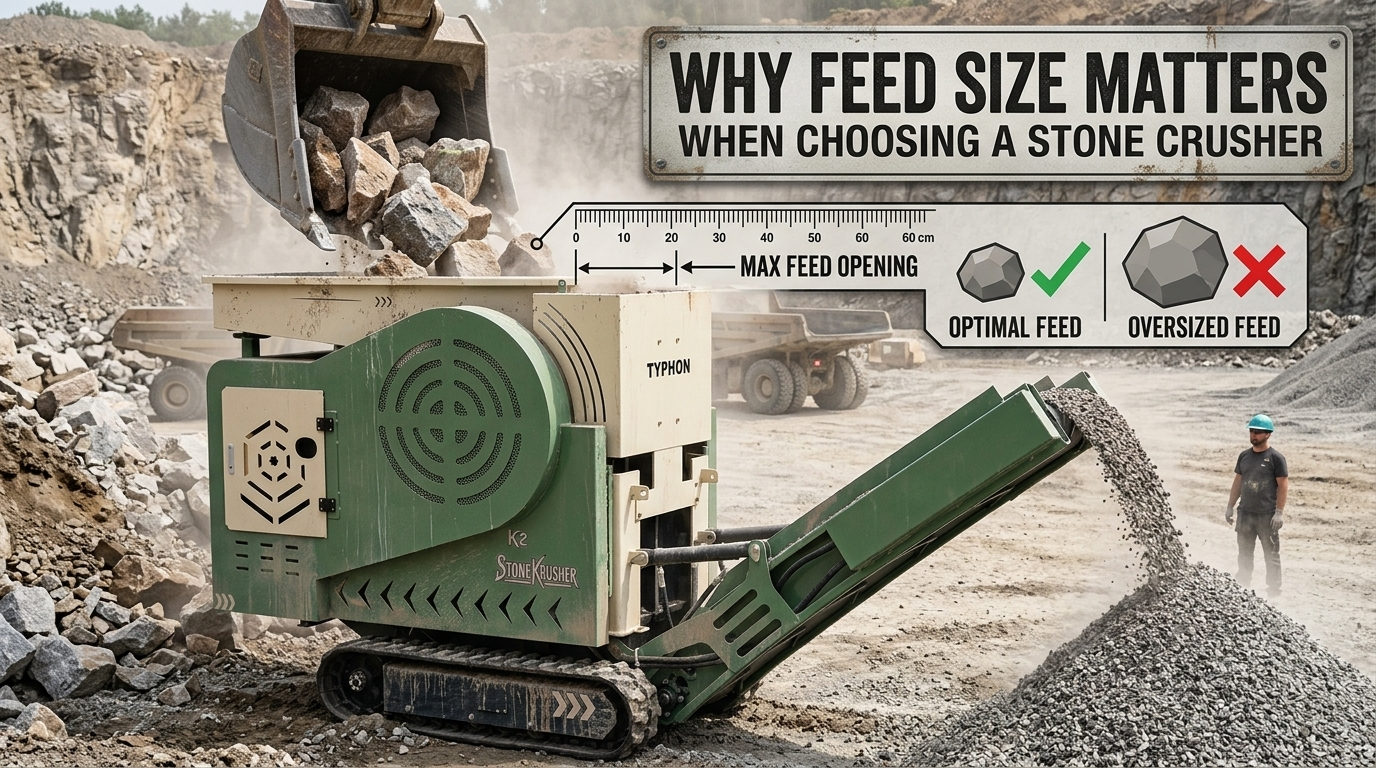
Feed size is one of the most practical factors in crusher selection, yet it often gets overshadowed by headline figures like capacity or output. That oversight can cost you dearly. A crusher that cannot accept your material forces constant pre-breaking, invites blockages, and drags down production before the first ton is even processed. The size of the rock you feed the machine shapes how smoothly the whole operation runs.
This guide explains why feed size matters when choosing a stone crusher across five practical areas. You will learn what feed size means and how it determines crusher suitability, how to match your rock size to the feed opening, how feed size affects crushing performance, how incoming size relates to your desired output, and how to weigh feed size alongside capacity, hardness, and settings. By the end, you will have a clear, dependable framework for choosing a crusher that handles your material the way your work demands.
Understanding Crusher Feed Size
Feed size refers to the dimensions of the material entering the crusher, and it is a foundational specification to understand before choosing any machine. Every crusher is built to accept material up to a certain size, and knowing the size of the rock you plan to process tells you whether a given crusher is suitable for the job. This is why the maximum rock size in your feed is one of the first numbers you should establish.
Knowing your maximum rock size helps you determine whether a crusher’s feed opening and crushing mechanism are up to the task. The feed opening sets the largest piece the machine can accept, while the crushing mechanism is built to break material within a designed range. When your largest common pieces fall comfortably within what the crusher can handle, the machine takes them in and processes them as intended.
Think of feed size as the entry requirement for the crusher. If your material exceeds what the machine is built to accept, it cannot enter and be processed cleanly, no matter how impressive the crusher’s other specifications may be. By measuring your material accurately and understanding the largest pieces you routinely handle, you give yourself a reliable basis for judging which crushers genuinely fit your operation. That clarity at the start prevents costly mismatches down the line.
Matching Rock Size to the Feed Opening
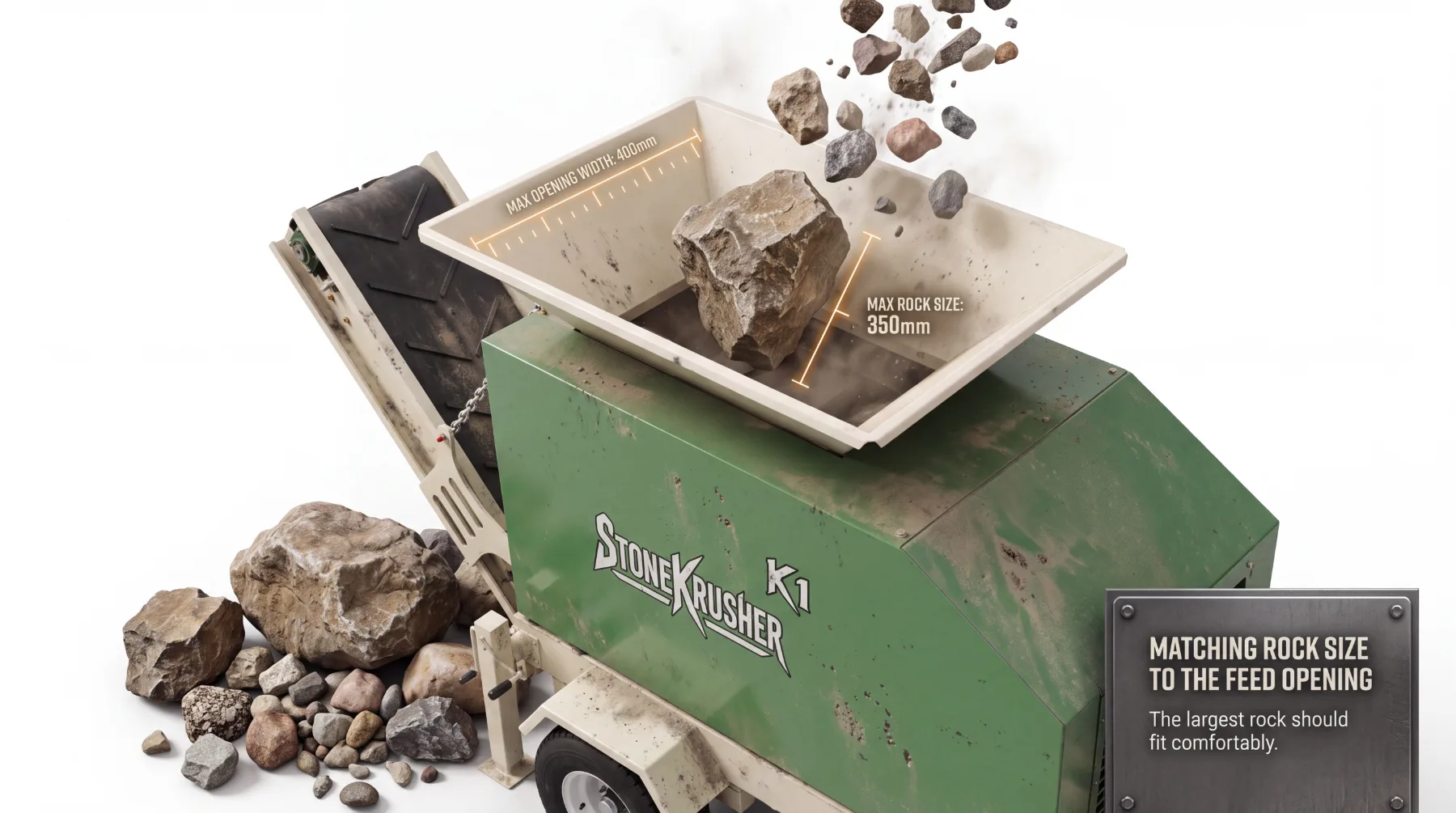
The feed opening must be large enough to accept the material being processed without excessive preparation, which makes it one of the most important specifications to match to your operation. The feed opening is the entry point to the crushing chamber, and its dimensions set the maximum size of rock the machine can take in. When the opening comfortably accommodates your incoming material, the crusher accepts each piece and gets to work without interruption.
Trouble begins when the material is larger than the opening allows. Oversized rocks may require additional breaking before they can enter the crusher, and that extra step carries real cost. Breaking down large pieces demands time, labor, and often additional equipment such as a breaker or hammer, all of which slow the operation and add expense. Every rock you have to reduce before it reaches the machine is a rock the crusher could have handled directly with a properly matched opening.
To judge whether an opening suits your work, start with the largest pieces you commonly process:
- Largest common rock size, which sets the minimum feed opening the crusher must offer
- Variation in your material, since rock arrives in a range of sizes depending on how it is quarried or excavated
- Realistic worst case, meaning the occasional oversized piece you can expect to encounter
A feed opening that comfortably accepts your typical largest pieces keeps material flowing and minimizes the pre-breaking that eats into productivity. When you match the opening honestly to the material you handle, the crusher takes in rock at a steady pace and spares you the constant effort of reducing oversized pieces by hand.
How Feed Size Affects Crushing Performance
Material that is appropriately sized for the crusher moves through the crushing chamber more efficiently, and that efficiency shows up directly in your production rate. When rock enters at a size the machine is designed to handle, it settles into the chamber, gets crushed cleanly, and passes through without struggle. The crusher works within its intended range, and the whole process runs smoothly, load after load.
Feeding material that is too large tells a different story. Oversized rock can increase resistance within the chamber and reduce processing performance. When a piece pushes the limits of what the machine can accept, the crusher has to work harder to break it, and the flow of material can slow or stall. Rather than moving steadily through the chamber, the material may cause blockages or bridging at the entry, interrupting the process and forcing intervention.
The practical effect is a drop in throughput and a rise in wear. A crusher fed material at the wrong size labors against every oversized piece, which slows production and places added strain on the crushing components. Over time, that strain can accelerate wear on the parts responsible for breaking the rock, adding to maintenance demands. A machine fed properly sized material, by contrast, processes each piece efficiently and sustains a steady, productive pace.
This is why feed size deserves attention as a performance factor, not just an entry requirement. When you supply the crusher with material sized to suit it, you keep the chamber working efficiently, protect the machine from unnecessary strain, and maintain the throughput your operation depends on. Matching feed size to the machine is one of the simplest ways to keep crushing performance where it belongs.
Feed Size and Final Output
The relationship between incoming material size and the desired output size sits at the heart of the crushing process, because crushing is fundamentally about reduction. A crusher takes rock of one size and reduces it to another, and the gap between those two sizes defines how much work the machine has to do. Understanding this relationship helps you judge whether a crusher can deliver the output you need from the material you feed it.
A suitable crusher should be capable of reducing the feed material to the required dimensions efficiently. When the difference between feed size and output size falls within what a single crusher can achieve comfortably, the machine reduces the material in one stage and delivers your target product. When the gap is very large, reducing big rock down to fine output may ask more of a single machine than it can manage efficiently, and the reduction may need to happen in stages.
This is worth thinking through carefully before you choose:
- Feed size, the dimensions of the material entering the machine
- Output size, the final product dimensions your project requires
- Reduction ratio, the relationship between the two that tells you how much work the crusher must perform
A crusher matched to both your feed and your output produces usable material directly, without excessive strain or the need for reprocessing. So the practical takeaway is clear: define both your incoming size and your target output before selecting a machine, then confirm the crusher can bridge that gap efficiently. When the machine suits both ends of the process, you get the product size your work requires with the efficiency your operation needs.
Considering Feed Size With Crusher Capacity
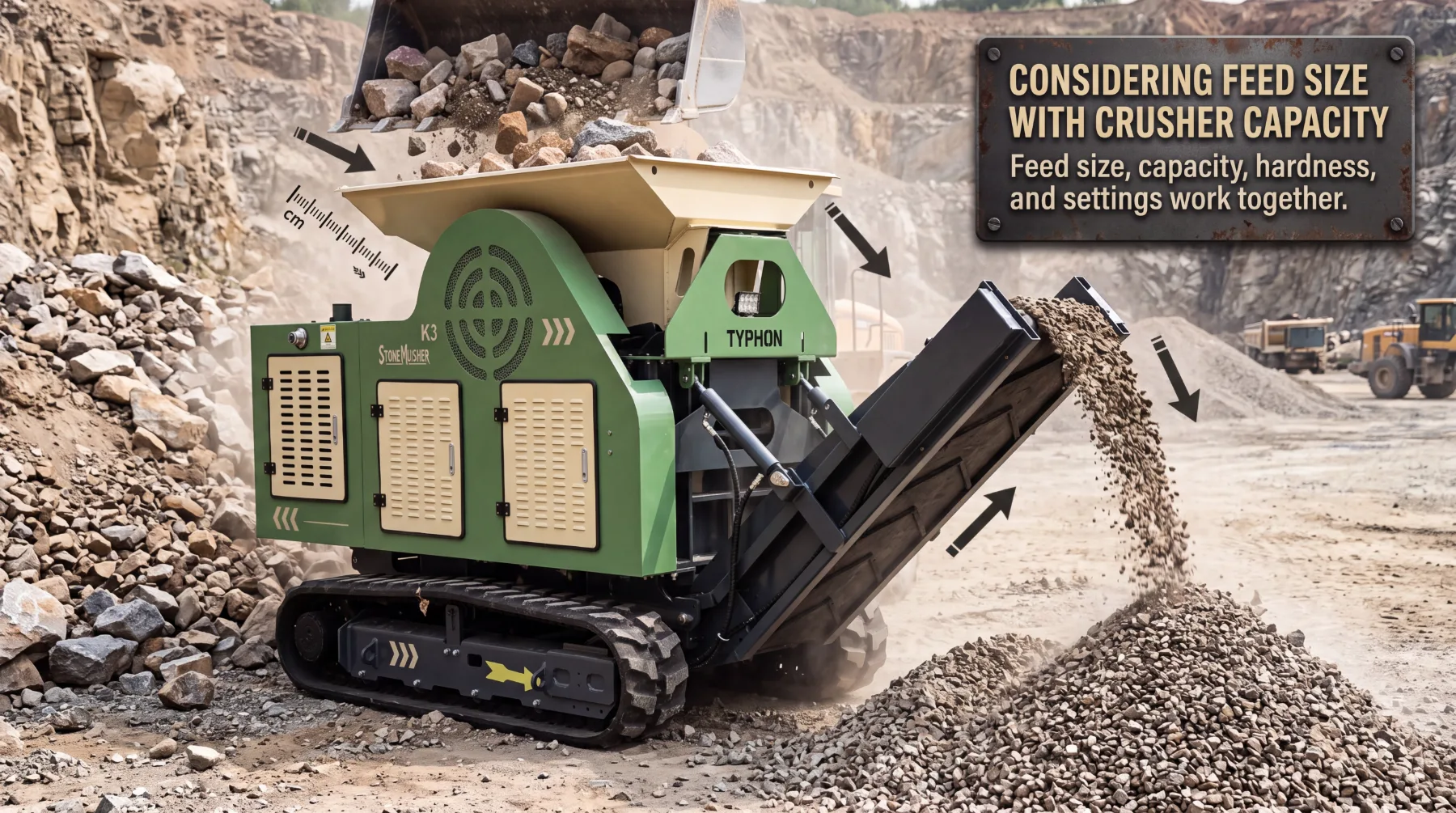
Feed size should never be evaluated in isolation. It belongs alongside throughput, material hardness, and crusher settings when selecting equipment, because these factors work together to determine whether a machine genuinely fits your operation. A crusher that accepts your feed size but cannot meet your production volume falls short, just as one with ample capacity but the wrong settings will not deliver the results you need. The right choice balances all these considerations together.
Each factor shapes the decision in its own way. Throughput, usually measured in tons per hour, tells you how much material the machine can process and must align with the volume your project demands. Material hardness affects how much force the crusher needs to break your rock, influencing both the type of machine and how it holds up under the work. Crusher settings, particularly the discharge configuration, control the output size and the efficiency with which the machine reduces material.
Feed size ties into all of these. Larger feed material generally requires more crushing work, which affects throughput, and harder rock at a large feed size places even greater demands on the machine. So the feed size you handle influences the capacity and durability you need from the crusher.
The practical approach is to look at your operation as a whole. Weigh your feed size against the throughput you require, the hardness of your material, and the output settings your project calls for, then choose a machine that satisfies all of them together. When feed size, capacity, hardness, and settings align with your work, you gain a crusher that handles your material reliably and meets your production requirements shift after shift.
Conclusion
Feed size is a decisive factor in choosing the right stone crusher. It determines whether the machine can accept your material without excessive pre-breaking, how efficiently rock moves through the crushing chamber, and whether the crusher can reduce your feed to the output your project requires. Considered alongside throughput, material hardness, and crusher settings, feed size becomes part of a complete picture of a machine’s fitness for the job.
Before selecting your next crusher, measure the material you process honestly, paying close attention to your largest common pieces. Confirm that the feed opening accepts your rock, that the machine can reduce it to your target output efficiently, and that its capacity, hardness rating, and settings match your workload. When you weigh feed size together with these factors, you gain a crusher that processes your material reliably and keeps your operation running efficiently. Reach out to discuss which crusher specifications best suit your material and production needs.
Frequently Asked Questions
1. What is crusher feed size and why does it matter?
Crusher feed size refers to the dimensions of material entering the crusher. It matters because every crusher has a maximum feed size determined by its feed opening and crushing mechanism. Knowing the largest rock you need to process helps determine whether the machine can accept and crush it effectively. If material exceeds the rated feed size, it may require pre-breaking, leading to delays, blockages, and added handling. Matching the crusher to your typical feed size helps maintain steady processing and avoid equipment mismatch.
2. How do I know if a crusher’s feed opening is big enough for my material?
Start by identifying the largest pieces of rock you regularly process and compare them with the crusher’s feed opening dimensions. Consider both typical material and occasional oversized pieces. If rocks are too large for the opening, they must be broken down before entering the crusher, adding time, labor, and potentially requiring equipment such as a breaker or hammer. Choosing an opening that comfortably accepts your largest routine material helps reduce pre-breaking and keeps the feed process more consistent.
3. What happens if I feed material that is too large into the crusher?
Oversized material can reduce throughput and create operating problems. Large rocks may increase resistance in the crushing chamber, slow material flow, or cause blockages and bridging at the feed opening. They also place additional strain on crushing components, which can accelerate wear and increase maintenance needs. Keeping feed material within the crusher’s rated size helps maintain consistent processing, reduce interruptions, and protect wear components.
4. How does feed size relate to the final output size I need?
Feed size and final output size are connected through the amount of material reduction the crusher must achieve. This relationship is often described by the reduction ratio. A crusher must be capable of reducing the incoming material to the required output size efficiently. If the size difference is too large for one crushing stage, processing may need to occur in multiple stages. Before selecting a crusher, define both the maximum feed size and desired output size, then confirm the machine can achieve the required reduction.
5. Should I consider feed size along with other crusher specifications?
Yes. Feed size should be evaluated alongside throughput, material hardness, and crusher settings. Throughput determines whether the machine can process the required volume, while material hardness affects the crushing force and component wear. Crusher settings, including the discharge configuration, influence final output size and reduction efficiency. Larger or harder feed material can increase the demands on the machine, so these specifications should be considered together when selecting a crusher for consistent production.