Common Causes of Fine Crusher Output and How to Reduce It

Producing graded base material on site requires more than keeping larger rock within the desired size range. A crusher may generate excessive fines when the feed contains soil and small material, the machine operates at an unsuitable setting, or already processed material passes through the crushing chamber again. Although the stockpile may look acceptable, too much fine material can affect drainage, compaction, and compliance with project specifications.
Several factors can contribute to excess fines during crushing. Feed material composition, crusher settings, feeding consistency, moisture, contamination, and repeated processing all influence the amount of fine material produced. Tight settings can increase crushing and create more fines, while soil mixed into the feed can add material that does not need to pass through the crusher in the first place.
Controlling these factors helps produce a more consistent aggregate product. Contractors can prepare the feed material, remove excessive soil and contamination, maintain an appropriate crusher setting, and avoid unnecessary recirculation of already processed material. Regular gradation testing also helps identify changes in output early, allowing adjustments before large quantities of material fall outside the required specification.
Hard and Brittle Material
Not all rock breaks in the same way, and the material entering the crusher has a major influence on how much fine material the process produces. Brittle rock may fracture along several planes at once, while some hard rock types can splinter or crumble instead of breaking into larger pieces. Softer, weathered, or layered rock may also break down easily and increase fines. Material can even vary within the same stockpile or deposit, so changes in rock properties can affect output as production moves through different sections of the feed.
Although the rock itself cannot be changed, the crushing process can be adjusted to suit its behavior and handle different materials at a construction site. Review information about the material source or run a small test batch and inspect the output before full production. Set realistic expectations when the material naturally produces a high percentage of fines, and adjust crusher settings, feed rate, or crushing stages when needed. If fines are unavoidable, plan for an appropriate use such as fill or blending material when project requirements allow. When processing an unfamiliar rock type, discuss its characteristics with the equipment supplier so the machine can be configured for the material as effectively as possible.
Key takeaway: Certain rock types naturally break into smaller particles during crushing, so material characteristics set a baseline for how much fine product the process creates.
Excessive Material Breakdown
Every pass through a crusher breaks material down further, so crushing beyond the required size can quickly increase the amount of fines in the finished product. Repeated passes through the crusher create more small particles, while overly tight settings can produce a finer output than the project requires. Material that already meets the target size can also become unnecessarily fine if it continues through the crushing process. Extended time in the crushing chamber has a similar effect because pieces continue to break down while they remain in the crushing zone.
Start by confirming the required product size from the project specifications and set the crusher to produce that range rather than a finer result. Where practical, separate material that already meets the specification and allow it to bypass the crusher. If oversized material needs to be reprocessed, return only the pieces that are too large instead of sending the entire output through another cycle. Matching the crushing process to the actual product requirement helps reduce unnecessary breakdown, control fines, and improve overall material yield.
Key takeaway: Repeated or excessive crushing produces more fine material, so process material only as much as the intended output and application require.
Crusher Operating Conditions
How the crusher is set up and run has a direct effect on how much material breaks into smaller particles. When fine output increases, operating conditions are one of the first areas to review.
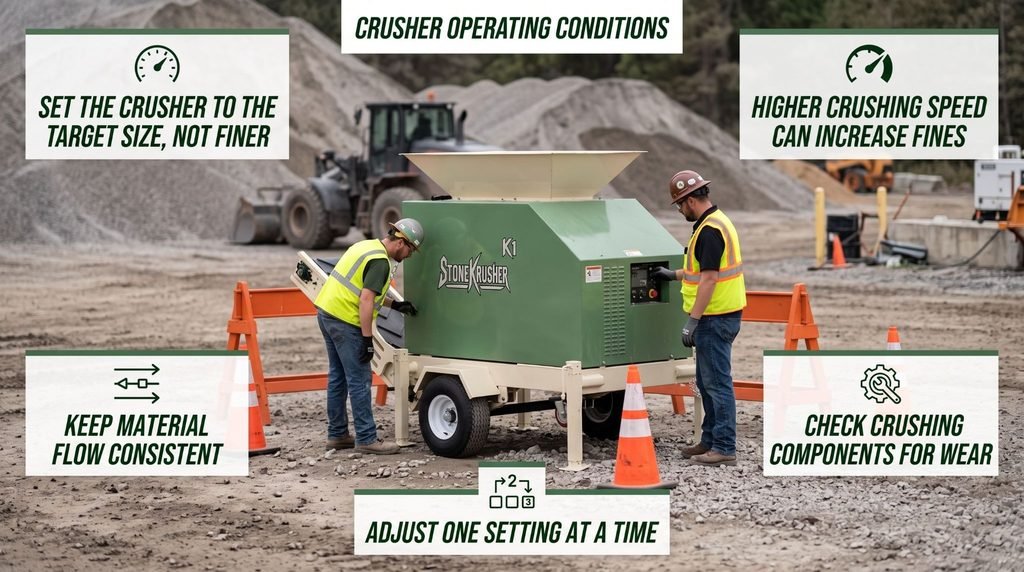
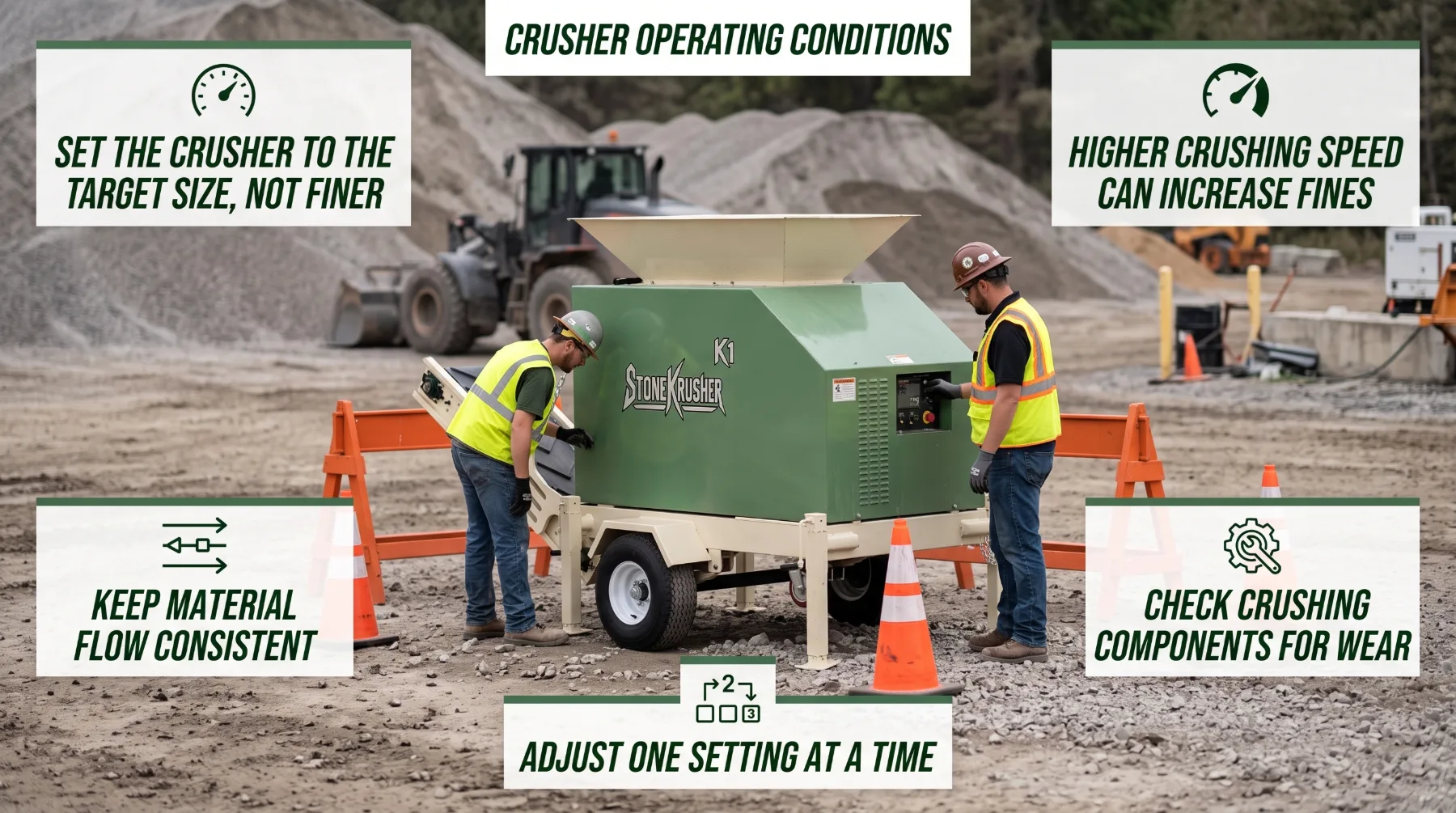
Several factors deserve attention:
- Machine settings: The discharge opening or closed-side setting controls how fine the material becomes. A setting tighter than the specification requires increased fines.
- Crushing speed: On machines where speed can be adjusted, such as some impact-style crushers, higher speeds can increase breakage and produce more fine material.
- Material flow: Consistent flow through the chamber supports steady crushing, while surges and gaps can affect product consistency.
- Component condition: Worn jaws, liners, blow bars, or other crushing components can change crushing action and affect output.
- Operating practice: Consistent procedures from shift to shift and operator to operator support a more predictable product.
Make changes carefully and one at a time. Adjust a single setting, run production, and check the output before making another change. That approach shows clearly which adjustment improved the result. Always follow the manufacturer’s procedures for adjusting settings, and shut down and lock out the machine before any adjustment that requires access to the crushing area.
Key takeaway: Machine settings, crushing speed, material flow, and overall operating practice influence how much material breaks into smaller particles, so review them whenever fine output increases.
Incorrect Feed Conditions
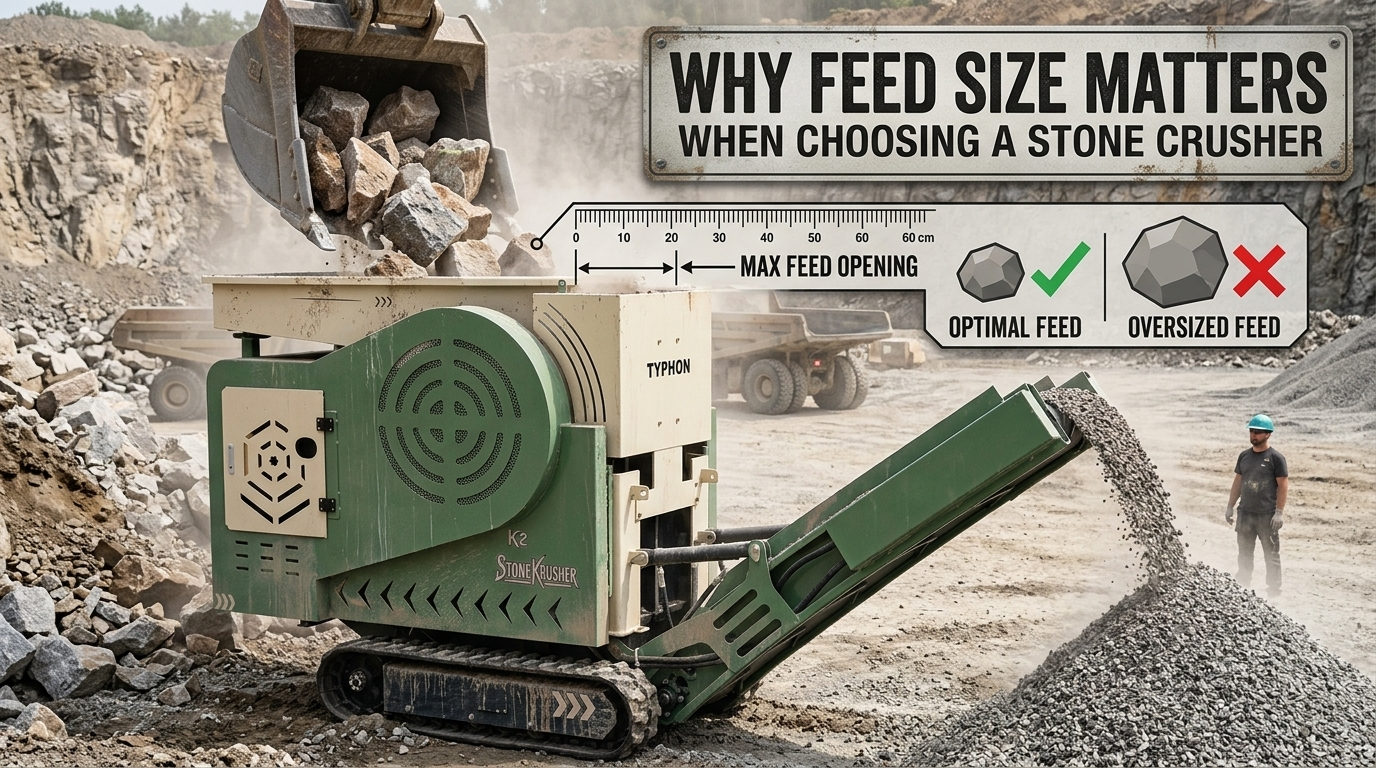
Feed conditions influence how crushing forces are applied and can affect the amount of fines produced. Soil, sand, and small rock already present in the feed add directly to the fine material in the finished product, while a mix of very large and very small pieces can make crushing less consistent. An irregular feed rate can also change how material breaks as the chamber moves between underloaded and overloaded conditions. Feeding directly from an excavation or demolition pile may introduce material that does not need crushing, making proper feed preparation important for both output quality and production efficiency.
Better preparation can reduce many of these problems. Remove excess soil, sand, and undersized material where practical, and use a scalping or pre-screening stage when the operation requires it to separate material that is already small enough. Keep incoming pieces within the crusher’s specified feed range and maintain a steady loading rate rather than alternating between large bursts and long gaps. Match the loader’s bucket size and cycle time to the crusher’s intake capacity so the chamber receives a consistent supply. Controlled feed preparation helps reduce unnecessary fines while supporting more predictable crushing performance.
Key takeaway: Irregular or unsuitable feed affects how crushing forces are applied, so maintaining appropriate feed size and a consistent material supply supports more predictable results.
Material Moisture and Composition
Moisture and mixed material can change how rock moves through a crusher and how it breaks, which can cause fine content to vary with weather and changes in the feed source. Wet material may cause fines to stick together or cling to larger pieces, coat crushing surfaces, and slow material flow. Material that packs inside the chamber can receive more crushing than intended and create additional fines, while wet fines may remain attached to the finished product and affect material testing or performance. Changes in material composition can create similar problems. Clay can bind with fines and stick to surfaces, while soil and organic material add to fine content and may make the finished material unsuitable for some base applications. Different rock types can also break at different rates, leading to less consistent output.
Inspect the feed pile before each shift, particularly after rain or when material comes from a different source. Where practical, process drier material first, shape stockpiles to encourage water runoff, and remove excess clay, soil, and other unwanted material before crushing. Keep an eye on changes in the feed as production continues because moisture and composition can vary within the same stockpile. Also check project specifications for limits on clay, organic material, or other contaminants in the finished product. Managing these conditions helps maintain more consistent crushing and reduces unexpected changes in output quality.
Key takeaway: Moisture and mixed material change how material moves through a crusher, and soil, clay, or other unwanted material mixed into rock can influence processing and increase fines.
Monitoring Finished Material
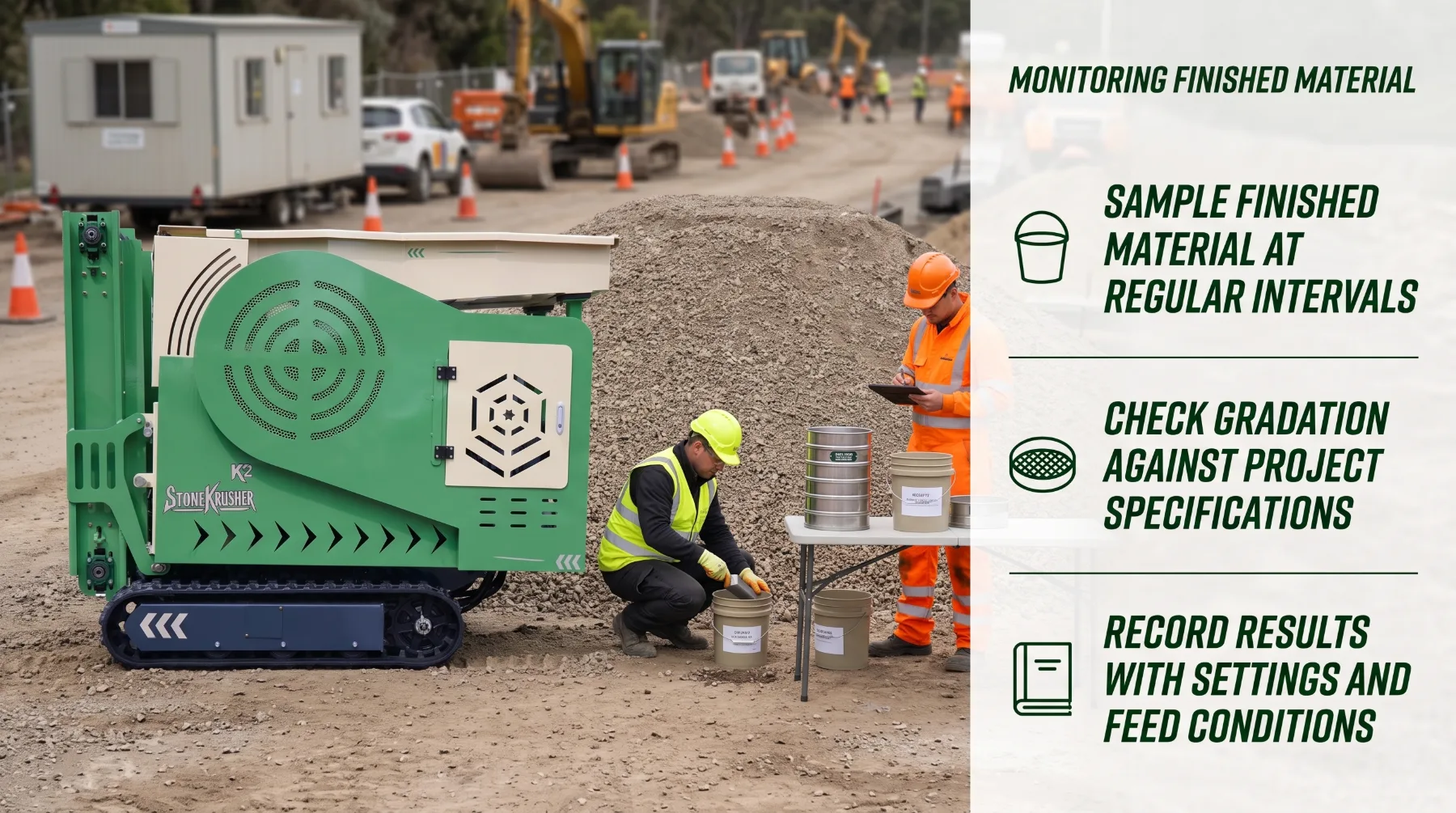
Excess fines are easier to correct when changes are identified early, so regular monitoring should be part of daily crusher operation. Take samples from the discharge conveyor or stockpile at consistent intervals and use the same sampling method so results can be compared over time. Check material gradation against the project specifications using sieve analysis or another required testing method, and record the results along with crusher settings, feed source, and weather conditions. Comparing results across shifts can reveal gradual changes before large volumes of material fall outside the required range.
When fine content increases, review the likely causes systematically. Start with the feed and check for added soil, moisture, changes in the material source, or inconsistent sizing. Then review crusher settings, operating speed, component condition, and whether material has been processed through the crusher more than once. Good records make this troubleshooting faster because they show what changed between acceptable and poor results. Visual inspection can help identify obvious changes between formal tests, but it should not replace proper sampling and gradation testing because fines can be difficult to judge accurately by appearance, particularly when the material is wet.
Key takeaway: Regularly checking and sampling finished material helps operators identify changes in output size and fines, and reviewing feed conditions and machine operation helps locate the cause.
Conclusion
Stone crusher fines can increase because of material properties, repeated crushing, feed conditions, operating settings, moisture, and component wear. Brittle or weathered rock may naturally produce more fines, while overly tight settings or repeated passes can create additional fine material. Wet feed, clay, soil, and inconsistent material can also affect crushing behavior and product quality, making feed preparation important. Operators should confirm the required output range, remove undersized material where practical, inspect jaws, liners, blow bars, or other crushing components for wear, and match crusher settings to the target product. Regular sampling and records of feed conditions, settings, and finished material help identify changes early and support targeted adjustments to maintain consistent output.
Frequently Asked Questions
Why does a stone crusher produce fine material?
Fine material can result from rock characteristics, crusher settings, feed conditions, and repeated crushing. Brittle or weathered material may break into smaller particles more easily, while unsuitable settings or excessive processing can also increase fines. In many cases, several factors contribute at the same time.
Can feed size affect fine crusher output?
Yes. Feed size and consistency influence how material moves through the crushing chamber and breaks apart. Feed that contains too much undersized material can add directly to the fine fraction, while inconsistent or unsuitable feed may produce less predictable results. Keeping the feed within the recommended range helps maintain more consistent output.
Does rock hardness affect fines?
Yes. Rock hardness, structure, and brittleness affect how material fractures during crushing. Some brittle, fractured, or weathered rock can produce more small particles than tougher material. Understanding the material being processed helps operators select suitable crusher settings and manage the expected gradation.
How can operators monitor fine output?
Operators can sample finished material regularly and compare its gradation with the required specifications. Recording sample results together with crusher settings, feed size, material type, and operating conditions can help identify changes over time. If fines increase, these records can help determine whether feed conditions or crusher adjustments may be contributing.