What Operators Should Know About Spider Excavator Setup
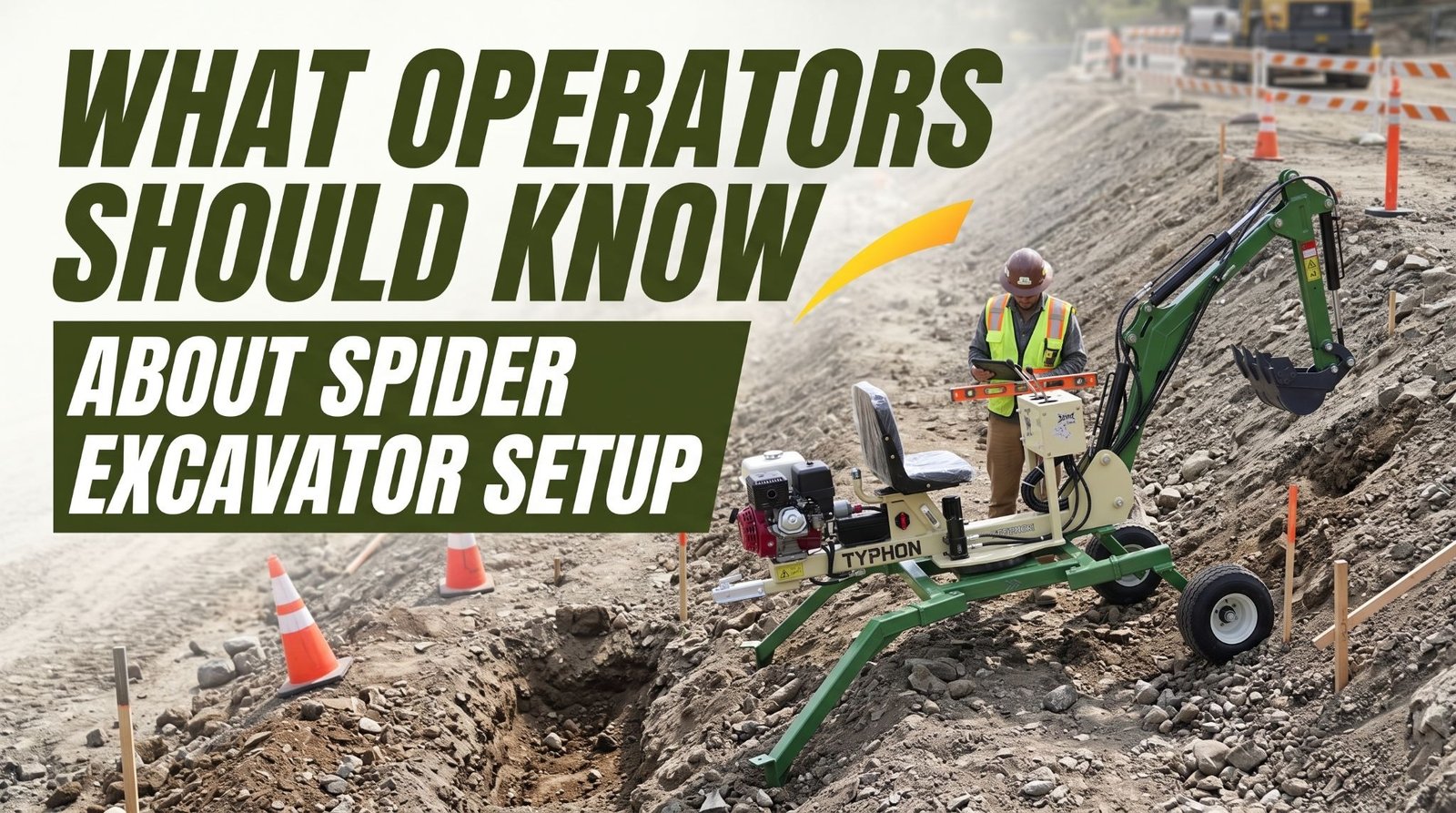
Working on a steep, wooded slope can present challenges that conventional equipment may struggle to overcome. Limited level ground, narrow access routes, and changing elevations can make it difficult for standard machines to reach the work area and maintain a stable working position. Spider excavators are designed for these demanding conditions, using articulating legs and adaptable footing to operate across slopes and confined terrain.
That capability also makes proper setup especially important. The same uneven ground that allows a spider excavator to reach difficult locations can create additional stability concerns if the machine is positioned incorrectly. Ground conditions, slope angles, available working space, and access routes all need to be assessed before digging begins.
Once the work area has been evaluated, careful positioning and preparation help support controlled operation. Checking the footing, preparing the attachment, confirming machine stability, and completing operator checks before digging can reduce avoidable problems. A thorough setup gives the excavator a more reliable working position and helps the machine handle challenging terrain as intended.
Inspect the Work Area First
Setup starts before the machine is even positioned. Operators should evaluate the ground, the slope, the access route, any overhead hazards, and nearby structures, since each of these shapes where and how the excavator can work. On the kind of difficult sites a spider excavator suits, that assessment is where safe operation begins.
Remote and uneven sites hold surprises. Conditions that aren’t obvious from a distance, such as soft patches, hidden drops, unstable edges, or overhead lines partly screened by trees, become clear only on a closer look. What appears workable from the access track can prove very different underfoot. Walking the area and identifying these factors early is what tells you where the machine can be safely positioned, rather than discovering a problem once it’s already in place.
Key takeaway: Evaluate the ground, slope, access route, overhead hazards, and nearby structures before positioning, since difficult sites hold conditions that aren’t obvious from a distance.
Establish a Stable Working Position
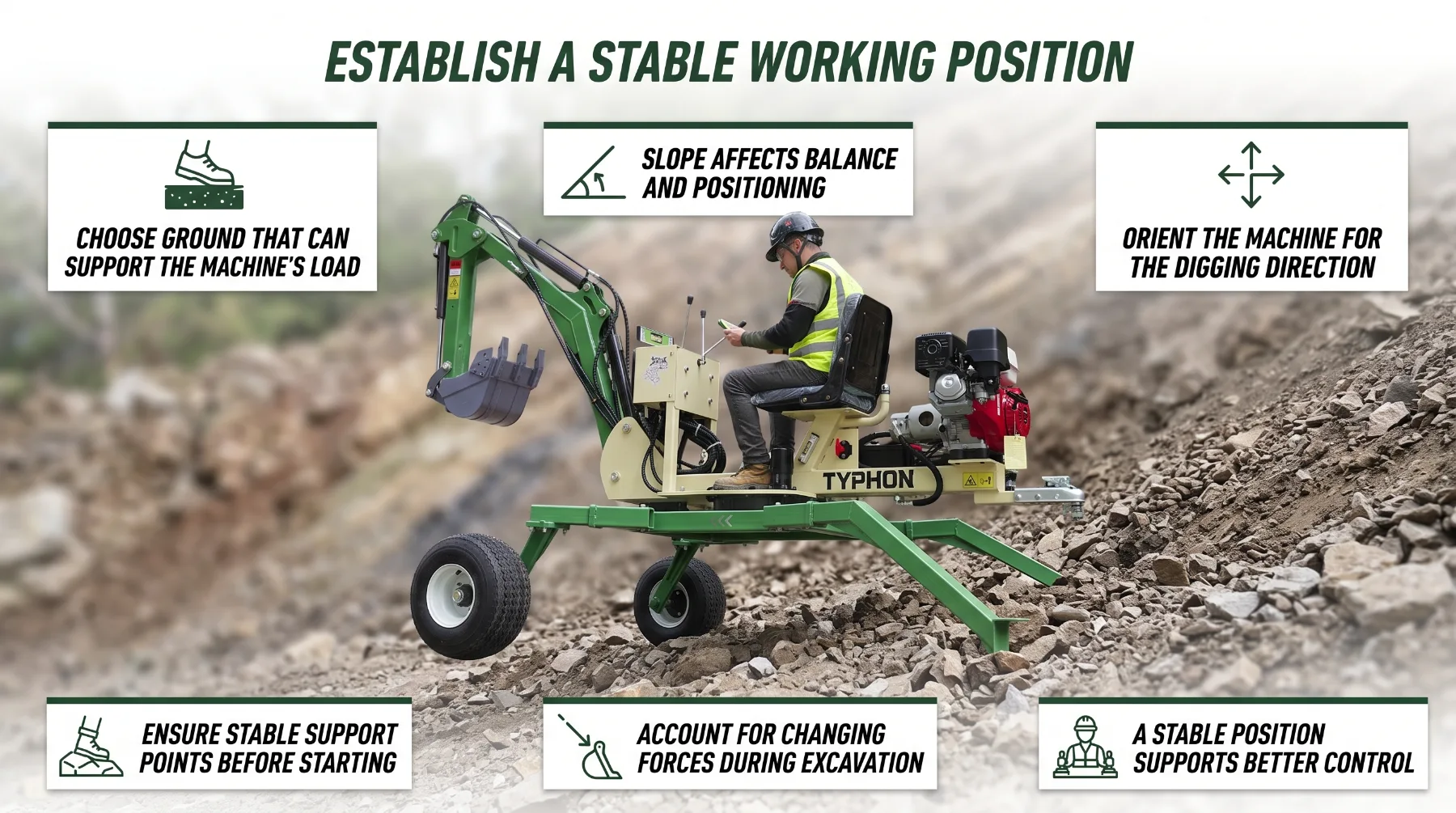
A spider excavator needs a stable base before digging, lifting, or carrying out other demanding tasks. Its ability to adapt to uneven terrain provides flexibility, but the machine still needs a suitable working position that can support its weight and the forces created during operation. Establishing that position first helps maintain controlled and predictable machine movement.
Several conditions should be considered together when choosing the working position. Ground firmness affects how well the machine can support the load, while slope and machine orientation influence balance and stability. A properly selected position gives the excavator a stronger foundation for handling changing digging forces and movements throughout the work cycle.
- Ground Firmness: Choose ground that can provide adequate support under the machine and its working load.
- Slope Conditions: Consider the grade and how it affects the machine’s balance and positioning.
- Machine Orientation: Position the excavator appropriately for the direction of digging and expected working forces.
- Footing Stability: Ensure the machine’s support points have a stable base before starting work.
- Digging Forces: Consider how excavation forces can change the machine’s load and movement during operation.
- Operator Control: A stable working position helps the operator maintain better control as the machine moves through the work cycle.
Key takeaway: The machine needs a stable base before digging or lifting, so weigh ground firmness, slope, and machine orientation to keep control as forces shift through the work cycle.
Check the Machine Configuration
What sets a spider excavator apart is its adaptable support system, and that system has to be configured correctly for the ground. These machines may use specialized support or leg arrangements that change depending on the terrain and the machine’s design, which is exactly what lets them work on grades and surfaces other equipment can’t. That flexibility only helps when it’s set properly.
Follow the machine’s own guidance here. Operators should set the support and leg components according to the manufacturer’s instructions, since those instructions reflect how the specific machine is designed to be configured for different conditions. This isn’t the place to improvise a setup. Before any demanding excavation begins, each support point should be properly positioned and secure, so the machine has the full, balanced base it relies on once it starts working under load. A support point left short or poorly placed undermines the stability the whole design depends on.
Key takeaway: Spider excavators use support and leg configurations suited to the terrain, so set them per the manufacturer’s instructions and confirm each support point is properly positioned before demanding excavation.
Prepare the Attachment
The attachment does the digging, so it deserves a proper check before it goes to work. Buckets and other attachments should be inspected before connection and use, since a fault found on the ground is far easier to deal with than one that appears mid-dig. This step is quick, and it heads off problems that would otherwise interrupt the work.
Cover the connection points and the attachment itself. Check the pins, the couplers, the hydraulic lines, and the visible attachment components for wear, damage, or loose fittings, since these are what hold the attachment secure and drive it through the cut. A worn pin, a loose coupler, or a damaged hydraulic line all deserve attention before use. Beyond condition, confirm the fit for the job: the selected attachment should suit the excavation task in front of you and stay within the machine’s capacity, so you’re not asking the excavator to handle a tool it isn’t rated for.
Key takeaway: Inspect the attachment’s pins, couplers, hydraulic lines, and visible components before use, and confirm the attachment suits the excavation task and the machine’s capacity.
Plan Machine Movement
On confined, difficult sites, how the machine moves matters as much as how it digs. Limited-access locations call for careful planning of travel and repositioning, because there’s rarely much room to correct a poor choice once the machine is on the move. Thinking the movement through in advance keeps it controlled.
Plan the path before you travel. Operators should identify the route ahead of time and stay aware of changes in ground elevation along it, since a spider excavator often works on grades where elevation shifts affect both stability and progress. Knowing where the ground rises, drops, or softens lets you move deliberately rather than reacting to it. It also pays to minimize unnecessary repositioning: every move on difficult terrain is a chance to lose the stable footing you’ve established, so avoiding needless shifts helps keep the machine steady and cuts the time spent moving between work areas. Fewer, well-planned moves beat frequent, improvised ones.
Key takeaway: Limited-access sites demand planned travel, so identify the route in advance, stay aware of elevation changes, and minimize unnecessary repositioning to keep the machine stable and save time.
Check Controls Before Digging
The last step before productive work is confirming the machine responds as it should. Before starting real excavation, operators should check that the travel, boom, arm, bucket, swing, and other controls all respond correctly. They should also confirm that the machine can climb and crawl smoothly over the intended work surface without unusual movement or loss of control. This quick verification is the bridge between a completed setup and safe operation under load.
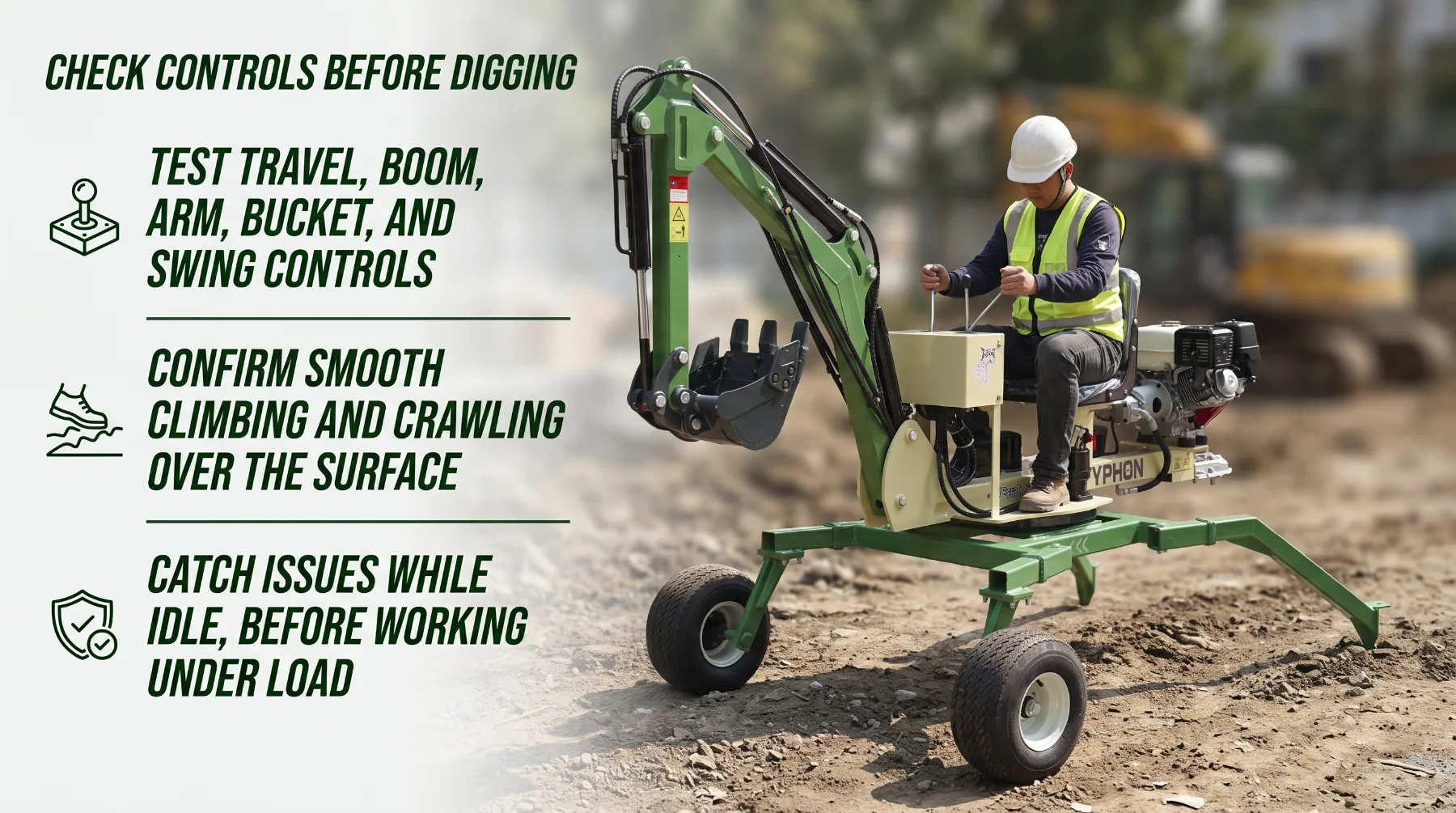
Run through the functions deliberately. Test each control through its range and confirm the machine reacts the way you expect, smoothly and predictably. A short functional check like this can surface a problem, whether a sluggish function, an unexpected response, or a hydraulic issue, before the machine begins working under load, when a fault is both harder to manage and more dangerous. Finding it now, with the excavator set and idle, means you can address it in a controlled way rather than mid-cut. Only once every control checks out is the machine truly ready to dig.
Key takeaway: Before excavating, confirm that travel, boom, arm, bucket, swing, and other controls respond correctly, since a short functional check identifies problems before the machine works under load.
Conclusion
Setting up a spider excavator well is what turns its terrain-handling capability into safe, controlled work. Start by inspecting the work area for ground, slope, access, overhead hazards, and structures, then establish a stable position suited to the grade and the digging to come. Configure the support and leg components per the manufacturer’s instructions, prepare and inspect the attachment, and plan movement carefully to protect the footing you’ve set. A final control check confirms the machine is ready before it works under load. None of these steps stands alone; together they give the machine the stable, reliable base that difficult sites demand. Work through them in order, follow the manufacturer’s guidance, and a spider excavator handles ground that would stop other equipment, safely and dependably.
Keep these essentials in hand:
- Work area: Assess ground, slope, access route, overhead hazards, and nearby structures first.
- Stable position: Weigh ground firmness, slope, and machine orientation for a base you can trust.
- Configuration: Set support and leg components per manufacturer instructions and confirm each point.
- Attachment: Inspect pins, couplers, and hydraulic lines, and match the tool to the task and capacity.
- Movement: Plan the route, watch elevation changes, and minimize unnecessary repositioning.
- Controls: Verify travel, boom, arm, bucket, and swing respond correctly before digging.
Before your next job, run through this quick checklist:
- Walk and evaluate the ground, slope, access route, overhead hazards, and structures.
- Establish a stable position based on ground firmness, slope, and machine orientation.
- Set the support and leg configuration per the manufacturer’s instructions.
- Confirm each support point is properly positioned and secure.
- Inspect the attachment’s pins, couplers, hydraulic lines, and visible components.
- Confirm the attachment suits the task and stays within the machine’s capacity.
- Plan the travel route and note any changes in ground elevation.
- Run a functional check on all controls before digging under load.
Approached this way, spider excavator setup becomes a dependable foundation for safe, controlled excavation on even the most difficult sites.
Frequently Asked Questions
What should be checked before setting up a spider excavator?
Before setup, assess ground conditions, slopes, access routes, overhead hazards, nearby structures, and available working space. Firm footing is essential because soft or unstable ground can affect stability under load. Check route width, ground conditions, and elevation changes, and look for hazards such as power lines and branches. Confirm there is enough room to position, support, and operate the excavator. Walking the work area beforehand can also reveal conditions that are difficult to see from the access route.
Why is machine positioning important?
Machine positioning directly affects the stability and control of a spider excavator, especially on slopes and uneven ground. Consider ground firmness, slope, and machine orientation so the excavator can handle digging forces properly. A stable, well-oriented position helps maintain control as the machine moves and working forces change. Poor positioning can reduce stability under load, making proper setup an important part of safe operation.
Should attachments be inspected during setup?
Yes, inspect attachments before connection and operation. Check the attachment, pins, couplers, hydraulic lines, and visible components for wear, damage, leaks, or looseness. Confirm the attachment is securely connected, suitable for the excavation task, and within the excavator’s rated capacity. Including this inspection during setup helps identify problems before they affect performance or safety.
Can spider excavators work on uneven terrain?
Yes, spider excavators are designed to work on slopes, uneven ground, and difficult surfaces where conventional equipment may struggle. Their specialized support and leg configurations help them adapt to challenging terrain, but they still have defined operating limits. Follow the manufacturer’s setup procedures, position the supports and legs correctly, and stay within the machine’s rated limits. Proper setup is essential for safe operation on difficult terrain.