Safe Operating Procedures for Underground Trenching Work
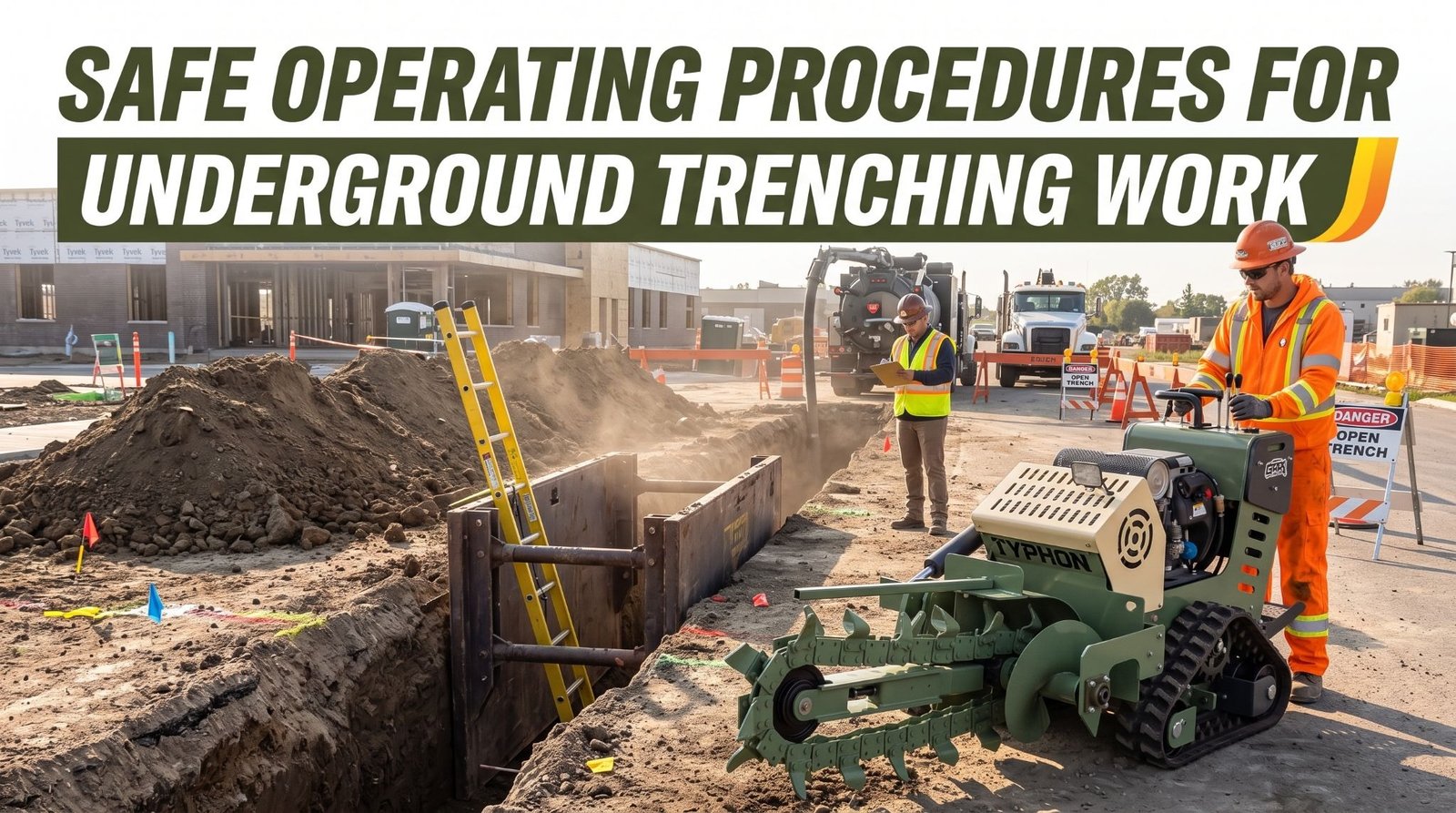
Installing buried water, sewer, electrical, and drainage lines requires careful coordination between excavation work and underground hazard control. Existing private utilities may not appear on public locating marks, while rain, loose soil, and nearby spoil piles can increase the risk of trench wall failure. Schedule pressure should never override site checks, worker protection, or the procedures required for the planned excavation depth.
Before breaking ground, contractors should arrange utility locating that covers both public and private services, then verify marked crossings using appropriate exposure methods. Soil conditions must be assessed by a competent person, with suitable protective systems selected according to the applicable regulations and site requirements. Equipment positioning, spoil setbacks, safe access, barricades, and communication between operators and ground workers all contribute to a controlled excavation area.
Throughout the project, crews should inspect trench conditions at the required intervals and after events such as heavy rain or changes that could affect stability. Workers must stay out of unprotected trenches where protective measures are required, and no one should enter until the competent person confirms that conditions are safe. Establishing emergency procedures before digging begins and stopping work when hazards appear helps protect the crew and prevent incidents from disrupting the project.
Assessing Soil and Site Conditions
Soil can look solid and still fail without warning. A cubic yard of soil can weigh well over a ton, and a trench collapse can bury a worker in seconds. A careful assessment of soil and site conditions decides how the trench must be dug and protected before anyone works in or near it.
Several factors affect trench stability. Soil type matters most. Cohesive clay holds a vertical face differently than loose sand or gravel, and previously disturbed soil, such as backfill from earlier utility work, rarely has the strength of undisturbed ground. Moisture changes everything, since rain, groundwater, and leaking pipes weaken soil and can cause walls to slough or slide. Vibration from traffic, compaction equipment, and nearby machinery can loosen trench walls over time. Nearby structures, such as building foundations, retaining walls, sidewalks, and utility poles, can add weight near the trench or lose support when soil is removed beside them.
A competent person should assess these conditions. Under applicable safety rules, a competent person is someone who can identify existing and predictable hazards in and around the excavation and has the authority to take prompt corrective action. That person evaluates the soil, often classifying it through visual and manual tests. They then determine the protective system and excavation approach required for the depth, soil, and site conditions. Regular equipment maintenance also supports better digging performance by keeping hydraulic components, tracks, and digging attachments in proper working condition.
Depth plays a key role in those decisions. In the United States, federal rules generally require a protective system for trenches 5 feet deep or more, unless the excavation is made entirely in stable rock. Shallower trenches may still need protection when the competent person finds signs of a potential cave-in. Deeper excavations may require a system designed by a registered professional engineer. Always follow the rules that apply in your jurisdiction.
Atmospheric hazards deserve attention as well. Trenches near landfills, fuel storage, sewers, or gas lines can collect low oxygen or toxic and flammable gases. Where a hazardous atmosphere could exist, test the air before workers enter and keep monitoring as conditions change.
Key takeaway: Soil type, moisture, vibration, nearby structures, and previous excavation all affect trench stability, so a competent person should assess conditions and determine the required protective system and excavation approach.
Establishing a Safe Work Area
A trench changes the jobsite around it. Open edges, heavy equipment, spoil piles, and moving vehicles create hazards for everyone nearby, not just those working in the trench. A well-organized work area controls who goes where and keeps people and equipment away from the most dangerous zones.
Keep unnecessary personnel and equipment away from the excavation. Only workers with a specific task should enter the work zone. Mark the area with barricades, fencing, or caution tape, and post warning signs where the public, other trades, or site visitors could approach. On streets and parking areas, set up traffic control that meets local requirements so vehicles stay well clear of the trench and equipment.
Plan clear travel paths for equipment and people. Separate machine travel routes from pedestrian walkways where possible, and keep haul trucks and loaders on established paths away from the trench edge. Mark turnaround areas so equipment doesn’t need long reversing moves near workers. Require high-visibility clothing for everyone in the work zone, and use a trained spotter wherever equipment works close to people or the trench.
Control loads near the edge. Spoil, materials, and equipment all add weight that can push a trench wall toward collapse. Place spoil piles and stored materials at least 2 feet back from the edge, or farther where the competent person or safety plan requires. Use retaining devices where needed to keep material from rolling back into the trench. Position excavators, trucks, and other heavy equipment well back from the edge, and use stop blocks or barriers where vehicles approach an open excavation.
Manage water before it becomes a hazard. Divert surface runoff away from the trench, and keep water from collecting in the bottom. Where dewatering is needed, a competent person should monitor the pumping operation and the trench walls.
Protect open trenches when work pauses. At the end of each shift, cover or barricade the excavation so no one can fall in, especially on sites near homes, schools, or public walkways.
Key takeaway: Keep unnecessary personnel and equipment away from the excavation, and establish barriers, warning signs, clear travel paths, and safe equipment positions to prevent collisions, edge failure, and unauthorized entry.
Identifying Underground Utilities
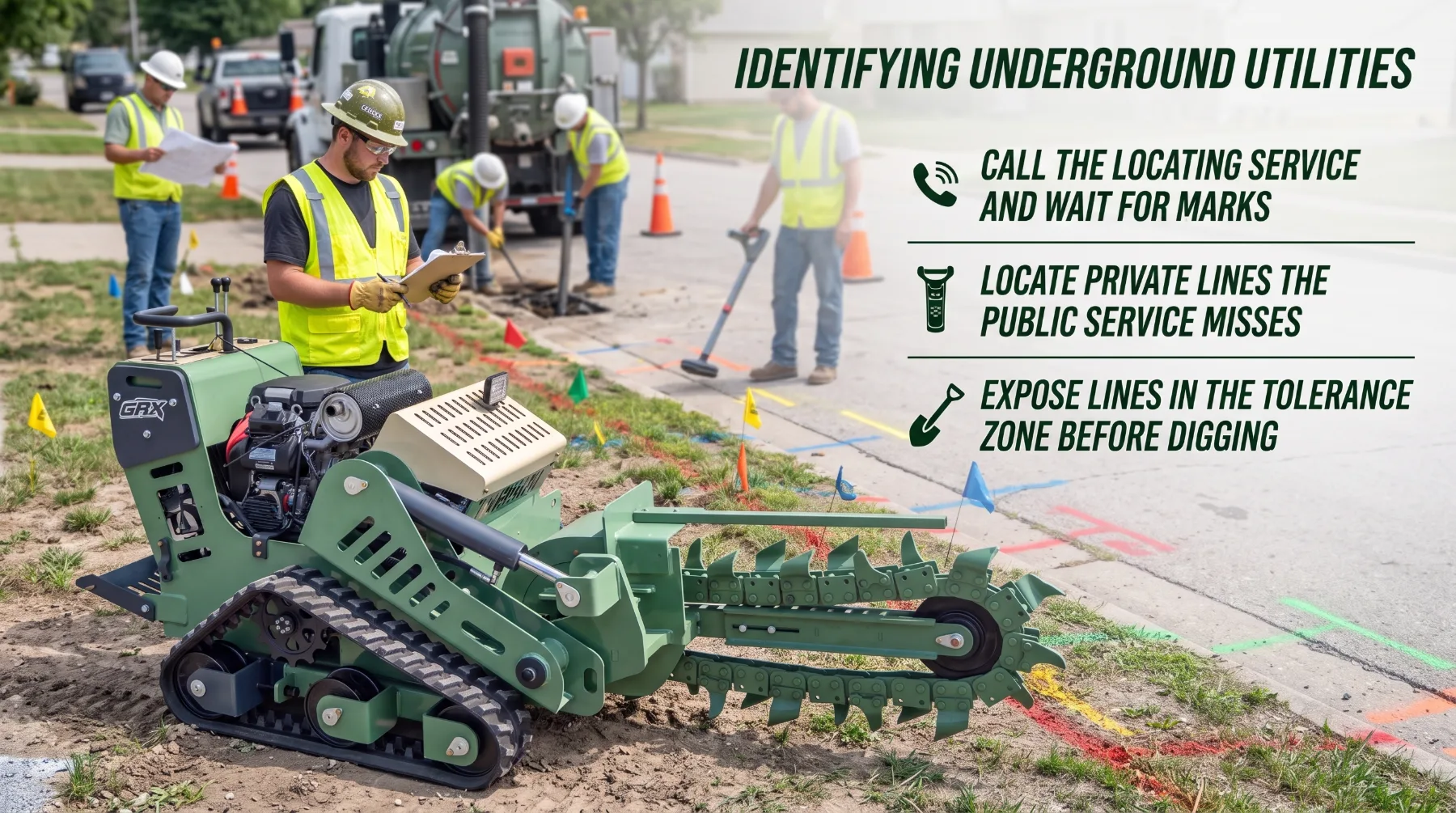
Every safe trench starts with knowing what is already underground. Buried electrical cables, natural gas lines, water mains, sewer pipes, fiber optic cables, telephone lines, and other utilities may run along the planned trench route. Striking these services can cause electric shock, fires, explosions, flooding, serious injuries, and costly service interruptions. Before excavation begins, contact the applicable utility locating service. In the United States, call 811 to request utility marking, provide accurate information about the digging location, and wait for the required response period. Waiting times vary by state, so confirm local requirements and never begin digging before all required utilities have responded.
Check the utility markings before starting work and confirm that they cover the entire excavation area. Standard marking colors include red for electric lines, yellow for gas and petroleum lines, blue for potable water, green for sewer and drain lines, and orange for communications. Keep the markings visible throughout the project, and request new markings if they fade, wash away, or the work extends beyond the original request. Remember that public locating services may not identify privately owned utilities, such as irrigation systems, parking lot lighting, private water and sewer lines, or electrical feeds to outbuildings. Ask the property owner for available site plans and arrange for a private utility locator when necessary.
Utility markings indicate approximate locations rather than exact positions. Before using mechanical equipment near a marked line, follow local tolerance-zone requirements and expose the utility using approved hand-digging or vacuum excavation methods. Confirm the line’s position, depth, and direction before continuing with machine excavation near or across it. Overhead power lines also require attention, so identify any lines above the trench route, spoil area, and equipment’s working range. Maintain the required safety clearances throughout the job to reduce the risk of electrical contact.
Key takeaway: Contact the utility locating service, wait for all lines to be marked, account for private lines, and expose utilities within the tolerance zone before mechanical digging begins.
Operating Trenching Equipment Carefully
Chain trenchers, mini excavators, backhoes, and other trenching equipment work close to people, utilities, and unstable ground. Careful operation protects everyone on site and helps keep the trench stable from the first cut to the last.
Follow the equipment manual for every machine. Review the manufacturer’s operating procedures, rated limits, and safety instructions before work begins. Complete a pre-shift inspection, and confirm that seat belts, guards, backup alarms, lights, emergency stops, and interlocks function correctly. Fasten the seat belt every time you operate.
Keep full awareness of the cutting area. On chain trenchers, the moving chain and spoil auger can cause serious injury in an instant. Keep everyone well clear of the chain, boom, and spoil discharge area. Never step over the boom or reach toward the chain while it’s running, and stop the machine completely before anyone approaches the cutting area. On excavators, mark the swing radius and keep workers on foot outside it. Never allow anyone under a raised bucket or suspended load.
Use controlled movements. Smooth, gradual control inputs keep the bucket or chain on line and reduce the risk of snagging buried objects. Approach marked utilities slowly, and switch to hand digging or vacuum excavation inside the tolerance zone. Avoid undercutting trench walls, and keep the machine back from the edge, since its weight and vibration add stress to the soil beside the excavation.
Stop when something unexpected appears. Digging should stop immediately if you encounter an unidentified obstruction, an unmarked pipe or cable, warning tape, a change in soil color or odor, water flowing into the trench, or cracks forming along the edge. Lower the bucket or raise the boom clear, keep people away, and have the situation assessed before work continues. An unknown line should be treated as live until the owner confirms otherwise.
Know how to respond if equipment contacts a power line. Stay in the operator’s seat unless fire or another hazard forces you out, and warn others to stay away from the machine. If you must exit, jump clear with your feet together, never touch the machine and the ground at the same time, and shuffle away with small steps.
Key takeaway: Follow the equipment manual, stay aware of the cutting area, use controlled movements, and stop digging whenever an unidentified obstruction, unexpected utility, or hazardous ground condition appears.
Trench Access and Protective Systems
Trench work exposes workers to serious hazards, including cave-ins, falling materials, water accumulation, and hazardous atmospheres. Proper protective systems, safe access, and regular inspections help reduce these risks.
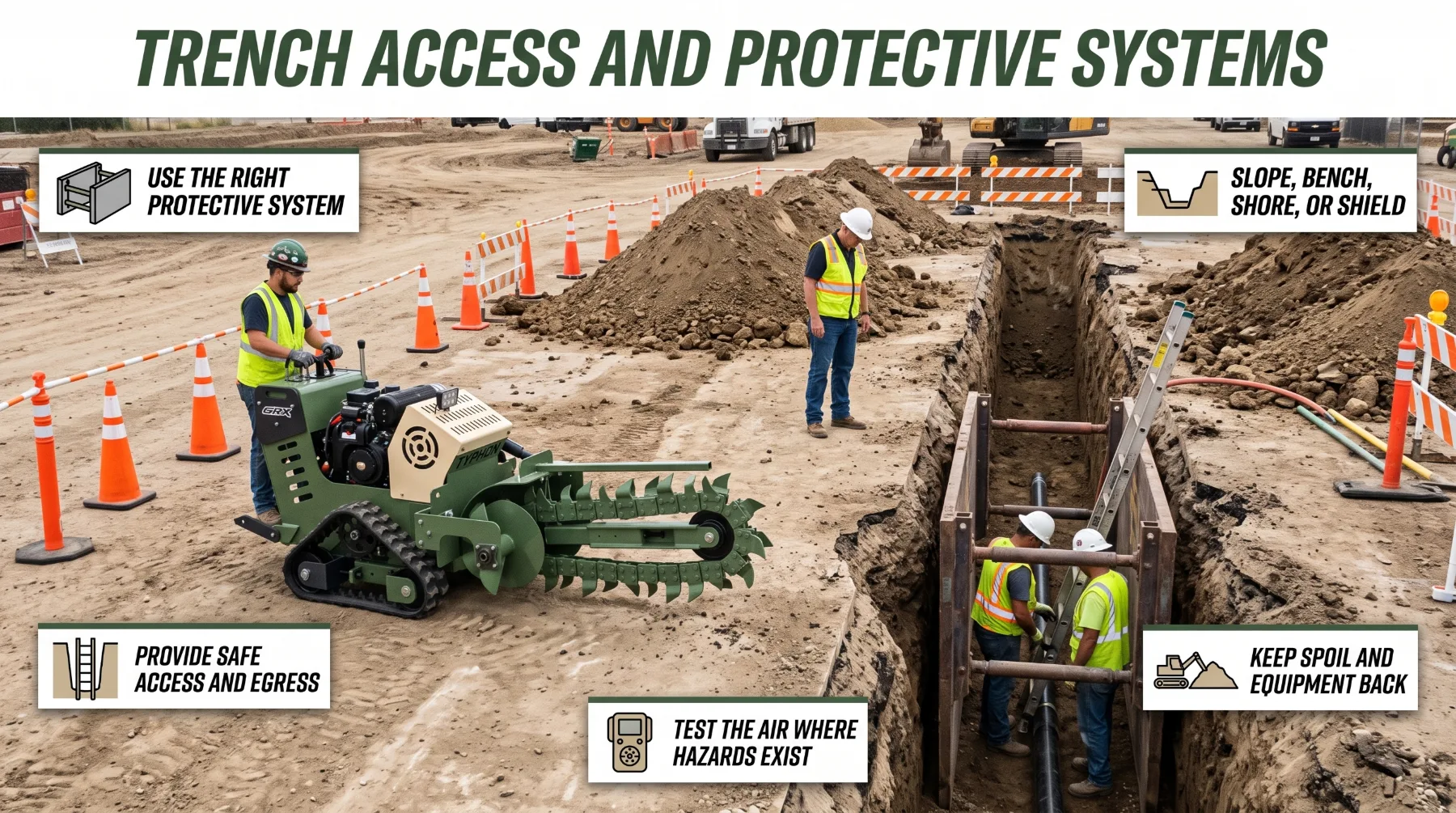
- Trench Protection Systems: Select suitable sloping, benching, shoring, or trench shields based on soil conditions, trench depth, and applicable safety requirements.
- Safe Installation and Removal: Follow manufacturer instructions when installing or removing protective systems. Keep workers clear when trench boxes are lifted or moved.
- Access and Exit Routes: Provide secure ladders, stairs, or ramps where required. In the United States, trenches 4 feet deep or more generally require an appropriate means of exit within 25 feet of lateral travel.
- Equipment and Spoil Placement: Keep excavated soil, materials, and heavy equipment away from trench edges as required by the site safety plan to reduce pressure on trench walls.
- Water and Atmospheric Hazards: Control water accumulation and test for hazardous gases or low oxygen when necessary. Provide ventilation and ongoing monitoring where conditions require them.
Key takeaway: Workers entering trenches need appropriate protective systems, safe access and egress, and inspections that follow applicable regulations, with spoil piles and equipment kept back from the edge.
Emergency Planning and Inspection
Even a well-run trenching job needs a plan for the unexpected. A utility strike, equipment incident, or ground movement can turn a routine day into an emergency within seconds. Crews that plan their response in advance act faster and avoid mistakes that make a bad situation worse.
Establish procedures before work starts. The emergency plan should cover utility strikes, equipment incidents, trench collapses, ground movement, flooding, medical emergencies, and hazardous atmospheres. Identify the nearest hospital, post emergency phone numbers, and confirm that everyone knows the site address. Assign responsibilities so each person knows who calls for help, who controls the area, and who meets emergency responders.
Plan for utility strikes specifically. If you strike a gas line, stop work, shut down equipment where it’s safe to do so, and move everyone away and upwind. Eliminate ignition sources, call 911 and the utility owner, and don’t attempt to stop the leak yourself. If you strike an electrical line, keep everyone clear of the equipment and the trench, and call 911 and the utility owner. For water line breaks, clear the trench immediately, since flooding can quickly undermine the walls.
Never send untrained rescuers into a collapsed trench. Secondary collapses are common, and well-meaning coworkers often become victims themselves. Call 911 at once, keep everyone out of the trench, keep heavy equipment away from the edge, and wait for trained rescue personnel.
Inspect the work area and protective systems as required. A competent person should inspect the trench, adjacent areas, and protective systems daily before work begins and as needed throughout the shift. Inspections must also follow any event that could affect trench stability, such as rainstorms, thaws, water intrusion, nearby vibration, or new loads near the edge. Look for cracks, bulges, sloughing walls, water seepage, damaged shoring, and changes in spoil placement. If the competent person finds evidence of a possible cave-in or other hazard, workers must leave the trench until the condition is corrected.
Record each inspection, finding, and corrective action. Clear records help the crew track changing conditions and support a consistent safety culture across every project.
Key takeaway: Establish emergency procedures for utility strikes, equipment incidents, ground movement, and other emergencies before work starts, and have a competent person inspect the trench and protective systems daily and after any change in conditions.
Conclusion
Safe underground trenching depends on disciplined planning and consistent procedures that protect workers from the moment the job is laid out until the last trench is backfilled. Contacting the locating service, accounting for private lines, and exposing utilities within the tolerance zone prevent dangerous strikes. A competent person’s assessment of soil, moisture, vibration, and nearby structures determines how each trench must be dug and protected. A controlled work area with barricades, clear travel paths, and spoils kept back from the edge keeps people and equipment out of harm’s way. Careful equipment operation and a firm rule to stop at the first sign of an unknown obstruction or unstable ground prevent incidents before they start, while proper protective systems, safe access, and regular inspections protect every worker who enters the trench. A clear emergency plan ensures the crew responds quickly and correctly when something goes wrong. When you follow applicable regulations and site-specific safety procedures on every job, you protect your crew, your customers, and the community around your worksite. Before your next trenching project, confirm every utility is marked and verified, have a competent person evaluate the soil and select the protective system, and brief the full crew on the work area layout and emergency plan before the first cut.
Frequently Asked Questions
Why must underground utilities be located before trenching?
Excavation can damage buried services, causing electric shock, gas leaks, flooding, service disruption, or other serious hazards. Before trenching begins, contact the utility locating service and identify any private lines that may not appear on public utility records. Reviewing utility markings and confirming the planned trench route helps operators avoid dangerous strikes, protect workers, and prevent costly repairs or interruptions to nearby properties.
Who should assess trench conditions?
A competent person should evaluate trench conditions, identify potential hazards, and determine the protective measures required under applicable regulations. The assessment should consider soil stability, water accumulation, nearby structures, equipment loads, and changes in weather or ground conditions. This person must also have the authority to take prompt corrective action when hazards arise, including stopping work and keeping workers out of unsafe areas until the necessary protections are in place.
Can workers enter an unprotected trench?
Workers must not enter a trench unless the entry conditions meet applicable safety requirements. In the United States, trenches 5 feet deep or more generally require protective systems unless excavated entirely in stable rock. However, depth alone does not determine every safety requirement, since unstable soil, water, nearby loads, and other hazards can create serious risks in shallower trenches. A competent person should assess the conditions and confirm that the required protections are in place before entry.
What should operators do if an unknown utility is found?
Stop excavation immediately, keep workers and other people clear of the suspected utility, and follow the site’s emergency and verification procedures. Do not touch, move, or attempt to identify the line by handling it, as it could carry electricity, gas, or another hazardous service. Treat the utility as live until the responsible owner confirms its status and provides instructions. Resume work only after the hazard has been properly identified and the necessary precautions are established.