
How Does Load Weight Affect Wheel Loader Performance?
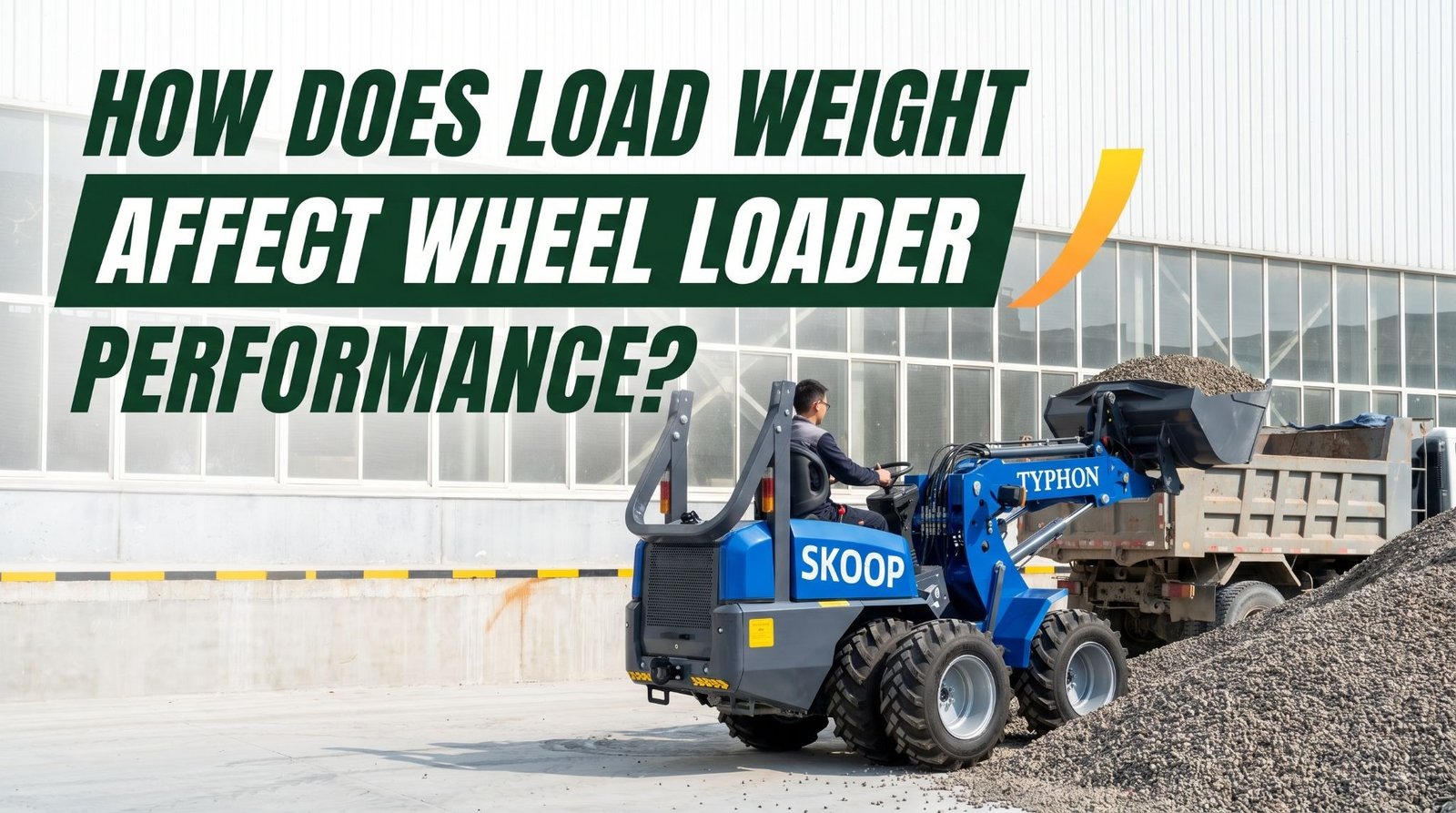
Load weight directly influences the mechanical and hydraulic demands placed on a wheel loader. As bucket payload increases, the engine must provide more power to the hydraulic system and drivetrain, while the transmission, axles, tires, brakes, and steering system must handle greater forces. Heavier loads can increase hydraulic pressure during lifting, raise traction requirements during loading, and increase rolling resistance during travel. Operating beyond the machine’s rated capacity can also shift the loader’s center of gravity, reducing stability and increasing stress on structural and powertrain components.
Proper payload management is therefore essential for maintaining productivity, fuel efficiency, and component life. A load well matched to the loader’s rated operating capacity allows the engine and hydraulic system to operate within their designed performance range while keeping travel and loading cycles predictable. Excessive payload can increase engine load and fuel consumption, extend cycle times, increase tire and brake wear, and reduce machine stability. Matching bucket fill, material density, payload, and machine capacity to the application helps convert available engine and hydraulic power into productive material movement without placing unnecessary loads on the machine.
How Load Weight Drives Engine Load and Fuel Consumption
Everything the engine does gets harder as the load grows heavier. A wheel loader’s engine powers the drivetrain that moves the machine and the pump that feeds the hydraulics, and both of those demands climb with load weight. Carrying a full bucket up a grade, accelerating from the pile, or crowding into dense material all force the engine to produce more power, which means burning more fuel. The relationship is direct: the heavier the load, the harder the engine works, and the more diesel it consumes per cycle.
The trouble is that this cost compounds across a shift. A loader carrying loads at or beyond its comfortable range runs closer to full throttle most of the time, generating more heat and pushing fluids past their efficient temperature. Fuel burn rises, but so does wear, since an engine laboring near its ceiling ages faster than its hour meter suggests. Loading within the machine’s designed capacity keeps the engine working in its efficient range, where it delivers steady power without straining, so both the fuel bill and the machine’s lifespan stay where they belong.
Key takeaway: Heavier loads force the engine to produce more power, raising fuel consumption and wear, so loading within the machine’s rated range protects both efficiency and engine life.
How Heavier Loads Raise Hydraulic Flow and Pressure Demand
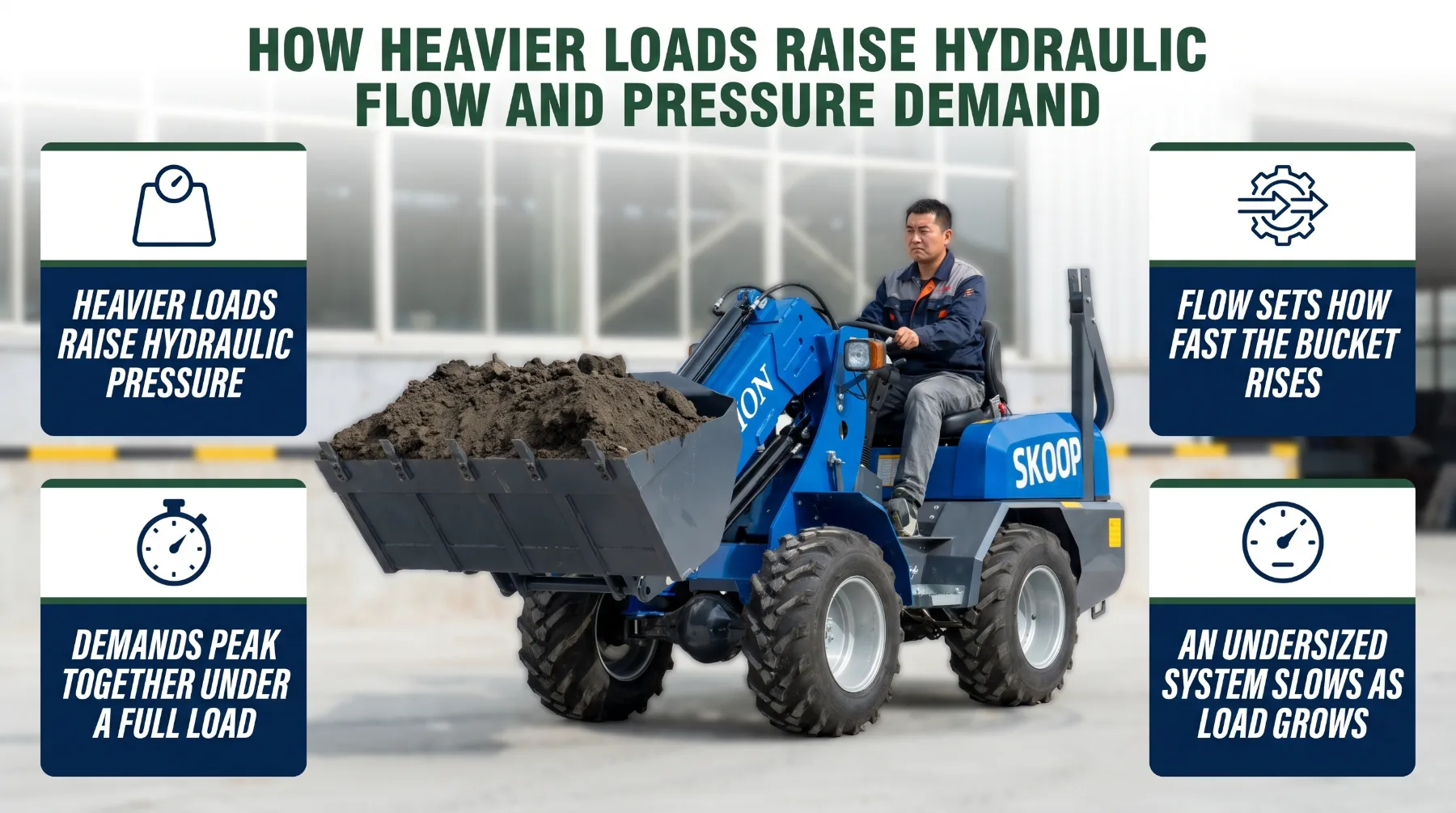
The hydraulic system feels load weight as pure resistance. A wheel loader lifts, tilts, and curls its bucket through cylinders driven by a pump, and the pressure that pump must build depends directly on how much weight those cylinders are moving. Lift a light load, and the system meets little resistance, so pressure stays low and the engine barely notices. Lift a full, heavy bucket, and the pressure needed to raise and hold it climbs sharply, which pulls more power from the engine to keep the pump turning against that resistance.
Flow enters the picture through speed. The volume of fluid the pump delivers sets how fast the bucket rises and curls, and when a heavy load demands high pressure at the same moment the operator wants a quick lift, the two demands peak together and stack onto the engine at once. A machine with genuine hydraulic and engine reserve holds its lift speed even under a full load, so cycles stay tight. A machine pushed beyond its range lifts noticeably slower as the load gets heavier, because the engine can’t sustain the flow when pressure climbs. Consistent lift speed under a full bucket is the clearest sign the hydraulics and engine are matched to the work.
Key takeaway: Heavier loads raise hydraulic pressure and, with it, the engine power needed to sustain flow, so lift speed under a full bucket reveals whether the machine is matched to the load.
How Load Weight Affects Traction and Stability
Weight changes how a wheel loader sits on the ground and how it holds its line. A loaded bucket shifts the machine’s center of gravity forward and upward, which affects stability in ways an operator feels through the seat. Within the rated load, the loader’s design and counterweight keep that balance safe and predictable. Carry too much, or raise a heavy load too high while turning, and the machine can grow tippy, especially on slopes or uneven ground where the shifting weight works against the operator rather than with them.
Traction responds to weight as well, and not always in one direction. Added weight over the driven axles can improve grip on firm ground, helping the machine push into a pile. On soft, wet, or loose surfaces, though, an overloaded machine tends to dig in and lose traction, spinning its tires as it fights to move a load it was never meant to carry. The stable, planted footing that safe and productive loading depends on comes from keeping the load within range and the bucket low during travel, so the machine stays balanced through every part of the cycle.
Key takeaway: Load weight shifts the machine’s balance and grip, so staying within rated capacity and carrying the bucket low keeps the loader stable and planted, especially on slopes and soft ground.
How Load Weight Changes Braking and Maneuverability
A heavier load carries more momentum, and that momentum lands squarely on the brakes. The energy a wheel loader must shed to stop rises with the weight it’s moving, so a fully loaded machine needs more distance and more braking force to come to rest than a lightly loaded one. Operators who don’t account for that difference find themselves stopping later than they intended, particularly on a downgrade where gravity adds to the load the brakes already fight. Allowing extra stopping distance with a full bucket isn’t caution for its own sake; it’s matching technique to physics.
Maneuverability suffers under weight in the same way. A heavy load makes the machine slower to accelerate, slower to change direction, and less nimble through the tight turns a busy loading cycle often demands. The forward weight bias also makes steering feel heavier and less responsive, so precise positioning near a truck or a pile takes more care and more time. Keeping loads within range and handling a full bucket with deliberate, measured movements preserves the control an operator relies on to work quickly and safely in close quarters.
Key takeaway: Heavier loads lengthen stopping distances and dull maneuverability, so allowing extra room to brake and moving deliberately keeps a loaded machine safely under control.
How Load Weight Drives Tire Wear and Ground Pressure
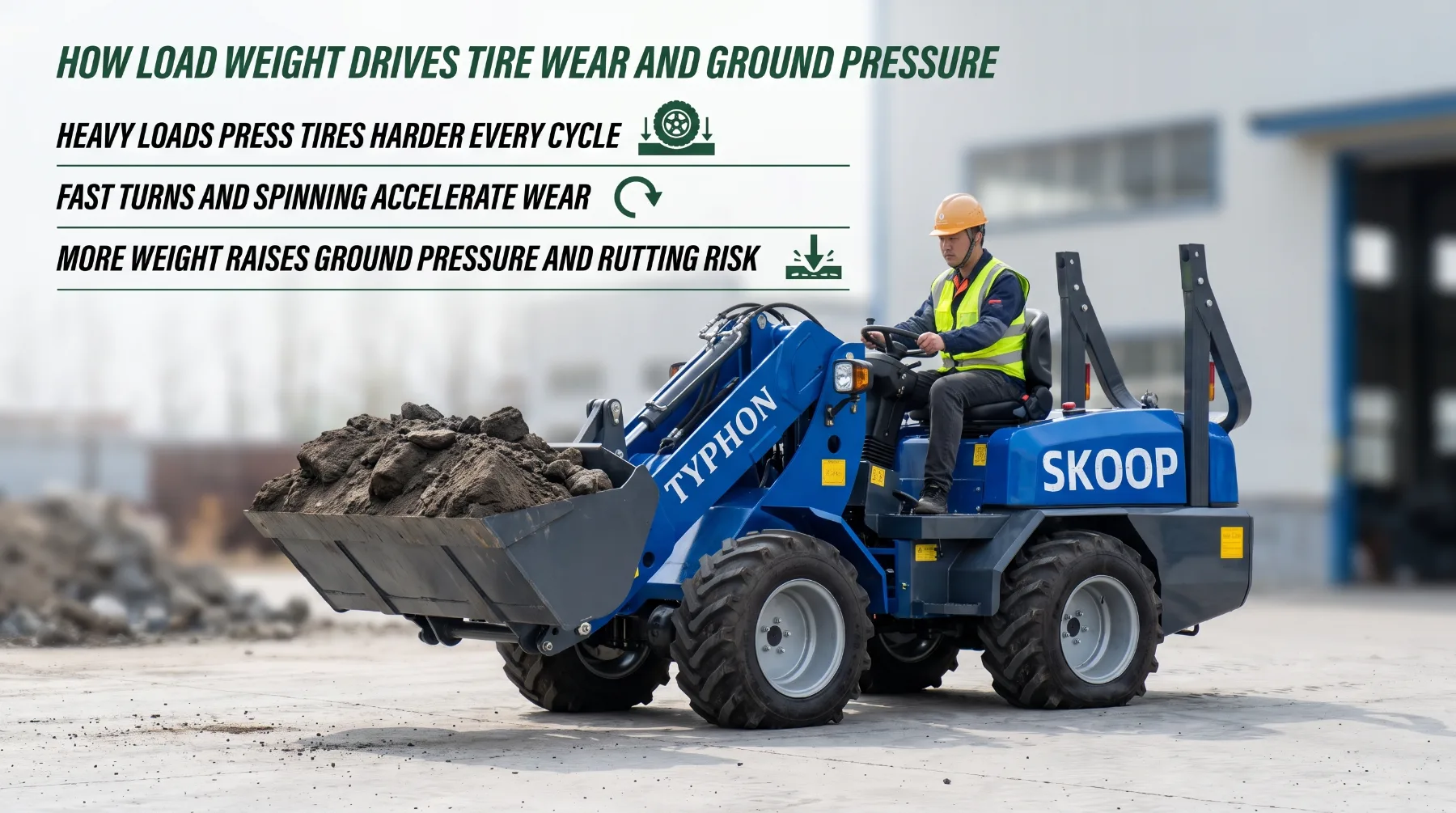
Tires carry the entire weight of the machine and its load, and they pay the price when that weight runs high. Every added ton presses the tires harder against the ground, raising the heat and stress they endure through each cycle. Heavy loads combined with fast turns, spinning on loose surfaces, or working across sharp debris accelerate that wear dramatically, turning tires, already one of a loader’s largest operating costs, into an even bigger expense. Loading within range and driving smoothly does more to extend tire life than almost any other habit.
Ground pressure rises alongside tire wear, and it matters wherever the surface has value. The heavier the machine and its load, the more force each tire drives into the ground beneath it, which increases the risk of rutting soft soil, damaging finished surfaces, or churning up a prepared site. On firm, prepared ground this rarely troubles the operator, but on sensitive or unstable surfaces the extra weight can leave real damage behind. Matching load weight to both the machine and the ground it works on protects the tires and the surface at the same time.
Key takeaway: Heavier loads raise tire wear and ground pressure together, so loading within range and driving smoothly protects both your costliest consumables and the surfaces you work on.
How Load Weight Stretches Cycle Times
Cycle time is where every other effect of load weight shows up on the balance sheet. A wheel loader’s productivity depends on how quickly it completes each dig, lift, carry, and dump, and load weight influences every one of those steps. Push loads beyond the machine’s comfortable range, and lift speed slows as the hydraulics strain, acceleration drags as the engine labors, and braking and turning take longer as momentum builds. Each delay is small on its own, but multiplied across hundreds of cycles a shift, they add up to real lost production.
There’s a tempting logic that says a bigger load per cycle means fewer cycles and faster work, but it breaks down quickly when the machine is overloaded. An overloaded loader moves slower through every phase, spins its tires, risks spillage, and forces the operator to work cautiously, so the fuller bucket often yields less total throughput than a properly sized load moving at full speed. The productive sweet spot is a load matched to the machine’s capacity, carried through brisk, confident cycles. That balance, not the biggest possible bucket, is what moves the most material per hour and per gallon.
Key takeaway: Overloading slows every phase of the cycle and often lowers total output, so a properly matched load moving at full speed moves more material than an overloaded bucket ever will.
Conclusion
Load weight is a primary operating parameter for a wheel loader because it directly affects engine torque demand, hydraulic pressure, traction, stability, braking performance, tire loading, and cycle efficiency. As payload increases, the engine must supply additional power to the hydrostatic or mechanical drivetrain while the hydraulic system requires greater force to accelerate, lift, and position the load, particularly when operating near maximum lift capacity. Increased payload also shifts the machine’s center of gravity and raises axle and tire loads, which can increase ground pressure, rolling resistance, tire deformation, and stopping distance while reducing maneuverability on slopes or low-traction surfaces. Excessive payload can further increase hydraulic relief pressure, engine loading, transmission stress, and thermal demand, causing slower lift and dump cycles if available power or hydraulic capacity becomes limiting. Loader selection should therefore consider rated operating capacity, tipping load, operating weight, hydraulic flow and pressure, engine torque, drivetrain capacity, tire specification, ground conditions, and the material density being handled. Maintaining payload within the manufacturer’s rated limits allows the loader to preserve hydraulic response, traction, stability, braking capability, and structural durability while avoiding unnecessary fuel consumption and accelerated component wear. Efficient loading practices should also aim for consistent bucket fill, controlled acceleration, minimal wheel slip, and cycle times that maintain production without forcing the powertrain to operate continuously at its maximum load.
Frequently Asked Questions
Does carrying a bigger load per cycle make a wheel loader more productive?
Not once you exceed the machine’s rated capacity. A fuller bucket may seem faster, but an overloaded loader takes longer to lift, accelerate, turn, and brake, and may also spill material or lose traction. Those delays add up across a full shift. The most productive approach is a load matched to the machine’s capacity, allowing fast, consistent cycles and efficient material movement.
How does overloading a wheel loader affect fuel consumption?
Overloading increases fuel use because the engine must produce more power for both the drivetrain and hydraulic system. Heavier loads require more effort to lift, move, and stop, keeping the engine under greater load for longer periods. Staying within the rated capacity helps maintain more efficient operation, reduce unnecessary heat and wear, and control fuel costs.
Why does a loaded wheel loader feel less stable, and how can operators stay safe?
A loaded bucket shifts the machine’s center of gravity forward, especially when the load is raised or the loader is turning. This can reduce stability on slopes, uneven ground, or soft surfaces. Operators should stay within rated capacity, keep the bucket low during travel, move at a controlled speed, and take extra care when carrying loads on grades or uneven terrain.