Operator Seat Ergonomics and Comfort in Wheel Loader Cabs
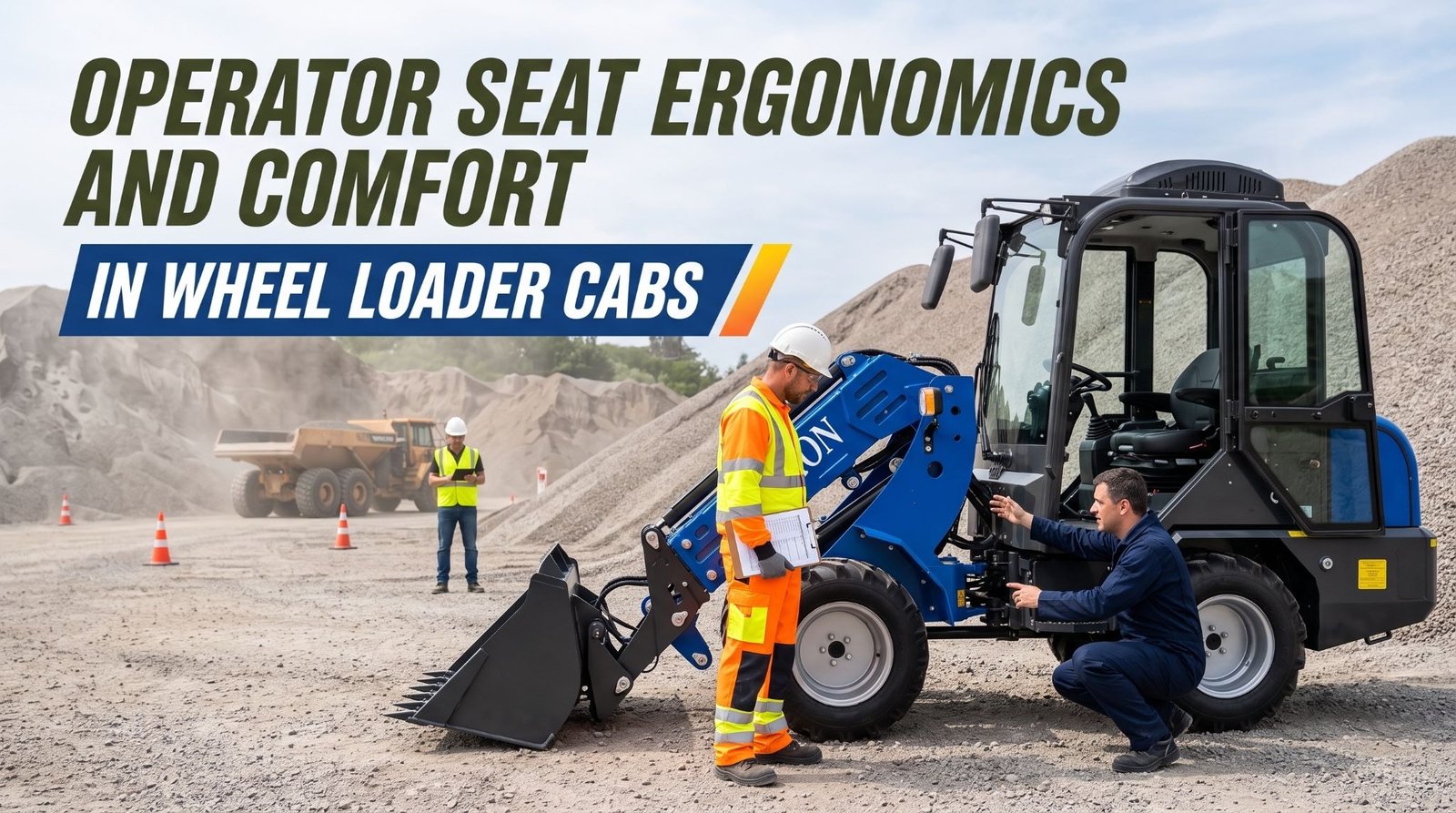
Wheel loader operators spend long hours in the seat loading trucks, moving stockpiles, clearing material, and working alongside other crews. A single shift can include hundreds of loading cycles, each one involving steering, lifting, tilting, and constant attention to the bucket, the travel path, and the people nearby. Through all of it, the operator’s seat carries their body weight, absorbs machine movement, and sets the position from which every control is reached and every hazard is seen.
Seat ergonomics and cab comfort shape how well an operator can sustain that work. A well-adjusted seat supports good posture, keeps controls within easy reach, and gives a clear view of the bucket and surroundings. A poorly adjusted or worn seat can lead to slouching, stretching, twisting, and fatigue that builds over the course of a shift. That fatigue affects comfort and can also reduce attention, slow reactions, and make precise loading harder to maintain.
This guide explains what seat ergonomics means in a wheel loader cab and how to adjust the seat correctly. It covers how suspension systems help manage vibration and how cab layout affects control reach. It also looks at how temperature and visibility contribute to comfort, and what to inspect to keep the seat in safe working condition. Contractors and operators who apply these practices give their crews a more comfortable, productive, and dependable working environment.
Understanding Seat Ergonomics
Seat ergonomics refers to how well the seat supports the operator’s body during work. It covers the seat’s shape, cushioning, back support, armrests, and range of adjustment, along with how these features fit the person sitting in it. The goal is simple. The seat should hold the operator in a stable, balanced posture that allows them to work comfortably and control the machine accurately for the full shift.
Several features contribute to good seat ergonomics:
- Seat cushion: Supports the thighs and hips evenly without creating pressure points behind the knees.
- Backrest: Supports the spine, particularly the lower back, and keeps the upper body upright without strain.
- Lumbar support: Helps maintain the natural curve of the lower back, where fitted.
- Armrests: Support the forearms and help steady the hands on joysticks and control levers.
- Headrest: Provides support for the head and neck, where fitted.
- Adjustment range: Allows operators of different heights and builds to set the seat to suit their body.
The seat should allow the operator to reach the steering, pedals, joysticks, and switches without excessive stretching, leaning, or twisting. When controls are hard to reach, the operator compensates by shifting their posture, and those small adjustments repeated hundreds of times a day can lead to discomfort in the back, shoulders, neck, and wrists.
Good ergonomics also supports better operation. An operator who sits balanced and supported can make smoother control inputs, judge bucket position more accurately, and stay alert longer. Comfort and performance are closely linked in a wheel loader cab.
Key takeaway: Seat ergonomics is about how the seat supports the operator’s body and keeps controls within easy reach, so a well-fitted seat supports both comfort and accurate machine control.
Seat Adjustment and Suspension Setup for Wheel Loader Operators
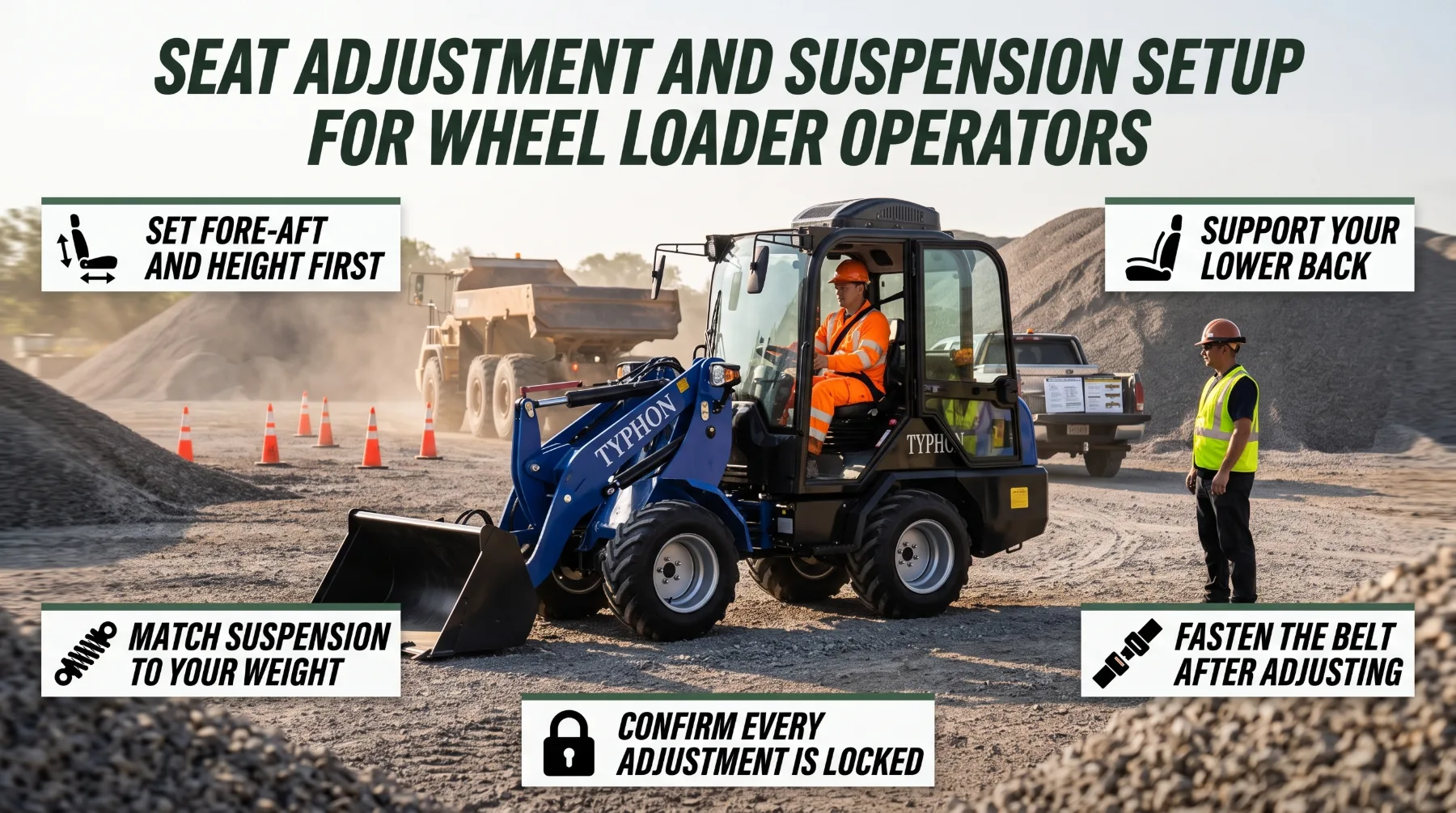
A properly adjusted seat helps wheel loader operators maintain a comfortable posture, reach the controls naturally, and reduce fatigue during long shifts. Before starting work, adjust the seat’s fore-aft position and height so the pedals and joysticks are within easy reach. Set the backrest to support the lower back, position the armrests comfortably, and confirm that all adjustment mechanisms are locked securely.
Suspension settings should match the operator’s weight and the seat manufacturer’s instructions. Correct adjustment helps absorb vibration and impacts when traveling over gravel, uneven haul roads, and rough stockpile areas. If the suspension is set incorrectly, the seat may provide inadequate support or move excessively during operation.
Once the seat is adjusted, fasten the seat belt snugly across the hips and check that it locks and releases correctly. Confirm that the operator can maintain a stable seated position while using the controls and observing the work area. Key takeaway: Adjust seat position, lumbar support, and suspension before each shift, then fasten the seat belt to support comfort and safe machine operation.
Cab Layout and Control Reach
A wheel loader cab places a great deal of equipment around the operator, including joysticks or levers, pedals, the steering wheel, displays, switches, and gauges. How these items are arranged affects how easily the operator can perform repeated tasks. A layout that suits the operator’s position allows quick, accurate inputs. A poorly matched layout forces stretching and twisting with every cycle.
Frequently used controls should be reachable without compromising posture or visibility. The hand controls for lifting and tilting the bucket see constant use, so they should fall naturally under the operator’s hands with the forearms supported. Pedals should be operable without lifting the heel excessively or stretching the leg. Displays and warning lights should be visible with a quick glance rather than a turn of the head.
Control layouts vary between machines. One loader may use a single joystick for lift and tilt, while another uses separate levers. Direction controls may be mounted on the steering column, on the joystick, or on a separate switch. Auxiliary hydraulic controls, ride control switches, and lighting controls may sit in different locations. Operators should become familiar with the layout before working in busy areas or performing precise loading movements. Assuming a new machine works like the last one can lead to unexpected movements.
Keep the cab floor and console area clear of loose items such as water bottles, tools, and bags. Objects that roll under pedals or block a control can cause unintended movement or prevent the operator from responding quickly.
Key takeaway: Frequently used controls should be easy to reach without straining or blocking visibility, so learn the cab layout thoroughly and keep the floor and console free of loose items.
Seat Inspection and Maintenance for Wheel Loader Operators
Regular seat inspections help identify wear and damage before they affect operator comfort or safety. Examine the cushion, backrest, armrests, mounting points, and adjustment mechanisms for looseness, cracks, or deterioration. Check that the seat moves smoothly through its intended adjustment range and locks securely in the selected position.
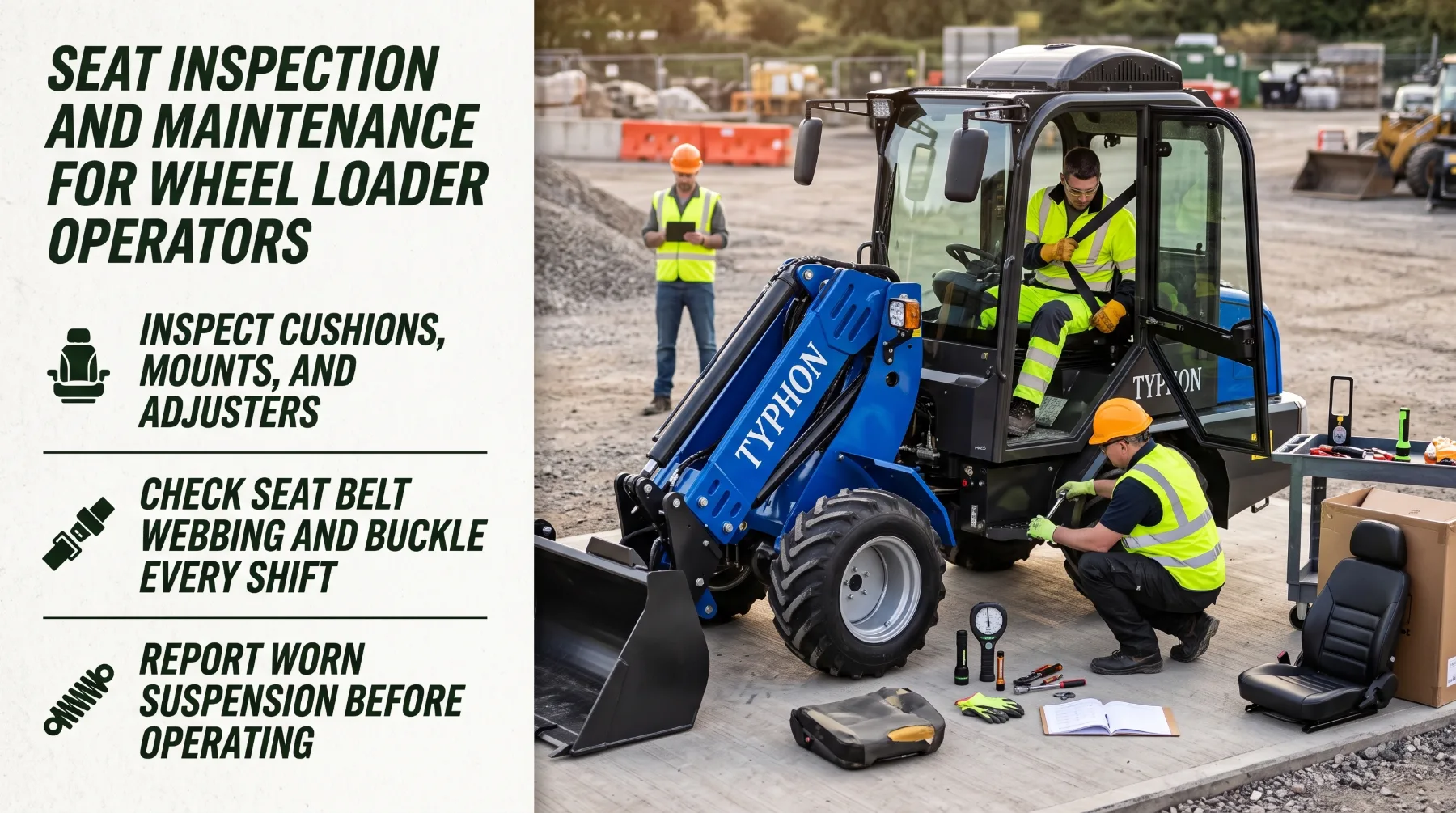
The seat belt requires particular attention because it is an essential operator restraint. Inspect the webbing for cuts, fraying, contamination, or other damage, and check the buckle, latch, and retractor for proper operation. Any damaged or malfunctioning restraint should be reported and repaired or replaced according to the manufacturer’s requirements before the machine is used.
Suspension components and mounting bolts should also be inspected according to the recommended maintenance schedule. Look for worn adjusters, damaged suspension parts, loose fasteners, or abnormal movement. Park the wheel loader safely, lower the bucket, shut down the engine, remove the key, and follow the prescribed isolation procedures before carrying out maintenance. Record inspection findings and report defects that require attention.
Key takeaway: Inspect the seat, mounting hardware, suspension, and seat belt regularly. Address worn or damaged components before operating to maintain reliable support and operator protection.
Suspension and Vibration Reduction
Wheel loaders transmit movement to the operator from many sources. Rough ground, potholes, stockpile edges, bucket impacts, and the machine’s own drivetrain all create vibration and jolts that travel through the frame and into the seat. Over a long shift, repeated exposure to this movement contributes to fatigue and discomfort, particularly in the lower back.
Many wheel loader seats use suspension systems designed to reduce the vibration reaching the operator. Mechanical suspension seats use springs and dampers. Air suspension seats use an air spring that can often be adjusted to the operator’s weight. Some machines also include cab mounts, ride control systems, or other features that help smooth out movement before it reaches the seat. The availability of these features varies by model and configuration.
Suspension only works well when it is set correctly. Most suspension seats include a weight adjustment that should be matched to the operator. A seat set too soft for a heavier operator may bottom out on bumps, delivering a hard jolt. A seat set too firm for a lighter operator may barely move, passing vibration straight through. Some seats also offer ride height and damping adjustments. Follow the manufacturer’s instructions and check that the seat sits near the middle of its travel when you are seated.
Report damaged suspension components, worn dampers, air leaks, or excessive vibration. A seat that no longer absorbs movement as intended should be repaired before it contributes to operator discomfort or injury.
Key takeaway: Set the seat suspension to the operator’s weight using the manufacturer’s instructions, reduce jolts through smooth routes and controlled speed, and report damaged suspension or excessive vibration promptly.
Temperature, Visibility, and Comfort
Seat comfort is only one part of the operating environment. Cab temperature, airflow, lighting, and window condition all affect how comfortable and alert the operator remains. A well-adjusted seat in a cab that is too hot, too cold, or poorly lit will still lead to fatigue.
Temperature plays a direct role in focus. A hot cab can make operators drowsy and slow to react, while a cold cab can stiffen hands and reduce fine control over joysticks and pedals. Properly functioning heating and air conditioning systems help keep the cab within a workable range throughout the day. Some seats include heating or ventilation features that add further comfort, depending on the model. Clean cab filters and clear vents keep airflow strong and help the climate system work as intended.
Visibility and comfort are closely connected. When windows are dirty or fogged, operators lean forward, crane their necks, and shift in the seat to see past smudges and glare. Clean windows, mirrors, and camera lenses let the operator stay in a supported posture while keeping a clear view of the bucket, tires, and surroundings. Use defrost and ventilation settings to prevent fogging, and adjust mirrors from the seated position after the seat is set. Sun visors and window shades, where fitted, help reduce glare that causes eye strain.
Lighting matters during early mornings, evenings, and indoor work. Work lights should illuminate the bucket, loading area, and travel path clearly, and dashboard lighting should be bright enough to read without causing glare on the windshield.
Operators should make cab adjustments without becoming distracted from machine movement or surrounding hazards. Change climate settings, mirrors, or lighting while the machine is stopped or during low-risk moments, not while approaching a truck, a stockpile edge, or workers on foot.
Key takeaway: Keep the cab temperature comfortable, windows and mirrors clean, and lighting adequate so the operator can stay in a supported posture, and make cab adjustments only when it is safe to do so.
Seat Inspection and Maintenance
A seat that was comfortable and supportive when new can lose much of its value as components wear. Cushions flatten, adjusters loosen, suspension parts wear out, and mounting hardware can work loose under constant vibration. Regular inspection catches these problems before they affect comfort or safety.
Include the seat in every pre-shift inspection and in scheduled maintenance:
- Cushions and covers: Look for flattened foam, tears, and worn areas that reduce support or create pressure points.
- Mounting hardware: Check that the seat is firmly attached to the cab floor or riser, with no loose bolts or excessive movement.
- Adjustment mechanisms: Confirm that fore and aft, height, backrest, and armrest adjustments move smoothly and lock securely.
- Suspension components: Check for worn dampers, broken springs, air leaks, and suspension that bottoms out or fails to return to height.
- Seat belt: Inspect the webbing for cuts, fraying, and fading, and confirm that the buckle latches and releases properly and the retractor works.
- Operator presence systems: Where fitted, confirm that seat switches and related safety systems function as intended.
- Armrests and consoles: Check that seat-mounted controls and armrests are secure and do not shift during use.
Seat belts and other required restraints must remain fully functional at all times. A damaged belt, a faulty buckle, or a retractor that does not lock should be replaced before the machine is operated. The seat belt keeps the operator in the protected area of the cab if the machine tips or stops suddenly.
Any defect that affects safe seating or restraint use should be reported and corrected before operation. Use replacement parts approved for the machine, and follow the manufacturer’s procedures for repairs. Keep a record of seat repairs and replacements so recurring issues can be identified and addressed.
Key takeaway: Inspect cushions, mounting hardware, adjusters, suspension, and seat belts regularly, and correct any defect that affects safe seating or restraint use before the machine returns to work.
Conclusion
Seat ergonomics and cab comfort play a central role in safe, consistent wheel loader operation during long shifts. A seat that fits the operator supports good posture and keeps controls within easy reach, while correct adjustment at the start of every shift prevents the strain that builds from stretching and twisting. Properly set suspension helps reduce the vibration and jolts that contribute to fatigue, and a familiar, well-organized cab layout allows smooth, accurate control inputs. Comfortable temperatures, clean windows, and good lighting let operators stay supported in the seat while keeping a clear view of their work. Regular inspection of cushions, adjusters, suspension, and restraints keeps these features performing as intended. When contractors and operators give the seat and cab the same attention they give the rest of the machine, they build a working environment that supports comfort, productivity, and safer operation every day.
FAQs
Why is seat ergonomics important for wheel loader operators?
Good seat ergonomics supports a comfortable, balanced posture and helps operators reach controls while maintaining clear visibility. This reduces fatigue and discomfort over long shifts and supports smoother, more accurate machine control.
How should an operator adjust the seat?
Adjust the fore and aft position, height, backrest, lumbar support, armrests, and controls to suit your body, control reach, and visibility, following the manufacturer’s instructions. Confirm that every adjustment locks in place, then fasten the seat belt.
Does a suspension seat eliminate all vibration?
No. A suspension seat reduces vibration, but its effectiveness depends on the seat design, weight setting, terrain, travel speed, and machine condition. Smooth travel routes and controlled operation also help reduce exposure.
What seat components should be inspected?
Check cushions, mounting hardware, adjustment mechanisms, suspension components, armrests, seat-mounted controls, operator presence systems where fitted, and the seat belt and buckle.
What should happen if the seat belt is damaged?
Report the defect and keep the machine out of service until the belt, buckle, or retractor has been repaired or replaced with approved parts. Operating without a functional restraint puts the operator at serious risk.