Operating Weight and Ground Pressure in Vibratory Rollers
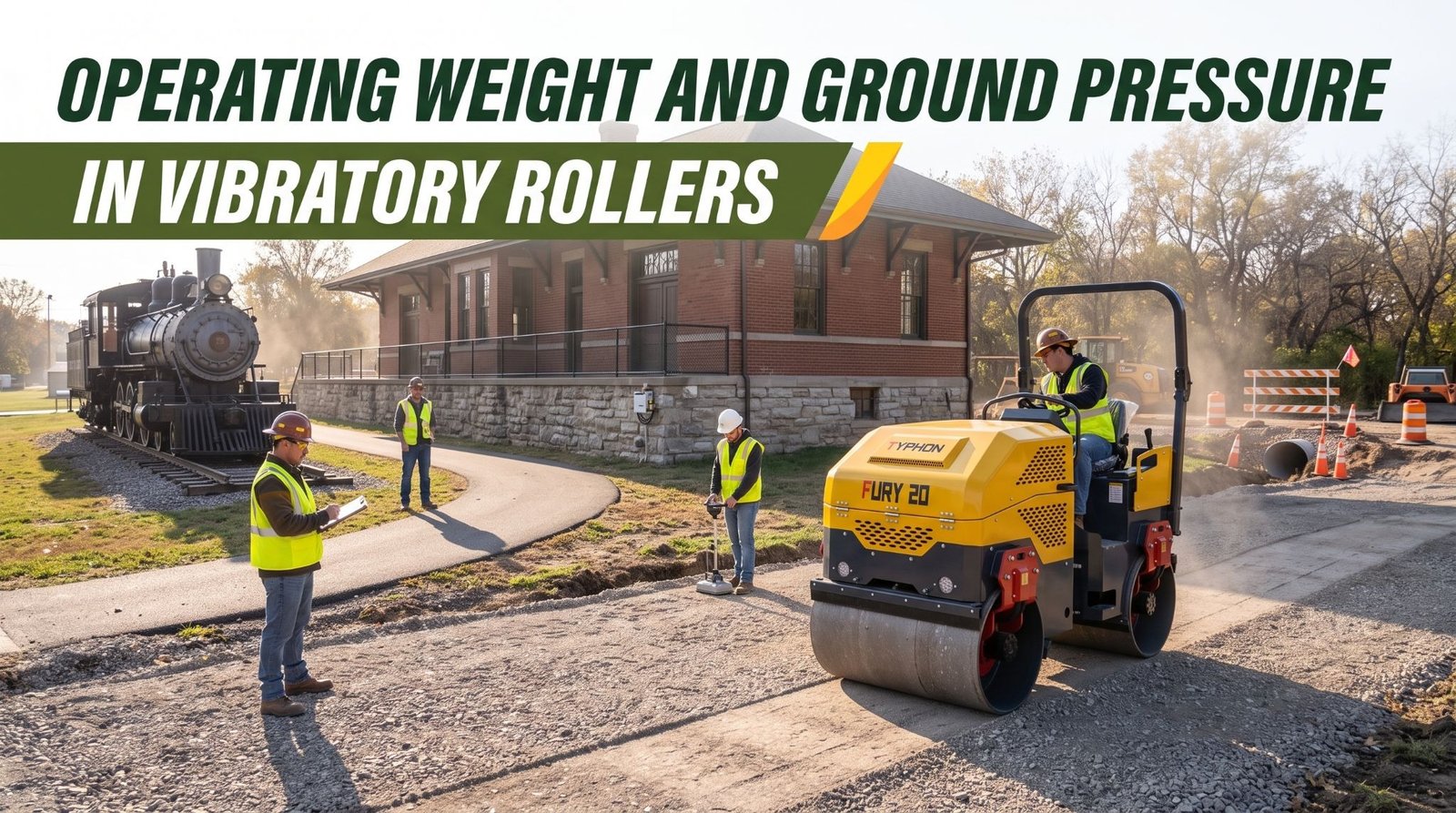
Compaction work on roads, parking lots, and paved paths requires equipment suited to the soil type, material moisture, layer thickness, and surrounding site conditions. A heavier vibratory roller does not automatically deliver better results, particularly when wet clay, buried structures, or sensitive foundations limit how much force the ground can tolerate. Selecting the right machine and compaction method helps achieve the required density while reducing rework and the risk of damage.
Operating weight, drum dimensions, ground contact, vibration amplitude, and frequency all influence how a roller transfers force into the material. Ground pressure describes the load applied over the contact area, while vibration adds dynamic force that helps compact suitable soil and aggregate. Material moisture and lift thickness also affect compaction results, so a smooth surface does not necessarily indicate that the full layer has reached the required density.
Effective compaction begins with checking the machine’s actual operating configuration, preparing the ground at a suitable moisture level, and placing material in appropriate layer thicknesses. Operators should adjust vibration settings to the material and working area, use static operation where required near sensitive structures, and verify results through density testing. Regular inspection of drum components, vibration systems, and isolation mounts helps maintain consistent performance throughout the project.
Understanding Operating Weight
Operating weight is the machine’s weight in its specified operating configuration. Manufacturers define that configuration differently. It often includes fluids, a full or partial fuel tank, standard equipment, and sometimes an operator of an assumed weight. Some spec sheets list a base weight alongside a separate figure for machines with a cab, a rollover protective structure, or other options. Before relying on any number, read the spec sheet carefully and confirm exactly what it includes.
This figure helps contractors compare rollers of similar size and type. It also plays a central role in transport planning. The trailer, the tow vehicle or tractor, the hitch, and any permits all depend on how much the machine actually weighs. Optional equipment can change the total weight significantly. Enclosed cabs, padfoot shell kits, blade attachments, water tanks, ballast, and compaction measurement systems all add weight. A plan built on the base figure may leave no margin once those options are installed, as the depot crew discovered at pickup.
Operating weight also affects the job site. Heavier machines need firm access routes, adequate turning room, and travel paths that won’t collapse beneath them. Ramps, culverts, bridges, and areas over shallow utilities may not be able to carry a large roller. Check those features against the machine’s real weight before mobilizing.
Weight distribution matters as much as the total. On a single-drum roller, part of the weight rests on the drum and part on the rear tires. The share on the drum is what does the compaction work. Two rollers with similar operating weights can apply quite different force through the drum. Many manufacturers list drum module weight or static linear load alongside operating weight, and those figures give a clearer picture of compaction capability. Confirm the actual configuration with your dealer, weigh the machine when the margin is tight, and plan transport and site access around the true number.
Key takeaway: Operating weight reflects a specific configuration defined by the manufacturer, so confirm what the figure includes, account for optional equipment, and use the actual weight for transport and site planning.
What Ground Pressure Means
Ground pressure describes how the machine’s load is distributed over its area of contact with the ground. When the same weight spreads across a larger contact area, pressure on the surface drops. When it concentrates on a smaller area, pressure rises. That relationship explains why a narrow drum and a wide drum of the same weight affect the ground differently.
Several factors influence the pressure a roller applies. Contact area depends on drum width and on how deeply the drum settles into the material. A smooth drum on a firm, compacted base touches the ground across a narrow band, while the same drum on loose material sinks in and contacts a wider area. Roller design matters too. Padfoot drums concentrate force on the tips of the pads, which helps them knead and penetrate cohesive soils. Pneumatic tire rollers spread load across several tires, and tire pressure changes how that load reaches the surface. Weight distribution between the front drum and the rear tires or second drum also shapes how much pressure each part of the machine applies.
For drum rollers, the industry commonly expresses static loading as static linear load. This figure divides the weight carried by the drum by the drum’s width, producing a value in pounds per linear inch or kilograms per centimeter. It helps you compare how much static force different rollers deliver along their drums.
A simple weight-to-area comparison can help explain static loading, but actual soil response is more complex. Soil reacts to moisture content, particle size, layer thickness, the firmness of the layer below, and the number of passes. Vibration adds dynamic force that far exceeds the static load during each cycle. For that reason, ground pressure figures are useful for comparing machines and understanding surface loading, but density tests on the actual material remain the true measure of results.
Key takeaway: Ground pressure describes how a roller’s load spreads across its contact area, influenced by drum width, roller design, and weight distribution, but real soil response also depends on moisture, layer thickness, and vibration.
Matching Roller Weight to the Material
The most common compaction mistake is assuming a heavier roller always produces better results. Different materials respond differently to roller weight and vibration, and a machine that excels on one material can struggle or cause damage on another. Matching the roller to the material is the foundation of efficient, reliable compaction.
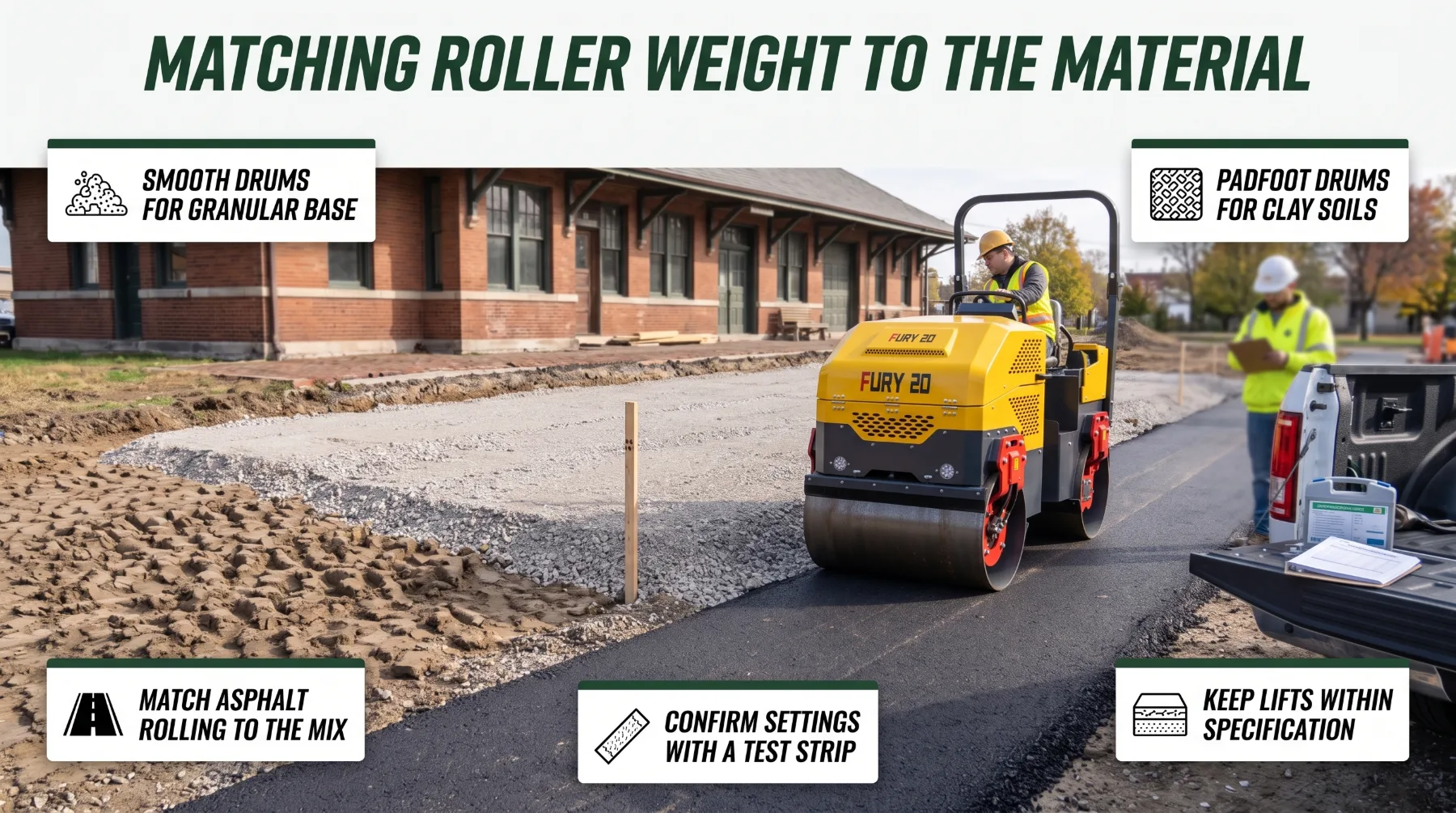
Different materials require different compaction methods to achieve the required density and surface quality. Selecting the right roller and adjusting its settings to suit the material and lift thickness helps prevent poor compaction and costly rework.
- Granular Materials: Sand, gravel, and crushed aggregate respond well to vibration. Smooth-drum vibratory rollers are commonly used, with amplitude and machine weight matched to lift thickness.
- Cohesive Soils: Clay and silty clay compact better through kneading and pressure. Padfoot rollers help compact these materials from the bottom of the lift upward.
- Asphalt Compaction: Tandem double-drum rollers and pneumatic tire rollers are commonly used for different rolling stages. Compaction depends on asphalt temperature, lift thickness, and timing.
- Correct Roller Settings: Excessive force can damage thin lifts or hot asphalt, while insufficient force may leave deeper layers loose. Follow project specifications and manufacturer recommendations.
- Test and Adjust: Use a test strip to determine the appropriate settings and number of passes. Reassess roller selection whenever material type or layer thickness changes to maintain consistent compaction quality.
Key takeaway: Granular materials, cohesive soils, and asphalt each need different compaction methods and roller types, so follow project specifications and manufacturer recommendations instead of assuming a heavier roller is always better.
The Role of Vibration in Compaction
Static weight alone can compact material, but vibration makes the process far more effective for many soils and aggregates. A vibratory roller uses rotating eccentric weights inside the drum to produce a rapid up-and-down motion. That motion transmits repeated energy into the material. With each cycle, particles shake loose from one another, rearrange, and settle into a tighter arrangement with fewer air voids. The result is higher density with fewer passes than a static roller of the same weight could achieve.
Two settings shape how that energy reaches the material. Amplitude describes how far the drum moves during each vibration cycle. Higher amplitude delivers more energy and penetrates deeper, which suits thicker lifts of granular soil and aggregate base. Lower amplitude delivers lighter, more controlled energy, which suits thinner lifts, finer materials, and asphalt. Frequency describes how many cycles occur each minute. Manufacturers set frequencies that work well for the materials each machine is designed to compact, and many rollers pair frequency with each amplitude setting automatically. Together, these settings produce the centrifugal force listed on most spec sheets.
Vibration settings, travel speed, material depth, and moisture all influence the result. Travel too fast, and each section of material receives too few impacts to compact properly. Travel too slowly, and you waste time and risk overcompacting the surface. Place material in lifts thicker than the roller can handle, and the bottom of the lift stays loose while the surface looks finished. Moisture matters most of all. Soil compacts best near its optimum moisture content, which a laboratory compaction test identifies. Material that’s too dry resists rearranging, while material that’s too wet can pump, rut, and fail to gain density.
Good technique protects the material and the machine. Engage vibration only while the roller is moving, and turn it off before stopping or reversing direction, since a vibrating drum held in one spot can create a depression or damage asphalt. Overlap each pass according to the project’s requirements, follow a consistent rolling pattern, and watch for signs that the material has reached its limit, such as the drum bouncing or the surface cracking. Many modern rollers include compaction measurement systems that indicate stiffness as you work. Where equipped, use them as a guide, and confirm results with density testing as the project requires.
Key takeaway: Vibration transmits repeated energy that helps particles pack tightly, and the results depend on amplitude, frequency, travel speed, lift thickness, and moisture working together.
Ground Conditions and Surface Protection
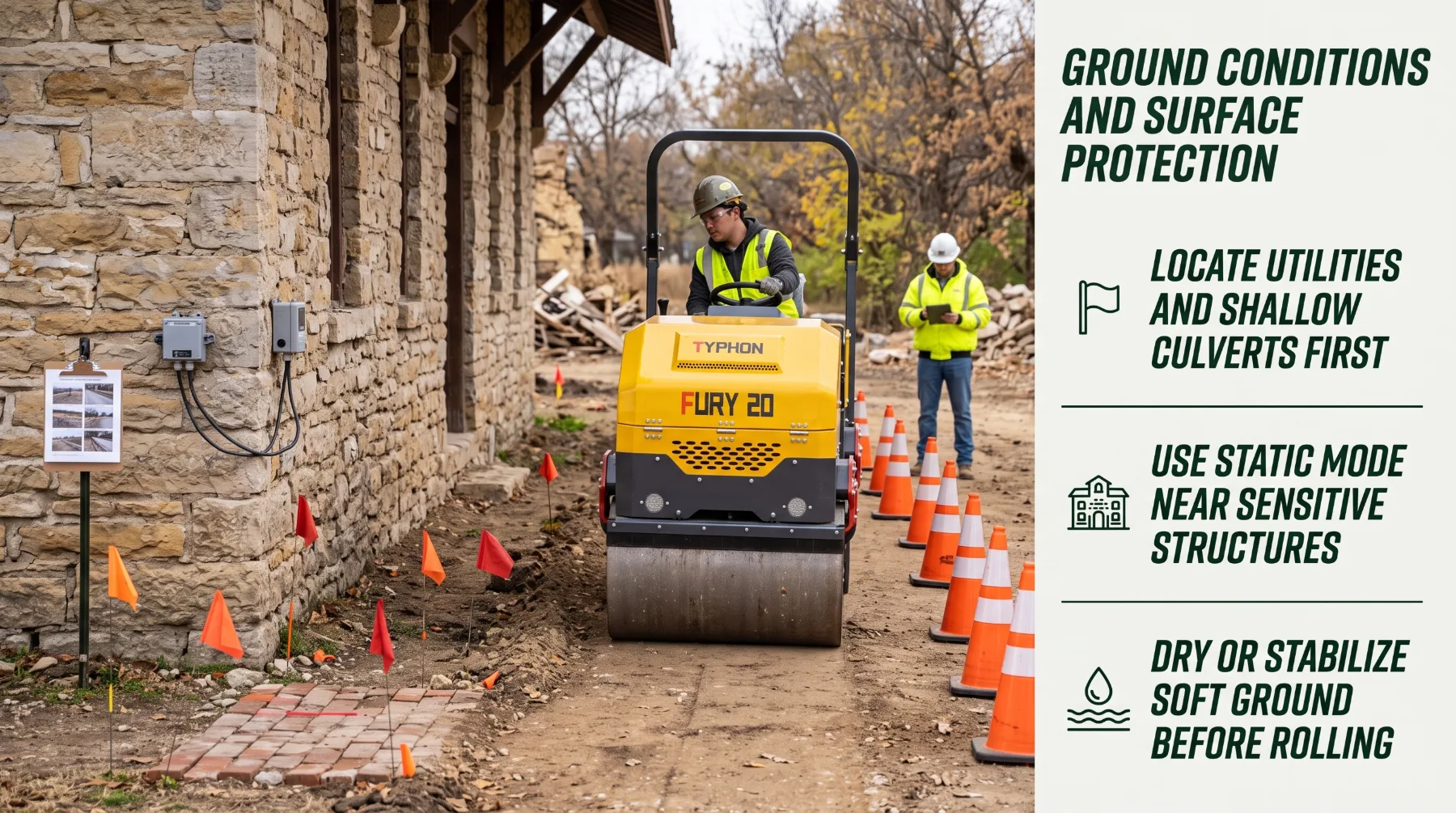
The ground beneath and around the work area shapes how a roller should operate. Excessive loading or unsuitable vibration can damage weak ground, disturb buried utilities, or create surface deformation. A setting that compacts aggregate base perfectly can cause rutting, pumping, or structural damage in different conditions just a few feet away.
Soft subgrades deserve particular attention. When the material beneath the layer you’re compacting can’t support the load, heavy rolling and strong vibration push it around instead of densifying it. Look for rutting, pumping, or ground that moves in waves ahead of the drum. Wet areas may need drying, moisture conditioning, stabilization, or removal and replacement before compaction can succeed. Recently placed materials and fresh fill may require a staged approach, beginning with lighter passes or static rolling before adding vibration. In some cases, a different roller type or a lighter machine is the better choice.
Buried utilities and nearby structures require planning before the first pass. Contact your local one-call locating service before work begins, which you can reach by calling 811 in the United States, and ask the property owner about private lines. Identify shallow utilities, culverts, tanks, and vaults, and confirm with the engineer whether they can carry the roller’s weight and vibration. Near foundations, retaining walls, older buildings, and other sensitive structures, vibration can travel through the ground and cause cracking or settlement. Follow the project’s requirements for vibration limits, switch to static mode or a lighter machine within agreed distances, document existing conditions with photos before work starts, and use vibration monitoring where the project calls for it.
Operator safety is part of protecting the work surface. Rollers can tip at the edges of embankments, trenches, and fresh fill, where the ground may give way under the drum. Keep the machine back from unsupported edges, and follow the manufacturer’s slope limits, which typically call for traveling straight up and down slopes rather than across them. Fasten the seat belt every time you operate a roller equipped with a rollover protective structure, since that structure only protects an operator who stays inside it. Keep workers on foot well clear of the roller’s path, especially when reversing, and use a spotter where visibility is limited. Operators should evaluate the surface before work and adjust the method according to project requirements and changing conditions.
Key takeaway: Weak ground, buried utilities, and nearby structures can be damaged by excessive loading or vibration, so evaluate the surface, use staged or static compaction where needed, and follow project requirements near sensitive features.
Maintenance and Compaction Consistency
A vibratory roller can only deliver consistent compaction when its components are in good condition. Drum condition, vibration components, engine performance, and hydraulic systems all affect how evenly the machine applies force pass after pass. Small mechanical issues often show up first as uneven density, inconsistent surface texture, or unusual vibration, long before they cause a breakdown.
Daily inspections should begin with the machine parked on firm, level ground, the vibration off, the parking brake engaged, the engine off, and the key removed. Many articulated rollers include a frame lock that must be installed before anyone works near the center joint, since the frames can pivot suddenly and create a crushing hazard. Apply lockout and tagout devices as your company and the manufacturer require.
Start with the drum. Inspect the drum shell for dents, cracks, and uneven wear, and check padfoot tips or shell kit fasteners where equipped. Examine the scrapers, which keep material from building up on the drum surface. Worn or poorly adjusted scrapers let soil and asphalt cling to the drum, which leaves an uneven surface and changes how the drum contacts the ground. Inspect the rubber isolation mounts that connect the drum to the frame. These mounts absorb vibration and keep it from reaching the operator and the rest of the machine. Cracked, torn, or separated mounts can cause uneven vibration and should be replaced according to the manufacturer’s instructions.
Check fluid levels as the manufacturer specifies, including engine oil, coolant, hydraulic fluid, fuel, and the oil in the vibratory system or drum, where the design requires it. Look for leaks around hoses, fittings, drive motors, and the drum housing. Never search for a hydraulic leak by running your hand along a hose, since pressurized fluid can penetrate skin and cause serious injury. Use a piece of cardboard instead. Test the warning devices, including the horn, backup alarm, lights, and seat belt. Confirm that the vibration controls engage and disengage correctly and that any automatic vibration shutoff works as designed. On asphalt rollers, check that the water spray system and nozzles deliver an even flow.
Record every inspection, defect, and repair in a maintenance log, along with the date and hour meter reading. Follow the manufacturer’s service intervals for filters, fluids, bearings, and the vibratory system. If you find a defect that affects safe operation or compaction performance, tag the machine out of service until a qualified technician completes the repair. Correct maintenance helps the roller deliver reliable performance across repeated passes and protects the quality of every layer you place.
Key takeaway: Inspect the drum, scrapers, isolation mounts, fluid levels, warning devices, and vibration controls daily, and follow the manufacturer’s maintenance schedule so the roller delivers consistent compaction on every pass.
Conclusion
Operating weight, ground pressure, and vibration determine how effectively a vibratory roller compacts different materials, so selecting the right machine requires matching all three to project conditions. Confirming what the stated operating weight includes, along with any installed options, helps ensure accurate transport planning and site access. Ground pressure depends on factors such as weight distribution, drum dimensions, and contact area, making it important to compare machines based on their actual design and intended application. Amplitude, travel speed, and lift thickness should suit the material and required density, while soil moisture should be adjusted toward the target established by laboratory testing. Smooth-drum rollers generally suit granular materials and asphalt applications, while padfoot drums are commonly used for cohesive soils. A heavier roller is not automatically the best choice, as excessive weight or vibration can damage sensitive surfaces, disturb nearby structures, or create instability on soft ground. Before work begins, confirm the roller’s operating weight with all installed options and check trailer capacity, towing limits, and access routes. Review project specifications for lift thickness, density targets, and testing requirements, then conduct a test strip to establish suitable settings and pass counts. Locate buried utilities, identify shallow culverts and sensitive structures, document existing conditions, and establish static zones or vibration limits where required. Inspect the site for soft ground, unsupported edges, and slopes, and complete daily checks of the drum, scrapers, isolation mounts, fluid levels, and safety systems. Matching machine weight, ground pressure, vibration settings, and material conditions helps achieve consistent compaction, protect surrounding infrastructure, and deliver durable surfaces that meet project specifications.
Frequently Asked Questions
What does operating weight mean for a vibratory roller?
It’s the machine’s weight in the manufacturer’s specified operating configuration, which may include fluids, standard equipment, and other defined items. Optional equipment such as cabs, padfoot shell kits, and blades can add weight, so confirm the actual configuration before planning transport or site access.
Does a heavier roller always compact better?
No. Compaction depends on material type, vibration characteristics, moisture, layer thickness, and the required density. A roller that’s too heavy for a thin lift or weak subgrade can overcompact the surface, crush aggregate, or cause rutting, while the right roller and settings reach density efficiently.
How does ground pressure affect compaction?
It describes how the machine’s load is distributed over its contact area and influences how the roller interacts with the surface. Drum width, drum design, and weight distribution all shape ground pressure. Many manufacturers also list static linear load, which helps compare the static force different drums deliver.
Why should roller settings match the material?
Different materials respond differently to static load and vibration. Granular soils respond well to vibration, cohesive soils need kneading action, and asphalt requires careful control of amplitude and timing. Appropriate settings help achieve the required density without damaging the surface, the layer below, or nearby structures.