Safe Operating Practices for Forklift Drivers and Warehouse Staff
Safe forklift operation depends on every employee following consistent procedures throughout each shift. Properly trained and authorized operators, thorough pre-use inspections, and effective separation between pedestrians and moving equipment form the foundation of a safe workplace. When these practices are overlooked, several small problems can combine into serious hazards. An operator unfamiliar with a specific truck type, an unchecked mechanical defect, a malfunctioning horn, damaged forks, or unmarked pedestrian routes can increase the risk of collisions, dropped loads, and equipment accidents. These risks are not always caused by equipment failure alone. In many cases, they result from procedures that are incomplete, inconsistent, or poorly enforced.
Improving forklift safety starts with identifying hazards and establishing clear responsibilities. Operators should receive appropriate training and practical evaluations before being authorized to use specific truck types. Pre-use inspections must involve actual checks rather than completed forms, and defective forklifts should be removed from service until qualified personnel finish the necessary repairs. Marked pedestrian walkways, designated crossings, protective barriers, and warning systems can help separate people from moving equipment. Safe load handling, secure loading dock procedures, and proper storage practices further reduce workplace risks. Written shift handoff records and timely reviews of near misses also help ensure that unresolved hazards are communicated and corrected before the next crew begins work.
Maintaining safe forklift operations requires consistent attention from operators, supervisors, maintenance personnel, and other warehouse employees. Following established procedures for training, inspections, pedestrian separation, load handling, travel, and communication helps protect workers while supporting efficient material movement. Regular safety reviews can reveal weaknesses as workloads increase, equipment changes, or warehouse layouts evolve. Reliable machinery is an important part of the operation, but equipment alone cannot prevent accidents. Consistent training, responsible equipment use, and effective workplace safety procedures are essential for reducing injuries, minimizing downtime, and keeping daily operations running smoothly.
Operator Training and Authorization
Operators should receive training and authorization appropriate to the specific forklift type and workplace. In the United States, OSHA generally requires formal instruction, practical training, and an evaluation of operator performance in the workplace. Training should cover truck controls, capacity, stability, inspections, and charging procedures, along with site-specific conditions such as aisles, ramps, loading docks, and pedestrian traffic. Experience with one truck type does not automatically qualify someone to operate another, as a walkie pallet jack and a sit-down counterbalance forklift handle differently.
Practical training should allow operators to demonstrate safe starting, stopping, turning, lifting, lowering, and parking procedures under realistic working conditions. They should also learn how different loads, floor surfaces, visibility restrictions, and travel routes affect forklift stability and control. Training should address the specific equipment and attachments used in daily operations, including any limitations that affect lifting capacity or maneuverability.
Employers should document operator evaluations and authorization, restrict forklift access to qualified personnel, and provide refresher training when required. Retraining may be necessary after an accident or near-miss, when workplace conditions change, when operators use a different truck type, or when an evaluation identifies unsafe practices. Regular supervision and follow-up assessments help reinforce correct procedures and identify training gaps before they contribute to an incident.
Safe Load Handling
Every forklift load must remain within the truck’s rated capacity under the actual operating conditions. The capacity plate identifies important limits, including rated load weight, load center, and restrictions associated with lift height or attachments. Load center refers to the horizontal distance from the vertical face of the forks to the load’s center of gravity. When a load extends farther forward or has uneven weight distribution, the forklift’s available lifting capacity may decrease even if the total weight remains unchanged.
Before lifting, operators should examine the load for damaged pallets, loose packaging, leaning cartons, unstable stacking, and protruding materials. Forks should be positioned evenly and inserted as far as practical beneath the load, with the spacing adjusted to provide proper support. Operators should account for any attachment installed on the truck because it can change the rated capacity and load center. If the load weight is unknown or exceeds the truck’s available capacity, it should not be lifted until the situation has been assessed. The benefits of proper forklift load handling include improved workplace safety, reduced product damage, greater material handling efficiency, and better load stability during lifting and transport.
Loads should be raised and lowered only when the forklift is appropriately positioned and stable, following the manufacturer’s operating instructions. Operators should keep people away from the area beneath and around elevated loads and avoid sudden movements that could shift materials. During travel, the load should remain low enough to maintain visibility and stability. If a load blocks the forward view, the operator should travel in reverse when safe to do so, looking in the direction of travel. Correct load handling reduces the risk of dropped materials, tip-overs, damaged inventory, and injuries.
Pre-Use Equipment Checks
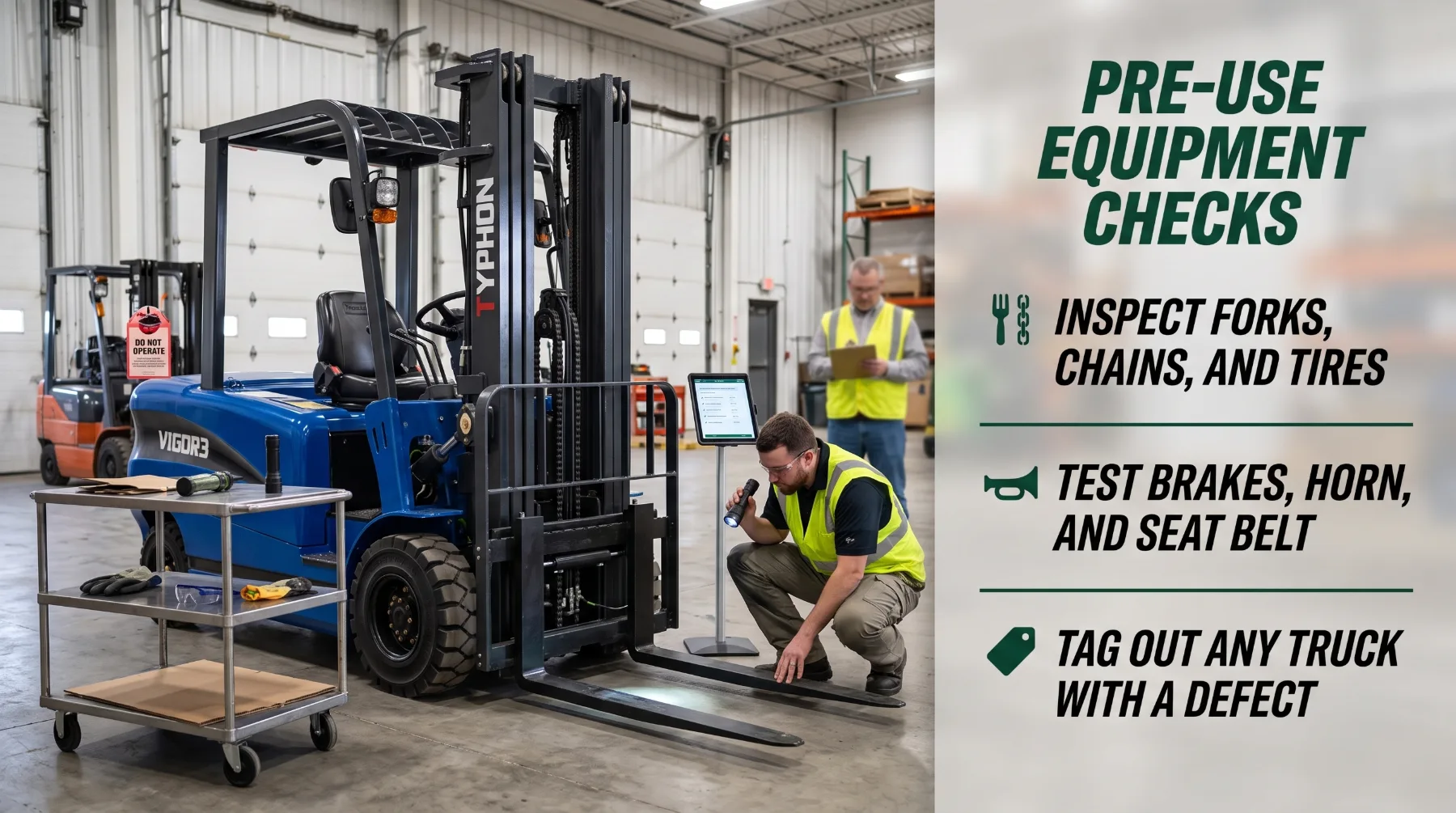
Forklifts should be inspected before being placed in service, at least daily, and after each shift when trucks operate continuously. Before starting the inspection, operators should park on a level surface, lower the forks, apply the parking brake, and turn off the truck. The visual check should cover forks, lift chains, hydraulic hoses, tires, wheels, the overhead guard, the load backrest, and the capacity plate. Hydraulic leaks should be investigated safely without using bare hands to locate escaping fluid.
Electric forklifts require additional attention to the battery restraint, cables, connectors, and charging components. Operators should look for damaged insulation, loose connections, corrosion, and other visible defects. For internal combustion forklifts, fuel lines, engine compartments, and other model-specific components should be checked according to the manufacturer’s instructions. Any unusual odor, visible leak, damaged component, or warning indicator should be investigated before the truck is used.
Once the visual inspection is complete, operators should test the service brakes, parking brake, steering, lift and tilt functions, horn, warning alarms, lights, and seat belt. Inspection findings should be recorded according to workplace procedures, and any defect that affects safe operation must be reported promptly. The forklift should be removed from service until a qualified technician completes the necessary repairs. Consistent inspections help identify developing problems early, reduce unexpected downtime, and maintain reliable equipment performance.
Traveling and Working at Docks
Forklifts should travel with the load kept low and the mast tilted back as appropriate for the truck and load. Speed should reflect traffic density, floor conditions, visibility, and the weight or dimensions of the material being transported. Operators should avoid abrupt turns, sudden braking, and rapid changes in direction because these actions can destabilize the truck. When a load blocks the forward view, traveling in reverse may be necessary, provided the route is clear and the operator can maintain visibility in the direction of travel.
Ramp procedures require particular attention because slopes can affect forklift stability. Loaded trucks should generally travel with the load facing upgrade, while unloaded trucks should travel with the forks facing downgrade, in accordance with the manufacturer’s instructions. Operators should not turn on a ramp or travel across a slope unless the truck’s operating instructions specifically permit the maneuver. Before entering a ramp, they should confirm that the surface is suitable, the route is unobstructed, and the load can be transported without compromising stability.
Loading docks introduce additional hazards involving moving trailers, dock edges, and differences in floor height. Before a forklift enters a trailer, the trailer should be secured using an appropriate vehicle restraint or wheel chocks, and the dockboard or leveler should be correctly positioned and rated for the equipment and load. Operators and drivers should follow an established communication system, such as dock lights or a controlled key procedure, to prevent premature trailer movement. Dock plates, trailer floors, and restraints should be inspected regularly, and any faulty equipment should be reported immediately rather than bypassed.
Pedestrian and Vehicle Separation
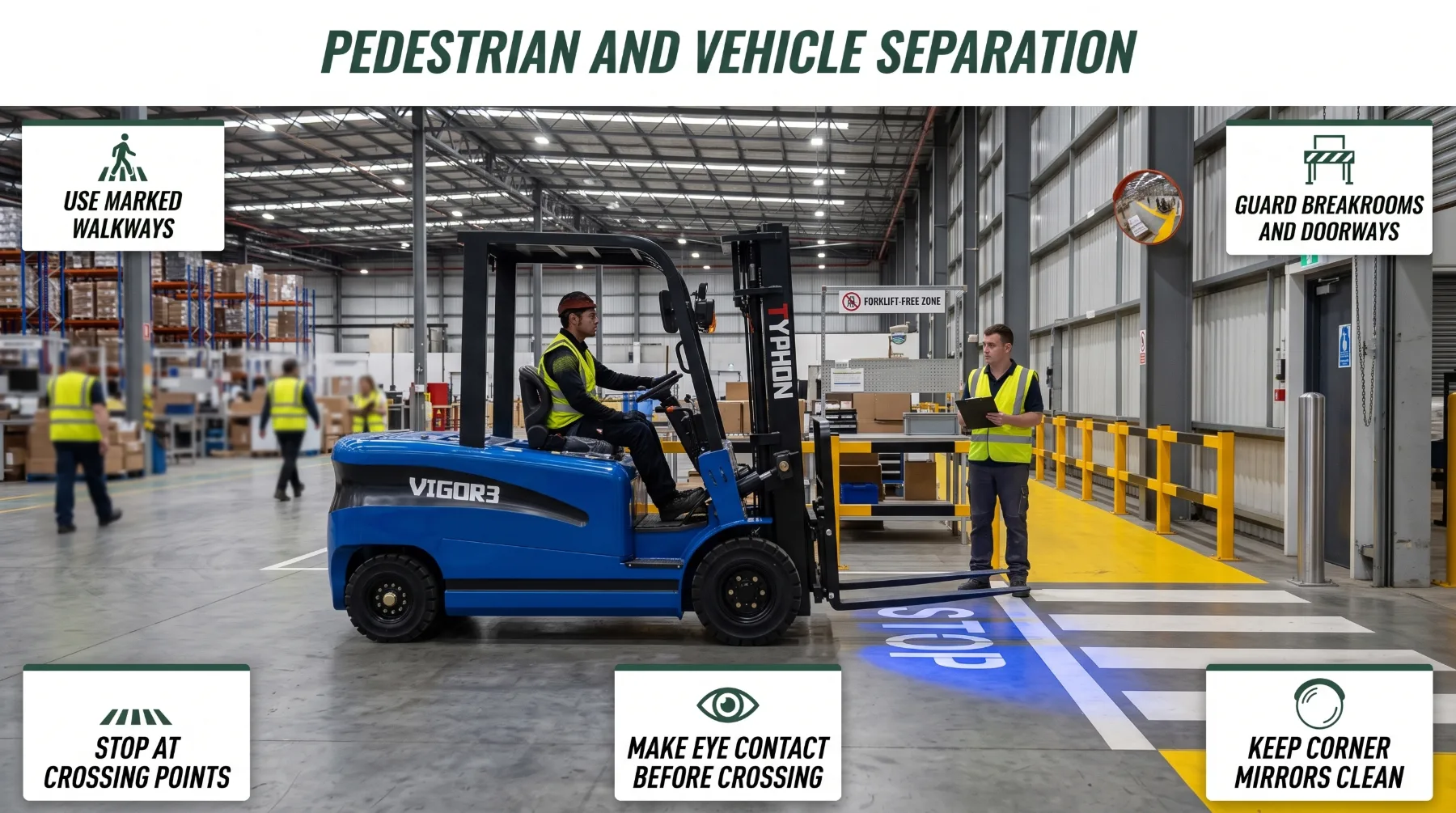
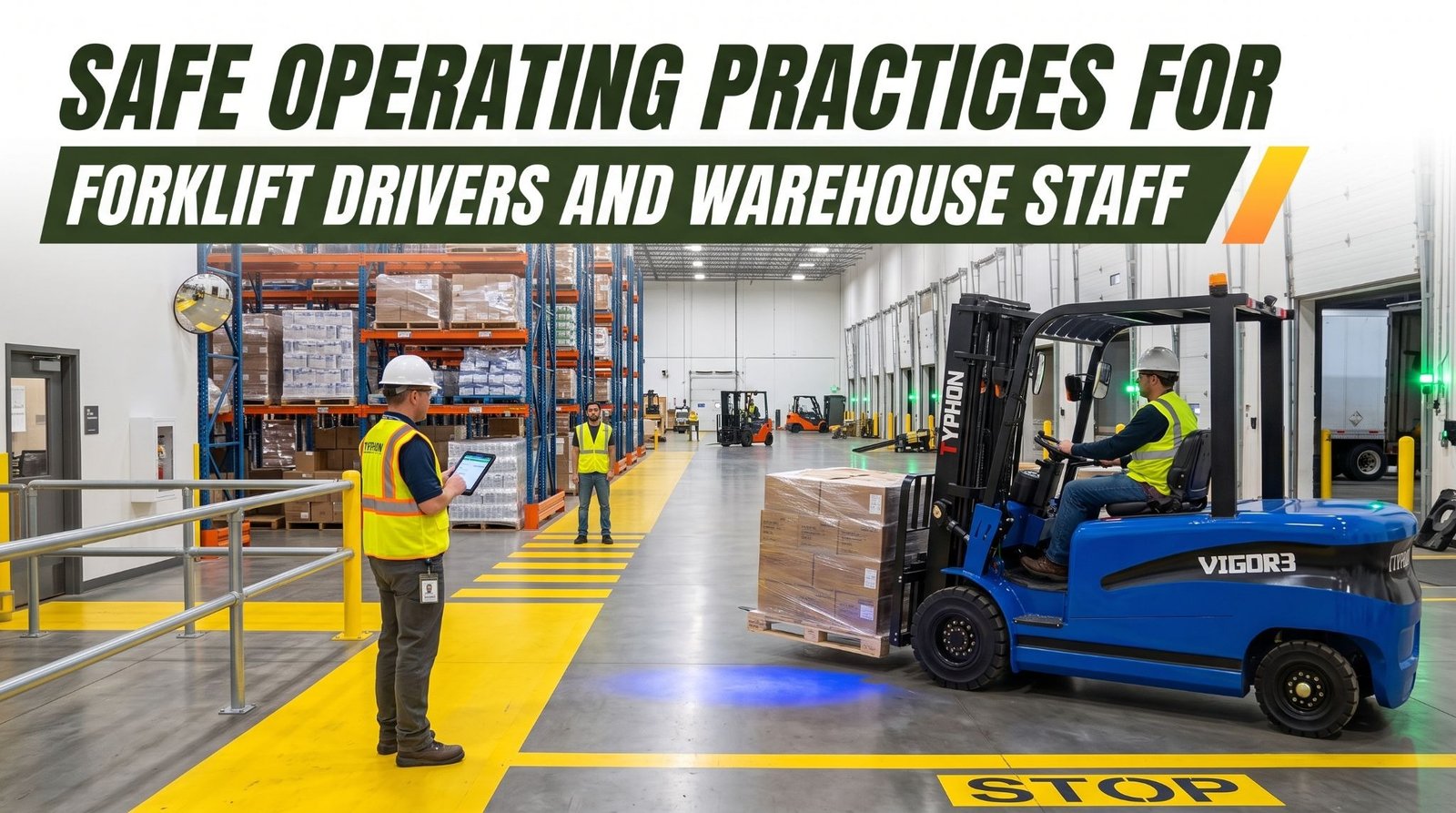
Pedestrians and forklifts frequently share warehouse space, making traffic separation an important part of workplace safety. Forklifts have blind spots created by the mast and load, while the counterweight swings outward during turns. Electric models may also operate quietly, making approaching vehicles difficult to hear. Where practical, facilities should establish separate pedestrian walkways, install protective guardrails, mark designated crossing points, and use convex mirrors at blind corners and aisle intersections.
Additional warning systems can improve visibility in busy work areas. Blue or red warning lights project visible signals onto the floor, helping pedestrians recognize an approaching forklift. Audible alarms, flashing beacons, floor markings, and traffic signs can provide further warnings, particularly near loading docks, warehouse doors, and intersections with limited visibility. These measures should complement physical separation rather than replace it wherever barriers or dedicated routes are practical.
Employees should use marked walkways, remain alert near operating equipment, and avoid distractions such as headphones in active forklift areas. Pedestrians should establish clear communication with operators before crossing a vehicle route and never walk beneath raised forks or suspended loads. Operators should obey posted speed limits, sound the horn at intersections and doorways, stop when visibility is restricted, and maintain enough distance to react safely. When a pedestrian enters the operating area unexpectedly, the operator should stop and proceed only when the path is clear.
Communication and Workplace Procedures
Clear communication helps coordinate forklift movements and maintain consistent safety practices across shifts. Operators and other employees should understand the workplace’s approved hand signals, radio procedures, and horn signals for intersections, doorways, and loading docks. When radio communication is used, messages should be brief and specific, identifying the location, intended movement, and any immediate hazard. Operators should stop when instructions are unclear or when a person enters the operating path unexpectedly.
Each shift should begin with a brief safety meeting that identifies equipment removed from service, damaged materials, recent near misses, and changes to traffic routes or work areas. A written handoff log can help communicate unresolved hazards between crews and prevent important information from being overlooked. Supervisors should ensure that inspection reports, maintenance records, and incident reports are available to the appropriate personnel. Consistent documentation also helps identify recurring equipment problems or unsafe traffic patterns that require corrective action.
Near misses and unsafe conditions should be reported promptly, recorded, and investigated so the underlying causes can be addressed. Emergency procedures should explain how employees must respond to tip-overs, falling loads, hydraulic leaks, fires, and medical emergencies. These procedures should be accessible to workers and reinforced through appropriate training and safety briefings. Regular reviews of workplace procedures, traffic arrangements, and operator practices help maintain awareness as warehouse operations change. A coordinated safety system makes it easier for employees to recognize hazards, communicate concerns, and prevent incidents before they result in injuries or equipment damage.
Conclusion
Safe forklift operations protect people and keep orders moving when every part of the system works together. Trained and authorized operators on the right truck type, honest pre-use inspections with defective trucks removed from service, clear separation between pedestrians and forklifts, loads handled within rated capacity, controlled travel with secure dock procedures, and consistent communication across every shift combine into a reliable daily practice. When drivers and warehouse staff hold to the same standards every shift, the building protects its people and delivers the dependable results customers depend on.
Frequently Asked Questions
Who should operate a forklift?
Only workers who have received the required training and authorization for the specific equipment and workplace conditions. Training must include formal instruction, practical hands-on exercises, and an evaluation of performance in the workplace. Experience on one truck type does not qualify an operator for a different type. Employers should document authorization, control access to keys, and require refresher training after accidents, near misses, changes in truck type, or any observed unsafe behavior.
Why should pedestrians avoid forklift routes?
Forklifts have blind spots created by the mast and load, swing their counterweight outward during turns, can be very quiet when electric, and need meaningful stopping distance. Pedestrians should use marked walkways and crossings, make eye contact with the operator before stepping into an aisle, wear high-visibility clothing, and avoid earbuds that block warning sounds. Physical barriers and forklift-free zones in busy pedestrian areas provide the most reliable protection.
What should drivers do with an unstable load?
Stop and arrange for the load to be secured or corrected before moving it. Unstable loads include broken pallets, torn or loose stretch wrap, crushed or leaning cartons, top-heavy stacks, overhanging material, and leaking containers. Moving an unstable load can drop material on people and shift the truck’s center of gravity in ways that increase the risk of a tip-over. The load should be rewrapped, restacked, or repalletized before lifting.
How can warehouses improve forklift safety?
Train and evaluate every operator on the exact truck type, require honest pre-use inspections with defective trucks tagged out of service, install marked walkways, barriers, crossings, mirrors, and warning lights where people and trucks share space, secure trailers with restraints or chocks before loading, coordinate dock work with drivers through a reliable communication system, hold daily safety huddles, and investigate and correct near misses within 24 hours.