Cold Storage Forklift Applications for Refrigerated Warehouse Operations
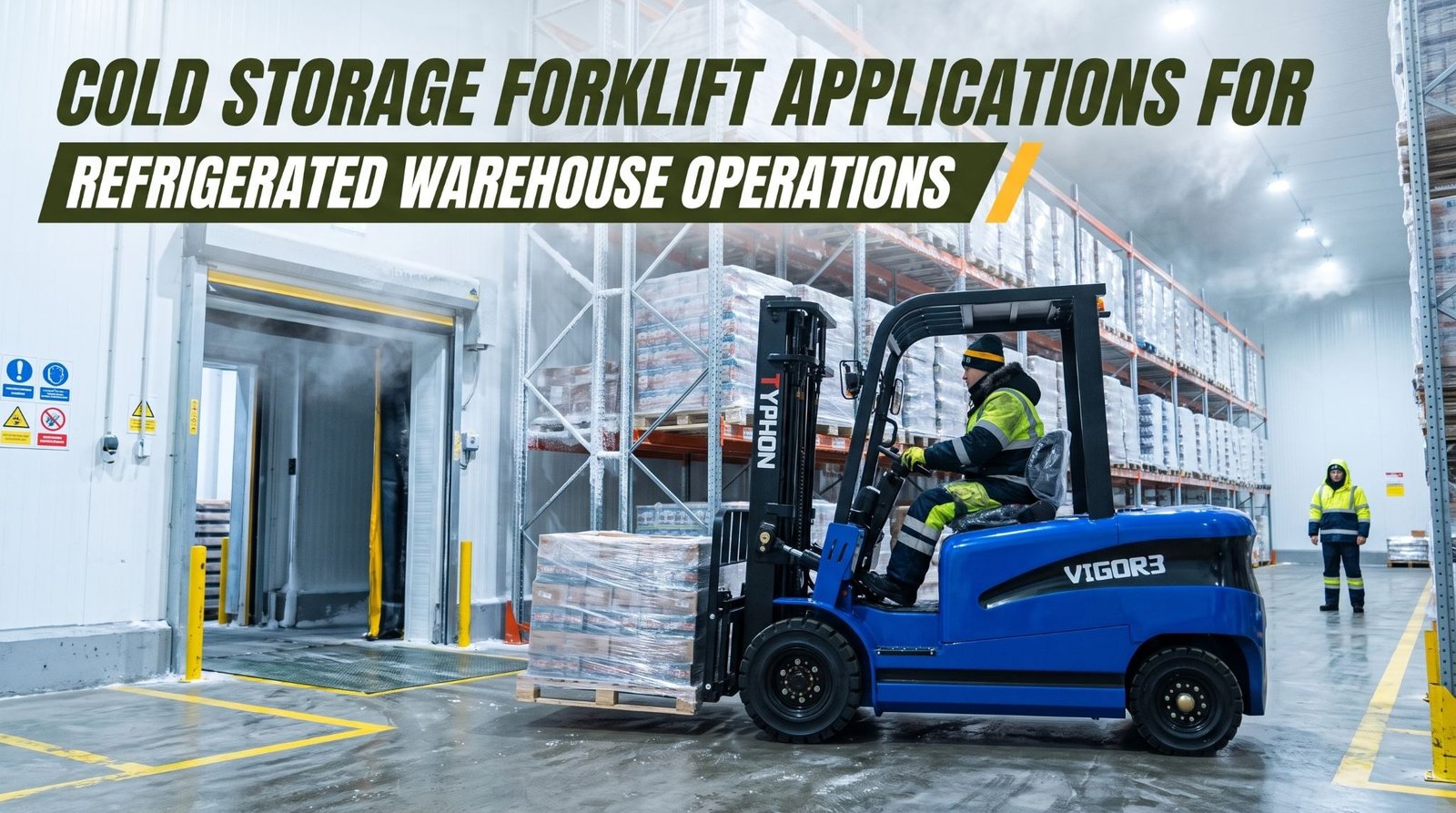
A pallet of frozen goods leaves the freezer, crosses a cold dock, and heads for a waiting refrigerated trailer. Within seconds, the forklift carrying it has moved through several temperature zones, each with its own humidity level. Few warehouse environments are as hard on equipment as this one. A forklift that performs well in a standard distribution center can lose battery capacity, collect condensation, and struggle for traction when it works the same routes in a refrigerated facility.
Refrigerated warehouses store food, beverages, pharmaceuticals, and other temperature-sensitive goods that must stay within specified conditions from receiving to dispatch. Forklifts keep that cold chain moving. They carry pallets from loading docks into chilled and frozen storage, between storage zones, through staging areas, and out to shipping. Every unnecessary delay, door opening, or equipment failure can put product quality at risk and disrupt the schedule.
Low temperatures affect almost every part of a forklift’s operation. Batteries deliver less available performance in the cold. Moisture forms when equipment moves between cold rooms and warmer areas. Floors can become slick with frost or ice, and operators wearing heavy protective clothing face reduced comfort and visibility. Lubricants, seals, tires, and electrical components all work under conditions that standard equipment may not be designed to handle.
Moving Temperature-Sensitive Products
Cold storage forklifts handle pallets at every stage of the refrigerated workflow. Operators unload incoming product at the dock, move it into chilled or frozen storage, transfer goods between temperature zones, and pull orders for shipment. Each step must happen efficiently so products spend as little time as possible outside their required conditions.
The forklift must suit the facility’s layout. Aisle width, rack height, pallet dimensions, and typical load weights all determine which truck types will work. Narrow-aisle designs such as reach trucks are common in high-density cold storage, where every cubic foot of refrigerated space carries a real cost. Counterbalance trucks often serve docks and staging areas, where loading and unloading drive the workload. Confirm that the forklift’s rated capacity covers your heaviest pallets at the required lift height and load center.
Efficient product movement also depends on how the warehouse operates. Well-organized inventory reduces travel distance and search time inside cold rooms. Planned routes and batched moves cut down on unnecessary door openings, each of which lets warm, moist air into cold areas. That air raises energy use and adds to frost and condensation problems. Rapid-roll doors, strip curtains, and air curtains can help, but disciplined traffic flow still makes the biggest difference.
Coordinate forklift work with receiving and dispatch schedules. When trailers arrive and depart on a predictable timetable, operators can stage product close to the dock without leaving it in warmer zones longer than necessary. That coordination protects product integrity and keeps the cold chain intact.
Key takeaway: Cold storage forklifts must match the facility’s aisle layout, rack height, pallet dimensions, and load requirements, while organized inventory and fewer door openings help keep temperature-sensitive products within specification.
Maintenance for Refrigerated Warehouse Use
Cold storage service places extra demands on batteries, electrical systems, lubricants, seals, tires, and mechanical components. Lubricants can thicken, seals can harden, and moisture can accelerate wear. A structured maintenance program helps catch these problems before they interrupt warehouse operations. Build your program around these five practices.
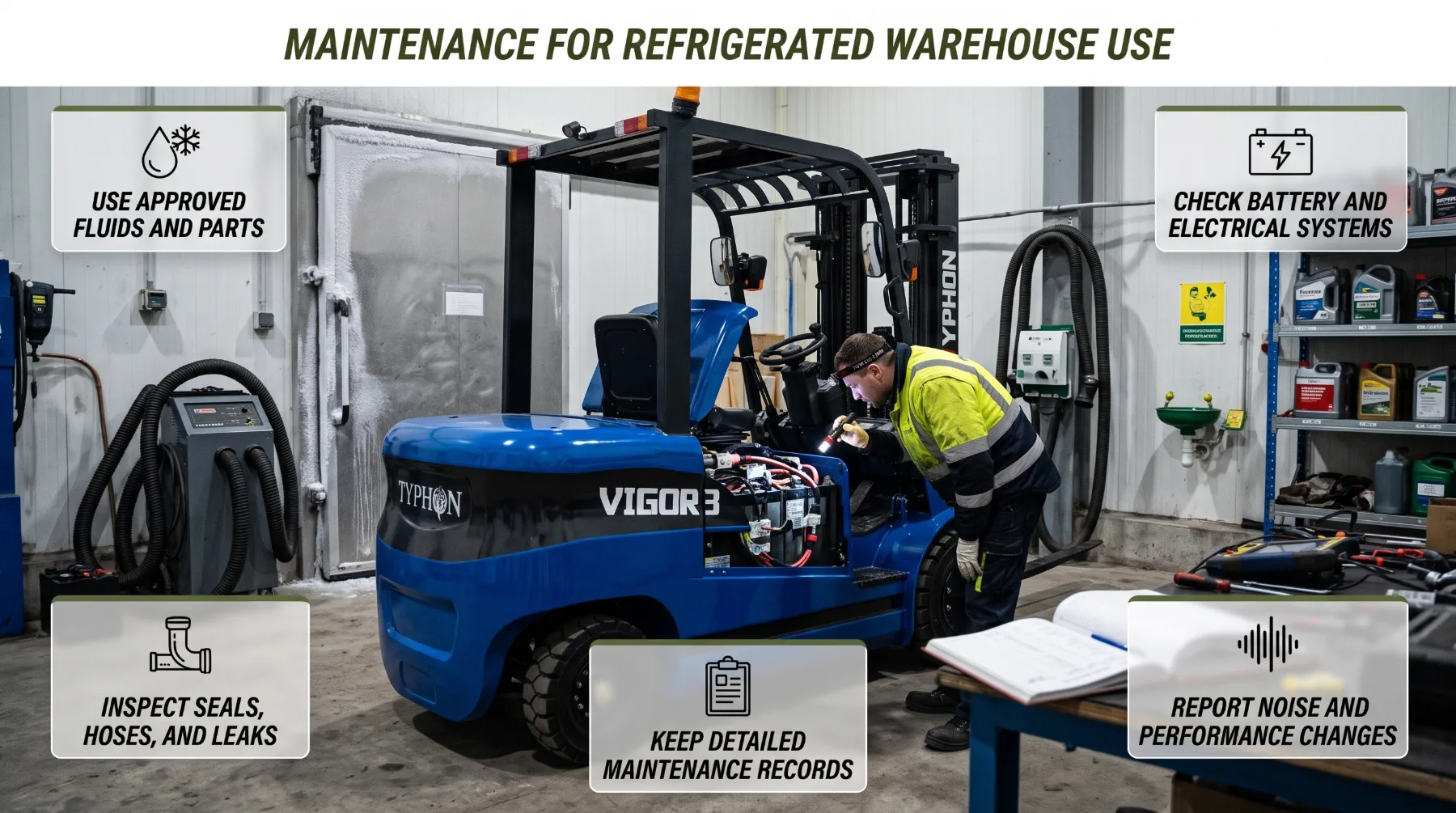
- Approved Fluids and Parts: Use lubricants, hydraulic fluids, and replacement parts approved by the manufacturer for the specified temperature range.
- Battery and Electrical Checks: Inspect battery condition, cables, connectors, and enclosures for reduced performance, damaged wiring, and moisture intrusion.
- Seals, Hoses, and Leaks: Check seals and hoses for hardening or cracking, and look for leaks that cold conditions may cause or worsen.
- Unusual Noise and Performance Changes: Report unusual sounds, sluggish response, or changes in lifting and travel performance as soon as they appear.
- Maintenance Records: Keep detailed service records to track recurring issues and identify patterns before they cause unplanned downtime.
Key takeaway: Approved fluids and parts, battery and electrical checks, seal and leak inspections, prompt reporting of performance changes, and detailed maintenance records protect cold storage forklifts from moisture and low-temperature wear.
Condensation, Moisture, and Electrical Components
Condensation forms when cold equipment meets warmer, more humid air. A forklift that has worked in a freezer and then drives onto a dock or into an ambient staging area can quickly collect moisture on its surfaces, controls, and components. When the truck returns to the cold, that moisture can freeze. Repeated cycles between zones make the problem worse over time.
Moisture creates real risks for a forklift. It can contribute to corrosion on metal parts, connectors, and fasteners. It can find its way into electrical enclosures, switches, and wiring, where it may cause intermittent faults, erratic controls, or component failure. Ice forming in moving parts or on control surfaces can also affect how the truck operates.
Equipment selection is the first line of defense. Choose forklifts approved for the intended temperature range and the conditions of your operation. Some trucks are available with cold storage options designed to protect electrical systems and components, depending on the manufacturer and model. Follow the manufacturer’s guidance on transitions between temperature zones, including any recommendations on how long equipment should remain in warmer areas.
Make electrical inspection a routine part of maintenance. Check connectors, electrical enclosures, cables, seals, and gaskets for moisture, corrosion, cracking, or damage. Report any intermittent electrical behavior promptly, since early faults often point to moisture intrusion that will worsen if ignored.
Key takeaway: Moving between cold and warm areas causes condensation that can lead to corrosion and electrical problems, so use forklifts approved for the temperature range, follow zone-transition guidance, and inspect electrical components regularly.
Battery Performance in Low Temperatures
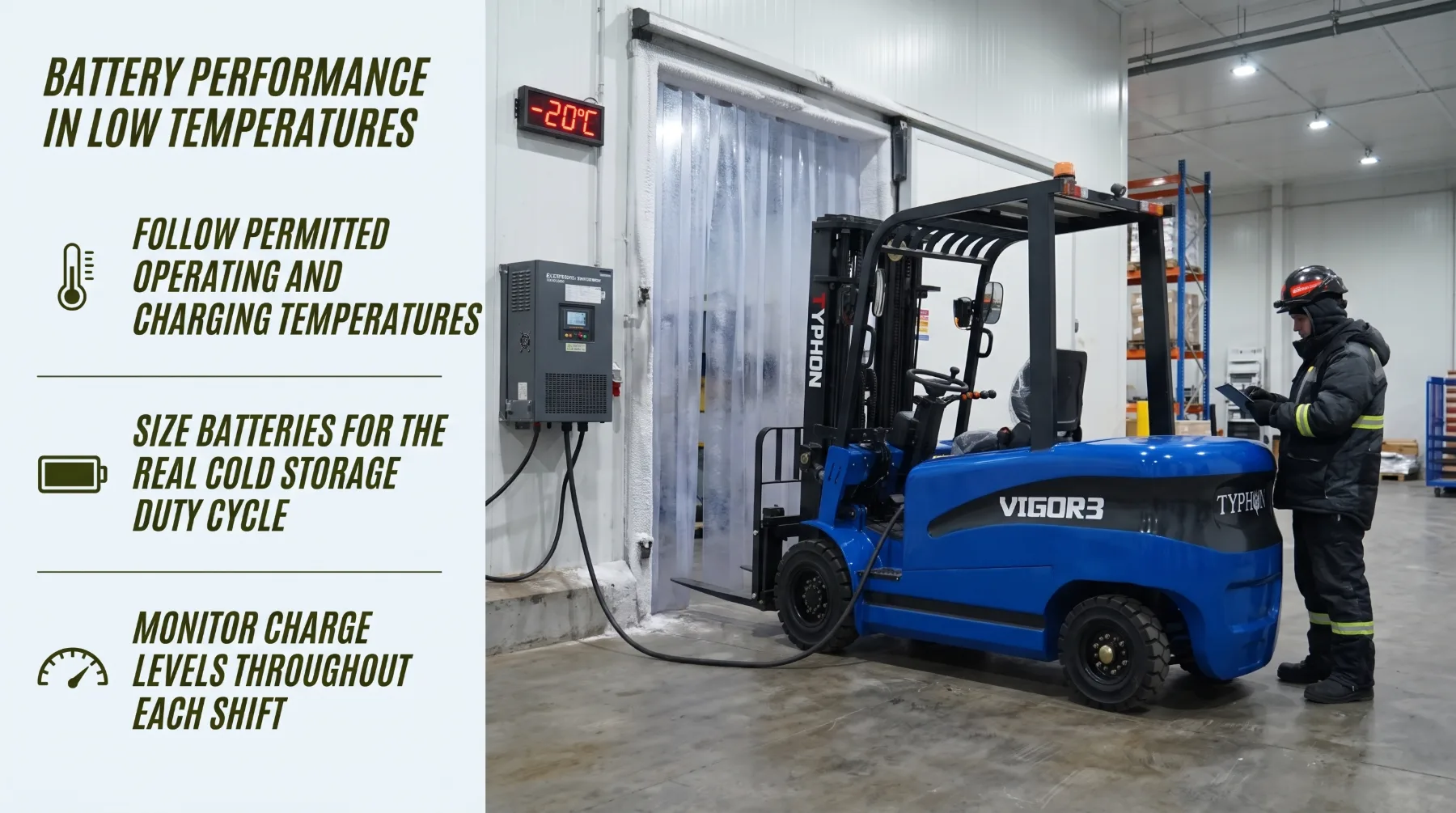
Battery behavior is one of the biggest challenges in refrigerated warehouse operations. Low temperatures can reduce the available performance of many forklift batteries, which means a truck may run for less time on a full charge than it would in a standard warehouse. Cold can also affect how a battery accepts a charge and how long charging takes.
The size of the effect depends on battery chemistry, operating temperature, battery age and condition, and how the forklift is used. Different chemistries respond to cold in different ways. Some have specific limits on charging below certain temperatures. Long periods inside freezers, combined with heavy lifting and frequent travel, place greater demand on the battery than short visits to a chilled area.
Consult both the battery and forklift manufacturers for permitted operating and charging temperatures. Many facilities locate chargers outside the coldest zones and follow the manufacturer’s guidance on when and how to charge after a battery has been in the cold. Never assume a charging practice that works in a standard warehouse will suit a freezer operation.
Capacity planning helps prevent mid-shift failures. Size batteries for the actual duty cycle, including time spent in the coldest zones. Monitor charge levels during shifts, and schedule opportunity charging or battery changes around breaks and slower periods. Track runtime over time, since a steady decline can signal a battery that needs attention before it causes unexpected downtime.
Key takeaway: Low temperatures can reduce battery performance and affect charging, so follow the manufacturers’ permitted operating and charging temperatures, size batteries for the real duty cycle, and monitor charge levels throughout each shift.
Tires, Traction, and Floor Conditions
Refrigerated warehouse floors can become slippery from moisture, frost, and ice. Condensation near doorways, frost on freezer floors, and spills that freeze in place all reduce traction. A forklift carrying a heavy pallet needs reliable grip to steer, stop, and turn safely, and lost traction can quickly lead to a collision, a dropped load, or a tip-over.
Tire selection must match the forklift’s approved configuration and the surface conditions. Different tire compounds and designs perform differently in the cold, and only tires approved by the manufacturer for the specific truck should be fitted. Replace worn tires promptly, since reduced tread or damaged surfaces lower grip on already slick floors.
Operator technique makes a major difference. Reduce speed in areas where traction is limited, particularly near doors, dock plates, and zone transitions. Avoid sudden turns, hard braking, and rapid acceleration, especially with a raised or heavy load. Follow designated travel paths, which should be planned to avoid known problem areas wherever possible.
Floor management is a shared responsibility. Report spills, frost buildup, and ice as soon as they appear, and address them according to facility procedures. Inspect floors regularly at doorways and transitions where moisture collects. Even a forklift designed for cold storage cannot safely compensate for an unsuitable or poorly maintained floor.
Key takeaway: Frost, ice, and moisture can make refrigerated floors slippery, so fit manufacturer-approved tires, reduce speed and avoid sudden movements where traction is limited, and report floor hazards promptly.
Visibility and Operator Comfort
Refrigerated environments challenge operators as much as equipment. Fogging on windshields, mirrors, and protective eyewear can occur when moving between temperature zones. Heavy protective clothing and gloves can reduce mobility and make controls harder to operate precisely. Long periods in the cold can lead to fatigue and reduced concentration.
Clear sightlines matter most when operators handle loads near high racks or travel through narrow aisles. Placing a pallet on an upper rack level requires a clear view of the forks, the load, and the rack beam. Fogged glass or poor lighting at that moment raises the risk of a dropped load or rack strike.
Facility managers can reduce these risks. Ensure lighting is adequate throughout cold rooms, aisles, and transition areas. Keep windshields, mirrors, and cameras clean and clear where fitted, and address fogging problems promptly. Some cold storage forklifts are available with enclosed or heated cabs, depending on the model, which can improve comfort and visibility for operators who spend extended time in freezers.
Provide operators with suitable protective clothing, gloves, and footwear that keep them warm without hindering control. Plan break arrangements and work practices to reflect the environmental conditions and applicable workplace requirements. Warm break areas, rotation between cold and ambient tasks, and adequate rest help operators stay alert and work safely throughout the shift.
Key takeaway: Fogging, protective clothing, and cold exposure can affect visibility and comfort, so maintain good lighting and clear glass, provide suitable protective equipment, and plan breaks and work practices around the conditions.
Conclusion
Cold storage forklifts keep refrigerated warehouses moving, and their reliability depends on equipment and procedures built for low temperatures and moisture exposure: forklifts must match the facility’s aisle layout, rack height, and load requirements while organized workflows limit door openings and protect product temperature; batteries need capacity planning, temperature-appropriate charging, and monitoring because cold reduces available performance; condensation from zone transitions calls for temperature-rated equipment and regular electrical inspections; frost, ice, and moisture require approved tires, controlled speeds, and prompt floor hazard reporting; operators need good lighting, clear sightlines, suitable protective equipment, and work practices that reflect the cold; and a disciplined maintenance program with approved fluids and parts, battery and electrical checks, seal inspections, and detailed records keeps every truck dependable. Before your next season of cold storage operations, confirm each forklift is approved for its operating temperature range, review battery sizing and charging arrangements with the manufacturer, map travel routes to avoid frost-prone areas, check tires and electrical components, provide operators with the right protective equipment, and update your maintenance schedule so your equipment protects both the goods you handle and the people who handle them.
Frequently Asked Questions
What is a cold storage forklift?
A cold storage forklift is configured or specified for operation in refrigerated or low-temperature environments. Depending on the model, it may include features designed to protect electrical systems, components, and operators in the cold. The permitted temperature range depends on the individual model, so always confirm it with the manufacturer.
Do cold temperatures affect forklift batteries?
Yes. Low temperatures can reduce available battery performance and affect how batteries accept a charge. The impact varies with battery chemistry, age, condition, and how long the truck spends in the cold. Follow the battery manufacturer’s operating and charging guidance.
Why is condensation a concern in refrigerated warehouses?
Condensation forms when cold equipment moves into warmer, more humid areas. That moisture can contribute to corrosion and electrical problems, and it may freeze when the forklift returns to the cold. Using temperature-rated equipment and inspecting electrical components regularly helps reduce the risk.
What should operators check before using a forklift in a cold room?
Check battery condition, tires, brakes, steering, lights, mirrors, and warning devices. Look for signs of moisture, ice, or frost on the truck and controls. Confirm the forklift is approved for the operating temperature, and make sure you have suitable protective clothing before entering the cold area.