Platform Capacity and Load Limits for Scissor Lift Operations
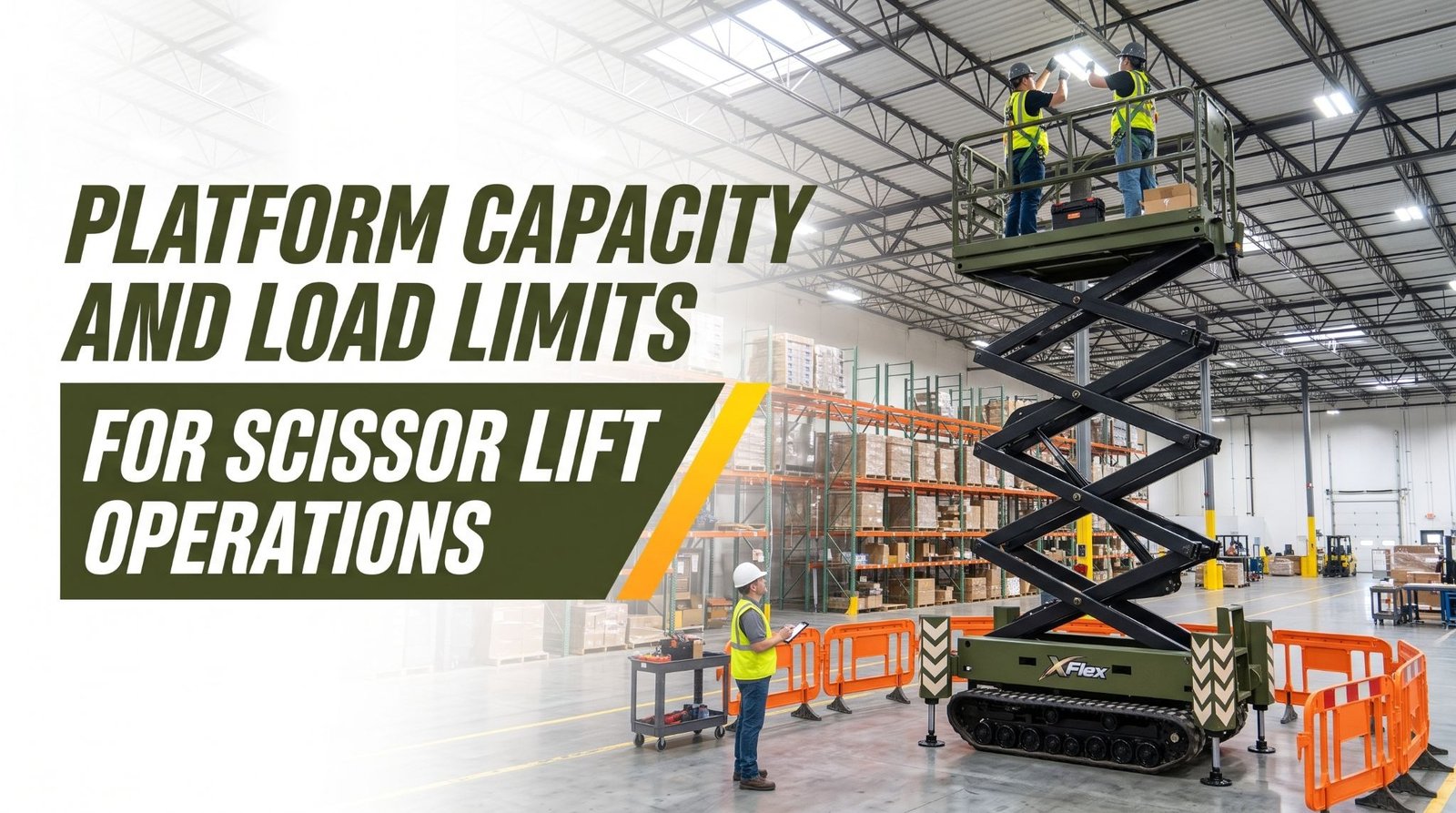
A facilities crew is replacing high-bay lighting in a distribution center. Two technicians step onto the scissor lift platform with tool belts, a cordless drill, a box of fixtures, and a coil of cable. Someone adds a case of replacement ballasts “just to save a trip.” Nobody adds up the weight. The lift rises, and the crew begins working near the ceiling without knowing whether the platform is within its rated limit.
That scenario plays out on construction sites, in warehouses, and at industrial facilities every day. Scissor lifts provide safe, stable elevated access for maintenance, installation, and inspection work, but only when people, tools, and materials stay within the platform’s rated capacity. Load limits are not conservative suggestions. They reflect how the manufacturer engineered the machine’s structure, hydraulics, and stability across its full operating range.
Understanding those limits protects your crew, your equipment, and your schedule. It also turns load planning into a routine part of the job instead of an afterthought.
Understanding Rated Platform Capacity
Rated platform capacity is the maximum combined load the manufacturer permits on the platform under specified conditions. It is the most important number on any scissor lift, and it should be confirmed before every job rather than assumed.
What the Rating Includes
Platform capacity covers everything carried on the deck. That includes:
- Every occupant, including the operator
- Clothing, PPE, harnesses, and tool belts
- Hand tools, power tools, and equipment cases
- Materials, fixtures, components, and supplies
- Any approved accessories mounted to the platform, where the manufacturer counts them toward capacity
If it rides up with the platform, it counts.
Conditions the Rating Applies Under
A capacity rating applies only under the conditions the manufacturer specifies. Those conditions commonly include:
- Maximum number of occupants, which is a separate limit from total weight
- Platform configuration, such as whether an extension deck is retracted or extended
- Operating environment, since many models carry different ratings for indoor and outdoor use
- Firm, level supporting surfaces within the machine’s permitted slope limits provide stable support during lifting operations and help reduce the risk of tipping or losing load stability.
- Wind conditions at or below the manufacturer’s stated limit for outdoor-rated machines
Change any of these, and the permitted load may change too.
How to Verify Capacity
Never rely on a general estimate, a similar model’s rating, or what a coworker remembers. Verify capacity from:
- The capacity decal on the platform, which typically states maximum load, maximum occupants, and any configuration-specific limits
- The operator’s manual for the exact make, model, and configuration
- Rental or fleet documentation, which should match the machine on site
If the capacity decal is missing, damaged, or unreadable, remove the machine from service until it is replaced. An unlabeled platform leaves operators guessing about the most critical limit on the machine.
Load-Sensing Systems
Many modern scissor lifts include load-sensing systems that detect an overloaded platform and prevent elevation or sound an alarm. These systems add a valuable layer of protection, but they do not replace load planning. Sensors can be miscalibrated or damaged, and they generally can’t detect poor load distribution. Treat any overload warning as a firm stop, and never bypass or disable a load-sensing system.
Key takeaway: Rated platform capacity is the maximum combined weight of occupants, tools, and materials under the manufacturer’s specified conditions, so verify it from the platform decal and operator’s manual for the exact machine before every job.
Ground Conditions and Environmental Factors
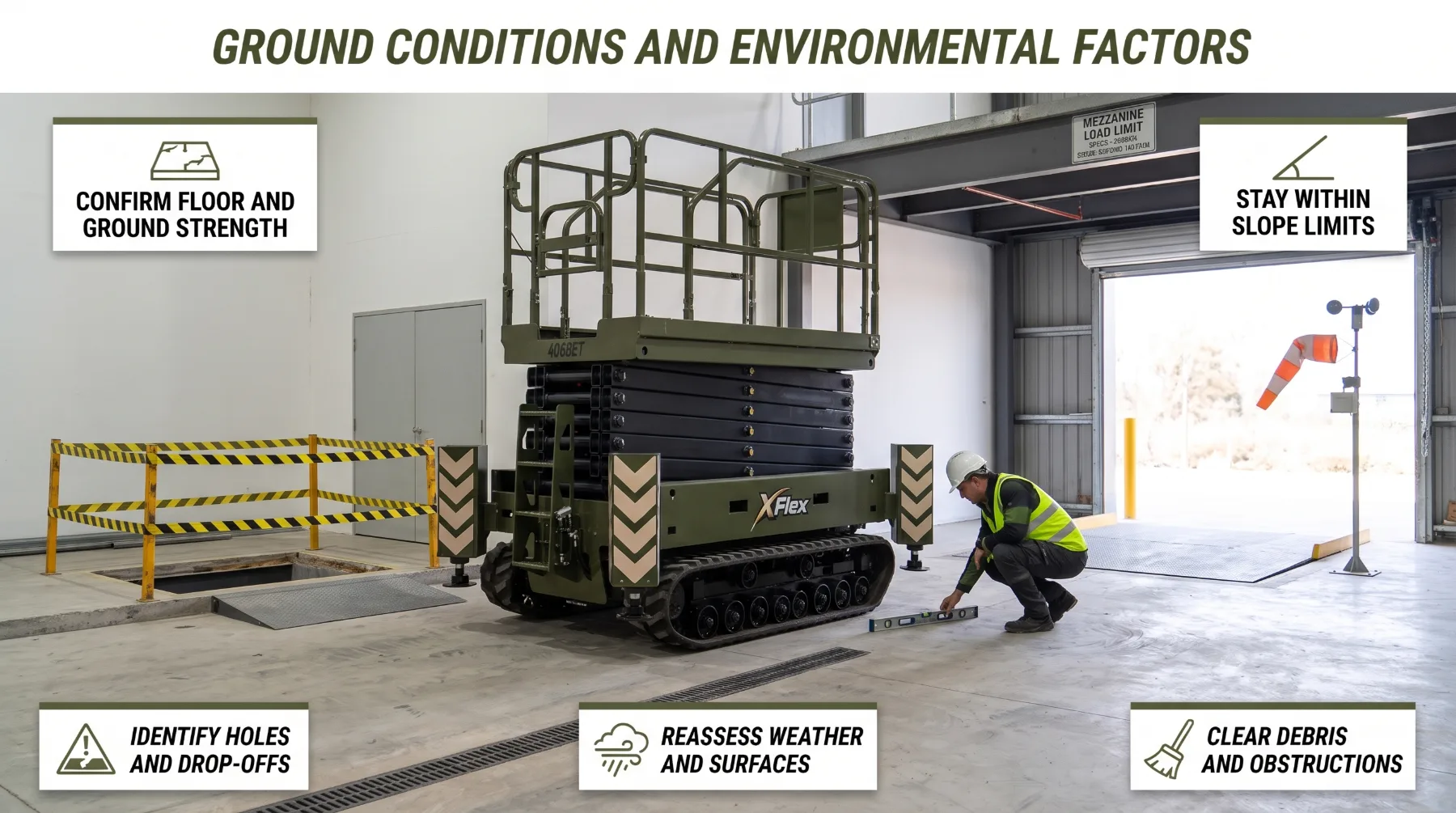
A scissor lift’s stability depends on what lies beneath it. Even a correctly loaded platform can become unstable if the supporting surface fails, slopes beyond limits, or contains hidden hazards. Assess the work area before positioning the machine using these five checks.
- Floor and Ground Strength: Confirm that slabs, mezzanines, elevated decks, and outdoor surfaces can support the machine’s weight plus its full platform load.
- Slope Limits: Verify that the surface stays within the manufacturer’s permitted slope for travel and elevation, and heed tilt alarms immediately.
- Holes, Openings, and Drop-Offs: Identify floor openings, trench covers, drains, dock edges, and uneven transitions along the route and at the work position.
- Debris and Obstructions: Clear cords, materials, offcuts, and loose objects that could cause wheels to drop, slip, or lurch.
- Weather and Surface Changes: Check outdoor surfaces for softening from rain, frost, or recent excavation, and reassess conditions throughout the shift.
Floor Strength and Load Concentration
A scissor lift concentrates its weight and platform load through its wheels into small contact areas. Older floors, suspended slabs, mezzanines, and elevated decks may not be rated for that concentrated load. Check structural ratings with the facility manager or project engineer where there is any doubt, and use approved load-spreading methods where required.
Slopes and Tilt Alarms
Most scissor lifts include a tilt sensor that sounds an alarm and restricts elevation or drive functions when the machine exceeds its permitted slope. If the tilt alarm activates, stop, lower the platform as instructed, and reposition the machine on suitable ground. Never ignore or override a tilt warning.
Pothole Protection and Floor Hazards
Many scissor lifts deploy pothole protection bars when the platform rises. These help reduce the risk of a wheel dropping into a depression, but they are not a substitute for inspecting the floor. Floor openings, unprotected edges, and drains can still cause serious incidents. Barricade or cover openings before work begins.
Outdoor Environments
Rough-terrain scissor lifts are designed for outdoor construction sites, but they still require firm, suitable ground. Soft soil, fresh backfill, and saturated surfaces can let a wheel sink as the platform rises. Some rough-terrain models include leveling outriggers, which must be deployed as the manufacturer specifies. Weather can change ground conditions quickly, so reassess as conditions evolve.
Key takeaway: Confirm floor and ground strength, stay within slope limits, identify holes and drop-offs, clear debris, and reassess outdoor surfaces as weather changes, because a correctly loaded platform is only as stable as the ground beneath it.
Load Distribution and Platform Stability
Total weight is only half of the equation. Where that weight sits on the platform also affects stability. A load can stay below the rated capacity and still create an unsafe condition if it is concentrated in the wrong place.
A scissor lift is engineered to support its rated load distributed across the platform as the manufacturer specifies. When heavy items are stacked at one end, piled against a corner, or concentrated on an extension deck, they shift the machine’s center of gravity. As the platform rises, that shift has a greater effect on stability. Watch for common mistakes such as stacking heavy materials at one end, loading the extension deck beyond its specific rating, allowing materials to overhang the platform edge, leaning heavy items against guardrails, or hanging tools and cords from the outside of the rails. Guardrails are designed to protect occupants from falls, not to support hanging loads or act as material racks.
Follow the manufacturer’s instructions for load placement. Spread heavy items evenly across the deck, keep materials within the platform’s footprint, secure loose items so they can’t shift or fall, and keep walking space clear. Long materials such as pipe or conduit deserve extra care. If they can’t be carried safely within the platform’s dimensions, use a different lifting method. Never use planks, ladders, buckets, or boxes to gain extra height or reach from the platform, and never build makeshift extensions beyond the guardrails. These practices concentrate loads, raise the occupants’ center of gravity, and defeat the protection the guardrails provide. Use only extension decks and accessories specifically approved for the machine.
Pushing, pulling, or prying from the platform also creates side forces that affect stability. Drilling into a ceiling, pulling cable, or forcing a component into position all apply horizontal force. Many manufacturers specify a maximum manual side force. Follow that limit, and avoid tasks that require heavy pushing or pulling while elevated.
Key takeaway: Distribute loads evenly within the platform footprint, never hang materials from guardrails or exceed extension deck ratings, avoid improvised height extensions, and respect the manufacturer’s side force limits.
Total weight is only half of the equation. Where that weight sits on the platform also affects stability. A load can stay below the rated capacity and still create an unsafe condition if it is concentrated in the wrong place.
Why Placement Matters
A scissor lift is engineered to support its rated load distributed across the platform as the manufacturer specifies. When heavy items are stacked at one end, piled against a corner, or concentrated on an extension deck, they shift the machine’s center of gravity. As the platform rises, that shift has a greater effect on stability.
Common Distribution Mistakes
Watch for these practices on every job:
- Stacking heavy materials at one end of the platform
- Loading the extension deck beyond its specific rating
- Allowing materials to overhang guardrails or the platform edge
- Leaning heavy items against guardrails
- Hanging tools, cords, or materials from the outside of the rails
Guardrails are designed to protect occupants from falls. They are not designed to support hanging loads or act as material racks.
Secure and Distribute Materials
Follow the manufacturer’s instructions for load placement. In general:
- Spread heavy items evenly across the deck
- Keep materials within the platform’s footprint
- Secure loose items so they can’t shift, roll, or fall
- Keep walking space clear so workers can move without tripping
Long materials such as pipe or conduit deserve extra care. If they can’t be carried safely within the platform’s dimensions, use a different lifting method.
No Improvised Extensions or Supports
Never use planks, ladders, buckets, or boxes to gain extra height or reach from the platform. Never build makeshift extensions beyond the guardrails. These practices concentrate loads, raise the occupants’ center of gravity, and defeat the protection the guardrails provide. Use only extension decks and accessories specifically approved for the machine.
Horizontal Forces Count Too
Pushing, pulling, or prying from the platform creates side forces that affect stability. Drilling into a ceiling, pulling cable, or forcing a component into position all apply horizontal force. Many manufacturers specify a maximum manual side force. Follow that limit, and avoid tasks that require heavy pushing or pulling while elevated.
Key takeaway: Distribute loads evenly within the platform footprint, never hang materials from guardrails or exceed extension deck ratings, avoid improvised height extensions, and respect the manufacturer’s side force limits.
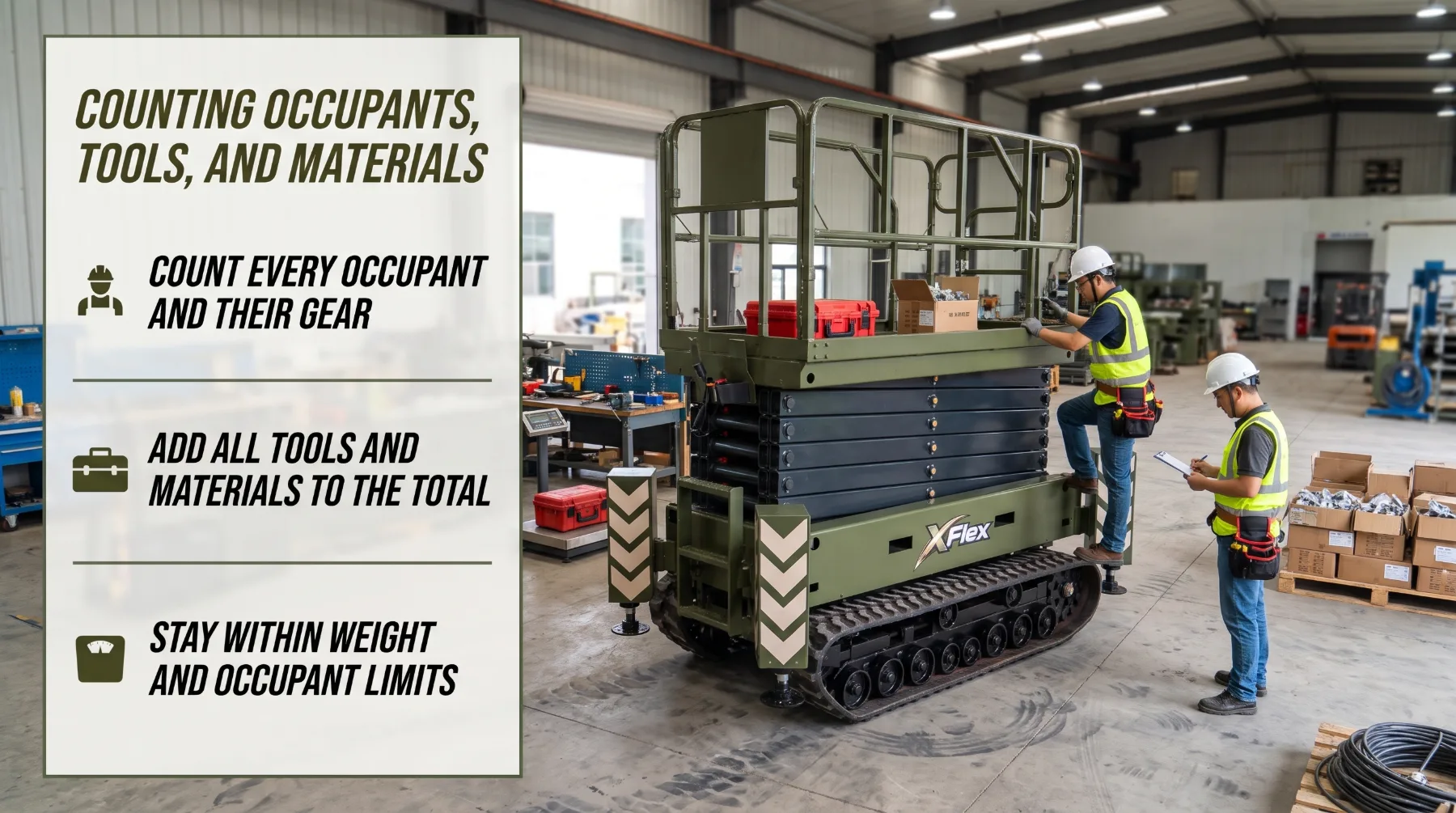
Counting Occupants, Tools, and Materials
Overloading rarely happens because someone deliberately exceeds the limit. It happens because no one added up the load. A simple calculation before elevating keeps every lift within its rating.
Occupants Come First
Occupants usually account for most of the platform load. Count each person’s body weight plus everything they wear and carry. Heavy work boots, harnesses, tool belts, and cold-weather gear can add significant weight per worker. Also confirm that the number of people stays within the maximum occupant limit, even when their combined weight is below the capacity figure.
Tools Add Up Quickly
Individual tools may seem light, but they accumulate fast. A typical maintenance setup may include:
- Cordless drills, impact drivers, and spare batteries
- Saws, grinders, or cutting tools
- Toolboxes and equipment cases
- Extension cords and cable reels
- Testing and measuring instruments
Weigh heavy items or check their published weights, especially equipment cases that are packed differently from job to job.
Materials Are the Biggest Variable
Materials change from task to task and often push a platform over its limit. Light fixtures, ductwork sections, sprinkler pipe, drywall, conduit, and boxes of fasteners all carry real weight. Bring up only the quantity needed for the immediate task. Making an extra trip to the ground takes minutes. An overloaded platform puts the entire crew at risk.
Recalculate When the Load Changes
Loads shift throughout a shift. Materials come down as they’re installed, tools are swapped, and workers rotate. Recalculate whenever you add materials, change crew members, or switch tasks. Make load checks part of every pre-lift routine.
Key takeaway: Add up every occupant, tool, and material before elevating, stay within both the weight limit and the maximum occupant count, and recalculate whenever crew, tools, or materials change.
Pre-Use Inspection and Safe Work Practices
Load planning works best as part of a consistent pre-use routine. Daily inspections confirm that the machine’s safety systems are functioning, while disciplined work practices keep every lift within its limits.
Pre-Use Inspection Checklist
Before each shift, inspect:
- Capacity and warning decals for presence and legibility
- Guardrails, toeboards, and entry gate for damage, secure mounting, and self-closing function
- Platform deck and extension for cracks, damage, and smooth extension and locking
- Tires or wheels for damage, wear, and proper condition
- Brakes and drive controls for correct response
- Platform and ground controls for proper function
- Emergency stop buttons at both control stations
- Emergency lowering system to confirm the platform can be lowered if power fails
- Load-sensing and tilt alarms where fitted
- Pothole protection system for proper deployment
- Hydraulic system for leaks, damaged hoses, and correct fluid level
- Battery and charger on electric models, including cables and connections
Follow the manufacturer’s inspection checklist and your site’s procedures. Tag out and report any defect before the machine is used.
Operator Training and Familiarization
Operators must be trained on scissor lift operation and familiarized with the specific model they will use. Familiarization should cover the location of the capacity decal, control functions, emergency lowering, load-sensing behavior, and any configuration-specific limits. Training requirements vary by jurisdiction, so follow the applicable workplace rules for aerial work platforms.
Safe Work Practices on the Platform
Keep these practices in place on every lift:
- Close and secure the entry gate before elevating
- Keep both feet on the platform deck at all times
- Never sit, stand, or climb on guardrails or midrails
- Use fall protection when required by the manufacturer, site rules, or applicable regulations
- Never exceed the rated load or occupant limit
- Keep tools and materials secured to prevent falling objects
- Watch for overhead hazards such as beams, ductwork, and power lines
Protect People Below
Falling tools and materials pose a serious risk to people beneath the platform. Establish exclusion zones around the lift, use barricades where foot traffic is heavy, and keep the area below the work zone clear. Tool lanyards and secured material containers add another layer of protection.
Stop When Limits Are in Doubt
If anyone is unsure whether the load, wind, surface, or configuration is within limits, lower the platform and resolve the question on the ground. Building a culture where workers feel confident pausing work protects both people and equipment.
Key takeaway: Inspect capacity decals, guardrails, controls, emergency systems, alarms, and the platform before every shift, train operators on the specific model, and follow safe platform practices that keep every lift within its rated load.
Conclusion
Scissor lift platform capacity includes the combined weight of all occupants, tools, and materials on the deck and applies only under the manufacturer’s specified conditions. Checking the capacity decal and operator’s manual establishes the correct weight and occupant limits for the machine. Operators must calculate the total load before each lift and reassess it whenever crew members, tools, or materials change. Even weight distribution, secured materials, and approved platform extensions help maintain stability, while extension deck ratings, indoor and outdoor operating limits, and wind restrictions must also be considered. Firm, level ground free from holes, debris, and other hazards provides a stable working surface, and regular pre-use inspections help confirm that safety systems are functioning correctly. For each elevated task, verify the rated capacity and occupant limit for the exact machine configuration, then calculate the combined weight of the crew, tools, and materials. Plan load placement to avoid uneven distribution, secure loose items, and confirm that any extension deck remains within its individual rating. Assess ground conditions, overhead and surrounding hazards, and applicable wind limits before raising the platform. Inspect guardrails, controls, tires, brakes, emergency lowering systems, and other safety devices, and remove the lift from service if a defect affects safe operation. Consistent load calculations, site assessments, and equipment checks help crews maintain a safe operating margin while improving confidence and efficiency at height.
Frequently Asked Questions
Does platform capacity include the operator?
Yes. Every occupant, including the operator, counts toward the total platform load. Their clothing, PPE, harnesses, and tool belts count as well. The number of occupants must also stay within the machine’s maximum occupant limit.
Can tools and materials be added if the platform is not full?
Only if their combined weight, along with all occupants, remains within the rated capacity and they can be carried and secured safely within the platform’s footprint. Available deck space doesn’t indicate available capacity. Calculate the total load before adding anything.
Does load distribution matter?
Yes. Uneven or concentrated loads can shift the machine’s center of gravity and create hazards even when the total weight is below the rated limit. Spread heavy items evenly, keep materials within the platform, follow extension deck ratings, and never hang loads from guardrails.
Where can operators find the correct capacity?
Check the capacity decal on the platform and the operator’s manual for the exact make, model, and configuration. These sources typically list total capacity, maximum occupants, extension deck limits, and indoor or outdoor ratings. If the decal is missing or unreadable, remove the machine from service until it is replaced.