
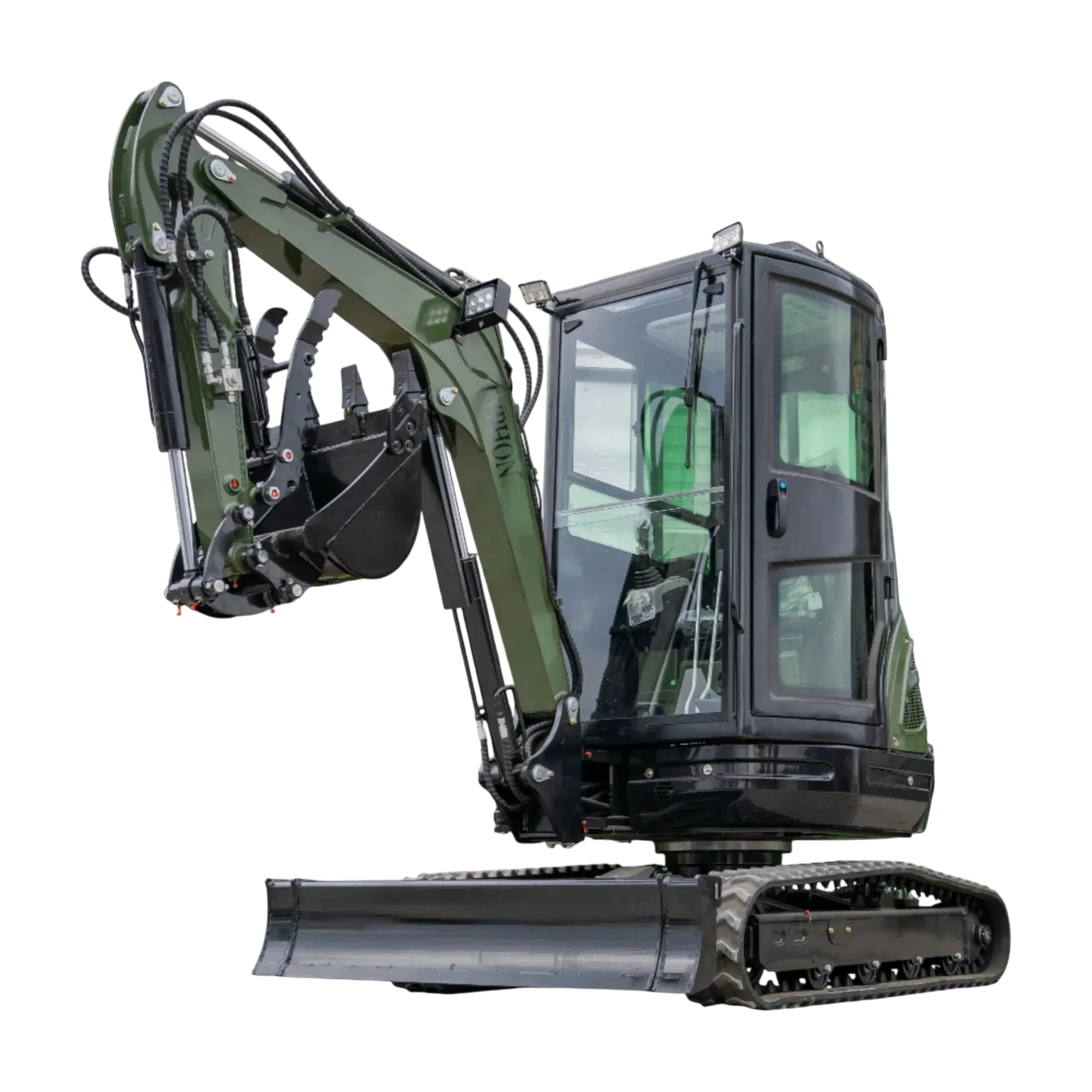
A mini excavator earns its keep by showing up ready to work — squeezing through tight gates, trenching in narrow backyards, and running attachment after attachment without complaint. That reliability isn’t automatic. It’s the result of a maintenance routine that catches small problems, like a loose track or a dry pivot pin, before they turn into a machine sitting idle on a job site. This guide walks through that routine by system rather than by the clock, so you understand why each check matters.
Before You Start Every Job
The habits that matter most are the ones performed before the engine ever turns over. A five-minute walkaround at the start of the day catches the majority of issues that would otherwise surface mid-job.
- Look underneath the machine for fresh fluid spots — hydraulic oil, engine oil, or coolant pooling overnight points to a leak worth chasing down immediately.
- Check track tension and look for embedded debris, cuts, or uneven wear on the rubber tracks.
- Confirm the engine oil and hydraulic fluid are at the correct level on a cold machine.
- Inspect the boom, arm, and bucket for any signs of stress fractures, loose bolts, or worn teeth.
- Clear dirt, mud, and debris from the engine bay and radiator fins. Packed debris around the engine is one of the most common causes of overheating on compact equipment, since it blocks the airflow the cooling system depends on.
Boom, Arm, and Hydraulics
An excavator’s boom and arm endure immense structural stress and constant pivoting. Greasing the pivot pins, bucket linkages, and the slew/swing bearing is arguably the most important excavator-specific task.
A dry pin will quickly wear out its bushing, leading to a “sloppy” bucket, loss of precision, and eventually, expensive repairs. Get into the habit of greasing the main pivot points daily (or according to your manual) until you see just a tiny bit of fresh grease push out from the edge of the joint.
Engine and Fuel System
The engine is the one component every other system depends on, which makes it the least forgiving place to defer maintenance.
Change the oil on the schedule your manufacturer specifies, and don’t stretch the interval because the machine “seems fine” — oil breaks down chemically long before it looks dirty. The air filter also deserves more attention than most owners give it. Mini excavators constantly kick up dust and work in dirty environments. A restricted filter doesn’t just rob engine power; it can pull the fuel mixture out of spec and increase fuel consumption.
Undercarriage and Tracks
The undercarriage takes more physical abuse than any other part of the machine, and it’s often the most neglected.
Track tension should be checked regularly and adjusted to the manufacturer’s specification. A track that’s too loose can derail during a tight turn or when navigating uneven terrain; one that’s too tight puts unnecessary strain on the drive motors, sprockets, rollers, and the track itself, drastically shortening its service life.
Clean packed mud, clay, and rocks from around the sprockets and track rollers after wet or rocky jobs. Material left to harden overnight is far more work to remove the next morning than material cleared while it’s still soft.
Building the Habit
None of these checks are individually complicated, and that’s the point — the machines that last longest aren’t maintained by owners with the most mechanical skill, but by owners with the most consistency. A checklist taped inside the cab, or a recurring phone reminder, does more for your uptime than any single repair ever will.
This is an incredibly helpful and comprehensive guide on mini skid steer maintenance! We recently added a couple of these versatile machines to our landscaping fleet, and the difference they make on tight job sites is night and day. However, since they run on such compact hydraulic systems, we quickly learned that keeping up with the daily maintenance routine is absolutely non-negotiable if we want to avoid costly downtime.
Your point about checking the track tension daily really resonated with me. Last season, one of our operators neglected to clear out the packed mud from the undercarriage after a heavy rain job. The tracks ended up over-tensioning as the mud dried and expanded overnight, which caused a premature idler failure the next morning. It was an expensive lesson to learn, but it completely changed how we handle end-of-day cleanups!
One question I do have for you: when it comes to greasing the pivot points in high-dust environments, do you recommend a standard lithium grease, or have you found that a specialized dry-film lubricant prevents the dust from grinding into the pins? We are trying to maximize the lifespan of our loader arms and would love to hear your expert recommendation. Thanks again for the great article!
Free to help