How to Choose a Dumper Machine Based on Terrain and Load
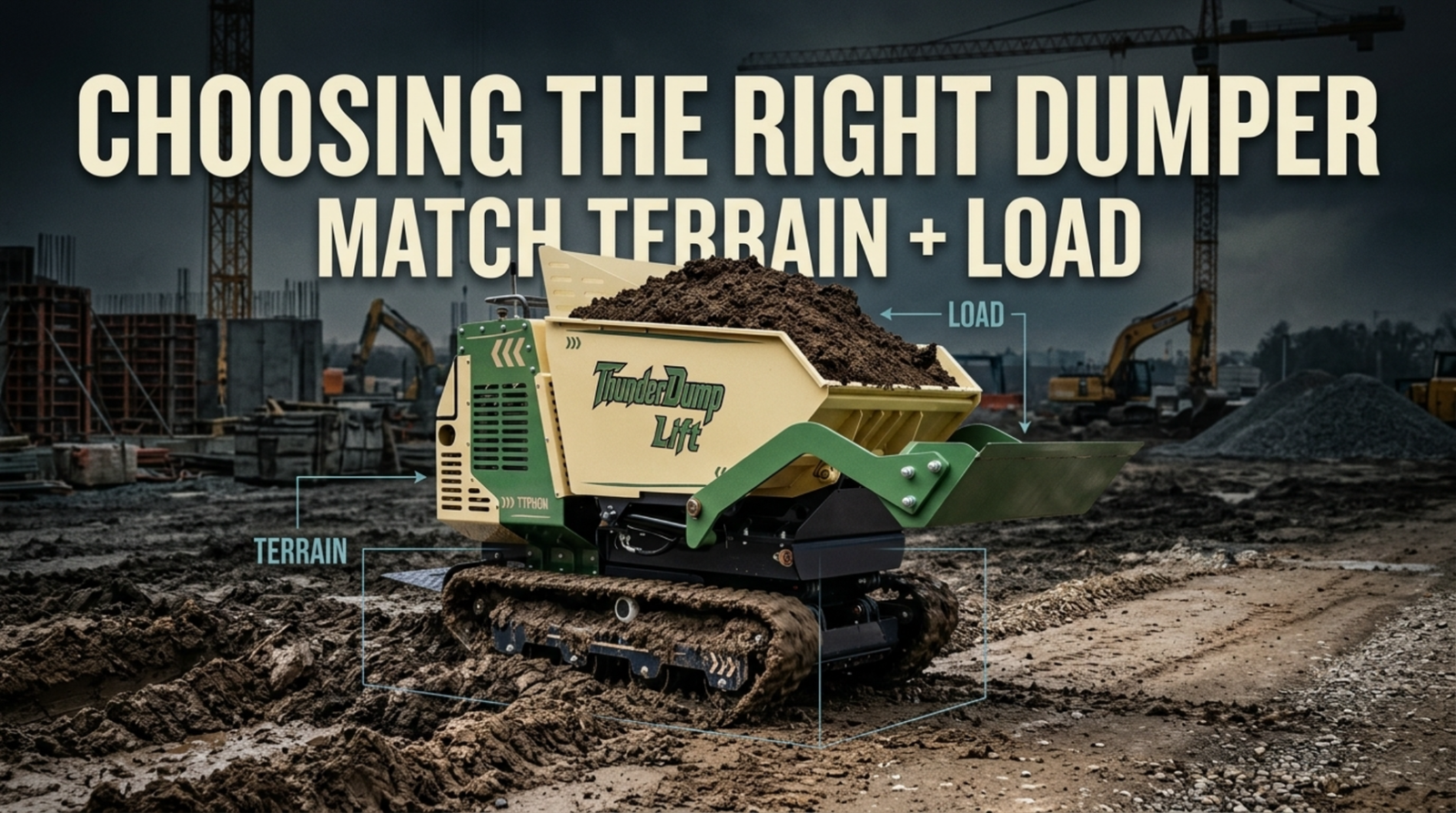
Selecting the right dumper machine is one of the most important equipment decisions you can make for a project. The wrong choice can slow you down, strain the machine, and create safety concerns, while the right one moves material efficiently and holds up under the demands of the job. Two factors sit at the center of this decision: the terrain you will work on and the loads you need to move.
This guide walks you through five key considerations that will help you choose a dumper suited to your conditions and requirements. From matching the machine to the ground beneath it to selecting the right dumping capability for your material, each section gives you practical guidance you can put to use. By the end, you will be equipped to make a confident, informed choice that fits your worksite.
Match the Dumper to the Terrain
The ground you work on shapes how a dumper performs, so terrain should be one of your first considerations. Before choosing a machine, think carefully about the surfaces it will face day to day. Will it operate on flat, firm ground, or will it need to climb slopes? Are you dealing with muddy areas, loose soil, or rough, uneven terrain scattered with rock and debris? Each of these conditions places different demands on the machine, and a dumper that excels on level pavement may struggle badly on a soft, sloping site.
Several machine features determine how well a dumper handles varied ground. Ground clearance matters a great deal on rough or uneven terrain, since a machine sitting low to the ground can hang up on obstacles or drag through soft spots. Traction is essential wherever surfaces are slippery, muddy, or loose, because a dumper that cannot grip the ground will spin, slide, and lose the ability to move its load reliably. Gradeability, which describes a machine’s ability to climb and work on slopes, becomes critical on hilly sites where the dumper must haul material up and down inclines safely.
Consider these terrain-related capabilities when comparing machines:
- Ground clearance for navigating rough terrain and avoiding obstacles that could catch the underside
- Traction for maintaining grip on mud, loose soil, and slippery surfaces
- Gradeability for safely climbing and operating on the slopes your site presents
Matching these features to your actual conditions is what keeps a dumper productive and dependable. A machine chosen with the terrain in mind moves confidently across the ground it faces, maintains control while carrying material, and reduces the risk of getting stuck or losing stability. Taking the time to assess your surfaces before you buy or rent ensures the dumper you select can handle the real demands of your worksite rather than falling short when conditions get tough.
Choose the Right Load Capacity
Load capacity is the measure of how much material a dumper is built to carry, and matching it correctly to your job is essential for both efficiency and machine longevity. The starting point is understanding what you actually need to transport. Consider both the weight and the volume of your material, since a dumper must handle both without being pushed past its limits. Dense material like wet soil or gravel adds up in weight quickly, while lighter, bulkier material may fill the hopper by volume before it reaches the weight limit. Knowing the nature of your loads helps you choose a machine sized appropriately for the work.
The rated payload is the key specification to focus on. This figure tells you the maximum weight the dumper is designed to carry safely and reliably. The right choice matches this rated payload to your job so the machine handles typical loads comfortably without regularly operating at or beyond its maximum. A dumper that is constantly overloaded suffers accelerated wear on its drivetrain, hydraulics, and structure, and it becomes harder to control, less stable, and more prone to breakdowns that cost you time and money.
There is a balance to strike here. A machine with too little capacity forces you into extra trips, dragging out the job and wasting fuel and hours. A machine with far more capacity than you need may be larger, heavier, and less suited to your site than necessary. The goal is to select a dumper whose rated payload comfortably covers your typical loads with a sensible margin, so it works within its designed limits rather than straining against them. Choosing capacity thoughtfully protects your investment, keeps the machine running dependably, and ensures you move material efficiently without either overworking the equipment or making more trips than the job truly requires.
Consider Tracked or Wheeled Design
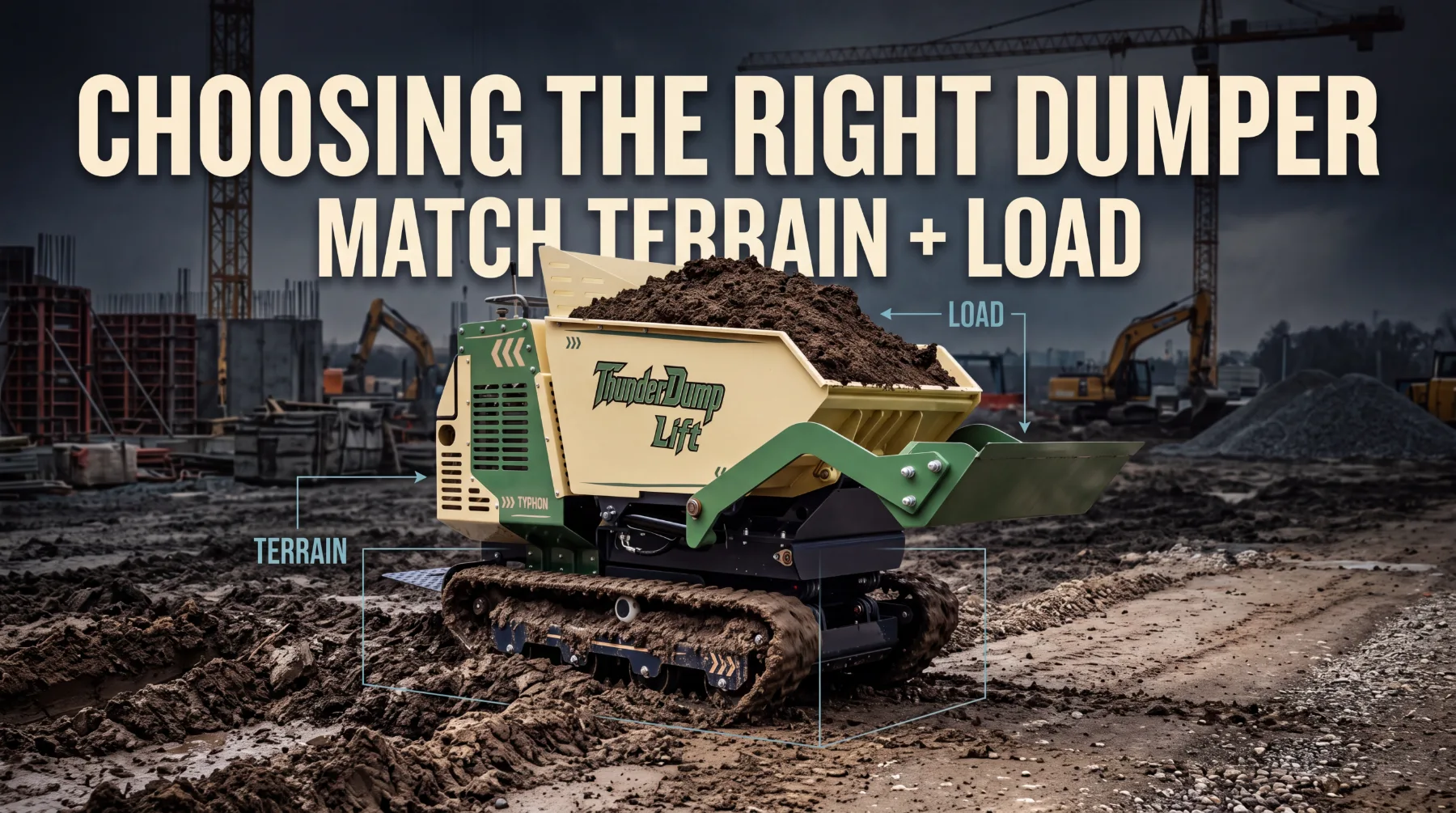
The choice between a tracked and a wheeled dumper is a fundamental one, and it comes down largely to the ground conditions you expect to encounter. Each design offers distinct advantages, and understanding how they differ helps you match the machine to your site. Tracked dumpers distribute their weight across a larger surface area, which gives them strong traction and stability on challenging ground. Wheeled dumpers, by contrast, are built for speed and ease of movement, performing best where the surface is firm and stable
Tracked models tend to be the better fit for soft, muddy, or uneven terrain. Because the tracks spread the machine’s weight, they reduce the tendency to sink into soft ground and maintain grip where wheels would spin or slip. This makes tracked dumpers a dependable choice on construction sites early in a project, on wet or loose soil, and across rough terrain where stability is a priority. The trade-off is that tracked machines generally move more slowly and can be harder to transport between sites.
Wheeled dumpers shine on firm surfaces and in applications that call for easier, quicker movement. On established roads, compacted ground, or paved areas, a wheeled machine travels faster and maneuvers with less effort, which can improve productivity when the terrain cooperates. They are often simpler to move from place to place as well.
The right decision depends on where and how you will work most often:
- Choose tracked when your site involves soft, muddy, loose, or uneven ground where traction and stability are critical
- Choose wheeled when you operate mainly on firm, stable surfaces and value speed and easier movement
Weighing your typical conditions against these strengths points you toward the design that will serve you best. If your work spans difficult ground, the traction and stability of tracks pay off. If you move across solid surfaces and prioritize pace, wheels are likely the smarter choice for keeping the job moving.
Check Maneuverability for the Jobsite
How well a dumper moves within your workspace can matter just as much as how it handles the ground or carries a load. Many jobsites present real constraints, and a machine that cannot navigate them effectively becomes a source of frustration rather than a productivity gain. Tight construction sites, narrow access paths, gated entries, and confined working areas all demand a dumper that can maneuver with precision. Before choosing a machine, take a clear-eyed look at the spaces it will need to work in and move through.
Machine width is often the first thing to check. A dumper that is too wide simply cannot pass through narrow gates, along tight paths, or between existing structures and obstacles. Measuring your access points and the tightest spots on your site against a machine’s dimensions prevents the costly surprise of equipment that will not fit where it needs to go. Overall dimensions, including length and height, matter too, particularly in areas with limited overhead clearance or restricted room to position the machine.
Turning capability is equally important on confined sites. A dumper that can turn tightly, or even within its own footprint, navigates around obstacles and repositions in cramped quarters far more easily than one requiring a wide arc to change direction. On busy sites where space is at a premium, this agility keeps the machine working smoothly instead of struggling to line up each move.
Thinking through maneuverability before you commit to a machine saves considerable trouble later. A compact, agile dumper suited to your access points and working areas moves material without the delays and difficulties that come from forcing an oversized machine through spaces it was never meant to handle. Paying attention to width, turning capability, and overall dimensions ensures the dumper you choose fits your site in practice, not just on paper, and can get where it is needed throughout the workday.
Match Dumping Capability to the Task
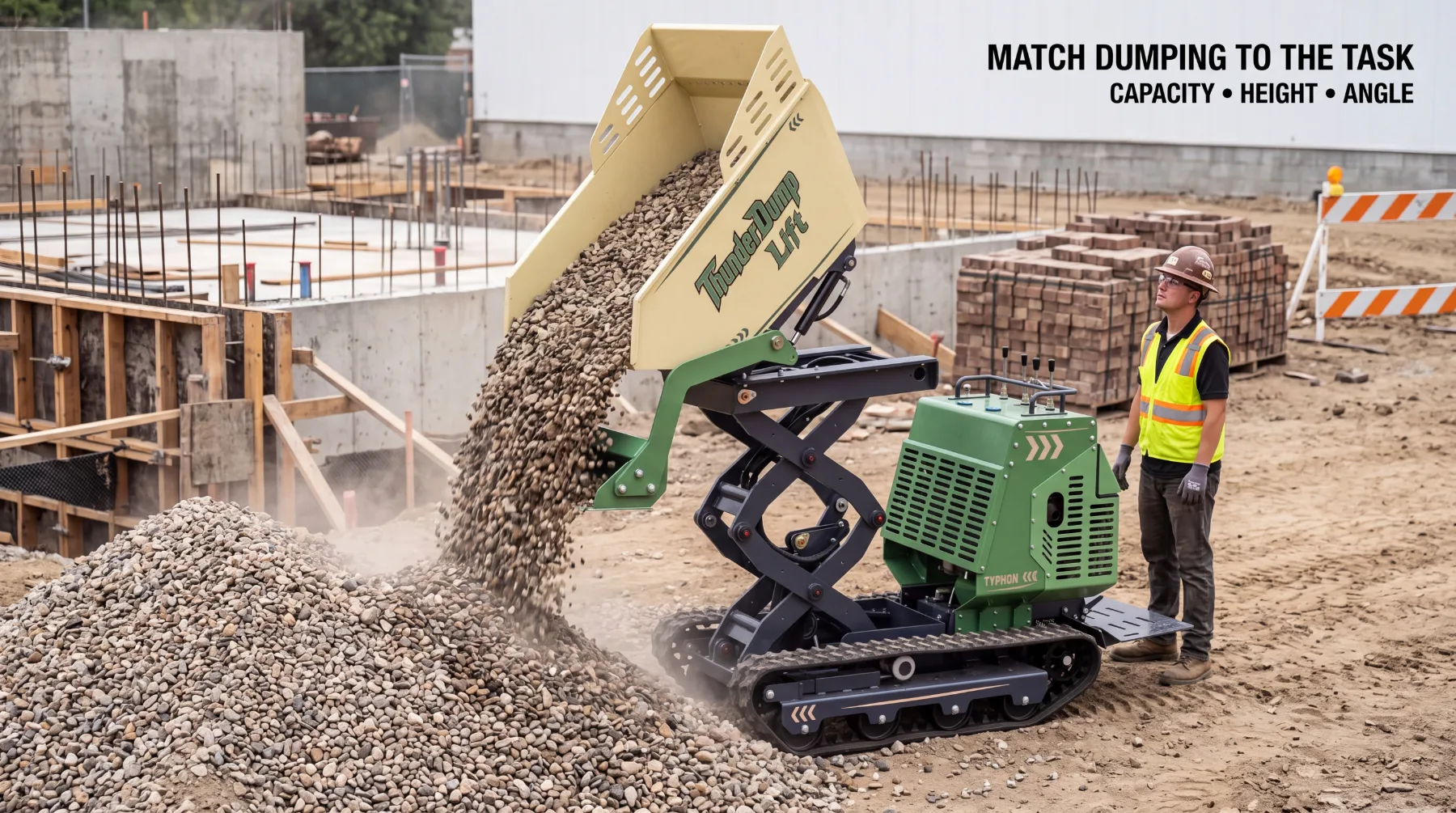
A dumper’s core purpose is to unload material where it needs to go, so its dumping capability deserves careful attention. The right features here make discharging soil, gravel, debris, and other materials quick and efficient, while a poor match can leave you fighting the machine on every cycle. Several factors work together to define how well a dumper unloads, and matching them to your task is what turns discharge from a chore into a smooth, dependable step.
Hopper capacity determines how much material the dumper carries and releases per cycle, and it should align with both your load needs and the machine’s overall balance. Dumping height and dumping angle then govern how and where that material can be placed. A greater dumping height lets you unload onto tall piles or over the sides of containers and other equipment, while a strong dumping angle helps material slide out completely rather than clinging in the hopper. When you need to discharge into a trench, onto a stockpile, or into a waiting hauler or crusher, adequate height and angle give you the reach and the clean release the task requires.
The discharge method rounds out the picture, shaping how material actually exits the hopper and where it lands. Consider where your materials need to go and choose a dumping setup suited to that destination. The right combination of hopper capacity, dumping height, angle, and discharge method makes unloading efficient across a range of materials and situations, whether you are placing gravel precisely or clearing debris quickly.
Thinking about how and where you will unload before selecting a machine helps ensure the dumper fits the real work. When these dumping features match your task, material goes exactly where it is needed with minimal effort and cleanup, keeping your cycles fast and your worksite productive. This alignment between dumping capability and the job at hand is what makes a dumper genuinely effective rather than simply capable of carrying a load.
Conclusion
Choosing the right dumper machine comes down to understanding your terrain and your loads, then matching a machine to both. Assessing the ground conditions guides your decisions on ground clearance, traction, gradeability, and whether a tracked or wheeled design suits your site. Selecting the correct rated payload keeps the machine working within its limits, while attention to maneuverability ensures it fits the spaces where you actually work. Finally, matching dumping capability to your task makes unloading efficient across whatever materials the job involves.
Taking the time to weigh these five considerations helps you invest in equipment that performs reliably and serves your project well. A dumper chosen with terrain and load in mind moves material confidently, holds up under demanding conditions, and keeps your worksite running smoothly. When you match the machine to the real demands of the job, you gain a dependable partner that delivers the productivity and value your work requires day after day.
Frequently Asked Questions
1. Why is terrain such an important factor when choosing a dumper machine?
Terrain matters because the ground a dumper operates on directly affects how well it performs and how safely it can carry a load. A machine that works well on flat, firm surfaces may struggle badly on muddy, loose, or sloping ground. Different conditions place different demands on the machine, which is why features like ground clearance, traction, and gradeability are so important. Ground clearance helps a dumper navigate rough terrain without hanging up on obstacles, traction keeps it gripping on slippery or soft surfaces, and gradeability determines how safely it can climb and work on slopes. Assessing your actual site conditions before selecting a machine ensures the dumper can handle the surfaces it will face. Choosing with terrain in mind reduces the risk of getting stuck or losing stability and keeps the machine productive throughout the job.
2. How do I know what load capacity I need?
Start by understanding both the weight and the volume of the material you need to transport. Dense materials like wet soil and gravel add weight quickly, while lighter, bulkier materials may fill the hopper by volume before reaching the weight limit, so knowing the nature of your loads is essential. The key specification to focus on is the rated payload, which tells you the maximum weight the dumper is designed to carry safely and reliably. The right choice matches this rated payload to your typical loads with a sensible margin, so the machine handles the work comfortably without regularly operating at or beyond its limits. Avoid a capacity that is too small, which forces extra trips, as well as one far larger than needed. A well-matched payload protects the machine from excessive wear and keeps material moving efficiently.
3. Should I choose a tracked or a wheeled dumper?
The choice depends largely on the ground conditions you expect to work on most often. Tracked dumpers distribute their weight across a larger surface area, giving them strong traction and stability on soft, muddy, loose, or uneven terrain. They resist sinking into soft ground and maintain grip where wheels would spin, making them ideal for challenging sites where stability is a priority. The trade-off is that they generally move more slowly and can be harder to transport. Wheeled dumpers perform best on firm, stable surfaces, offering faster travel and easier maneuvering, which improves productivity when the terrain cooperates. They are also often simpler to move between sites. If your work spans difficult ground, the traction of tracks pays off. If you operate mainly on solid surfaces and value speed, a wheeled machine is likely the better fit.
4. What should I look at to make sure a dumper fits my jobsite?
Focus on three things: machine width, turning capability, and overall dimensions. Machine width is often the first constraint, since a dumper that is too wide cannot pass through narrow gates, tight paths, or gaps between structures and obstacles. Measure your access points and the tightest spots on your site and compare them against the machine’s dimensions to avoid the costly surprise of equipment that will not fit. Turning capability is equally important on confined sites, as a dumper that turns tightly can navigate obstacles and reposition in cramped quarters far more easily than one needing a wide arc. Overall dimensions, including length and height, also matter in areas with limited overhead clearance or restricted room. Checking these details before you commit ensures the machine fits your site in practice and can reach where it is needed throughout the day.
5. How do I match a dumper’s dumping capability to my work?
Consider how and where you will need to unload material before selecting a machine. Several features work together to define dumping capability. Hopper capacity determines how much material is carried and released per cycle and should align with your load needs and the machine’s balance. Dumping height governs whether you can unload onto tall piles or over the sides of containers and other equipment, while dumping angle affects how completely material slides out rather than clinging in the hopper. The discharge method shapes how material exits and where it lands. If you unload into trenches, onto stockpiles, or into waiting equipment, adequate height, angle, and the right discharge setup give you the reach and clean release the task requires. Matching these features to your material and destination makes unloading efficient and keeps your cycles fast and productive.