How Hydraulic Flow and Pressure Affect Forklift Engine Load
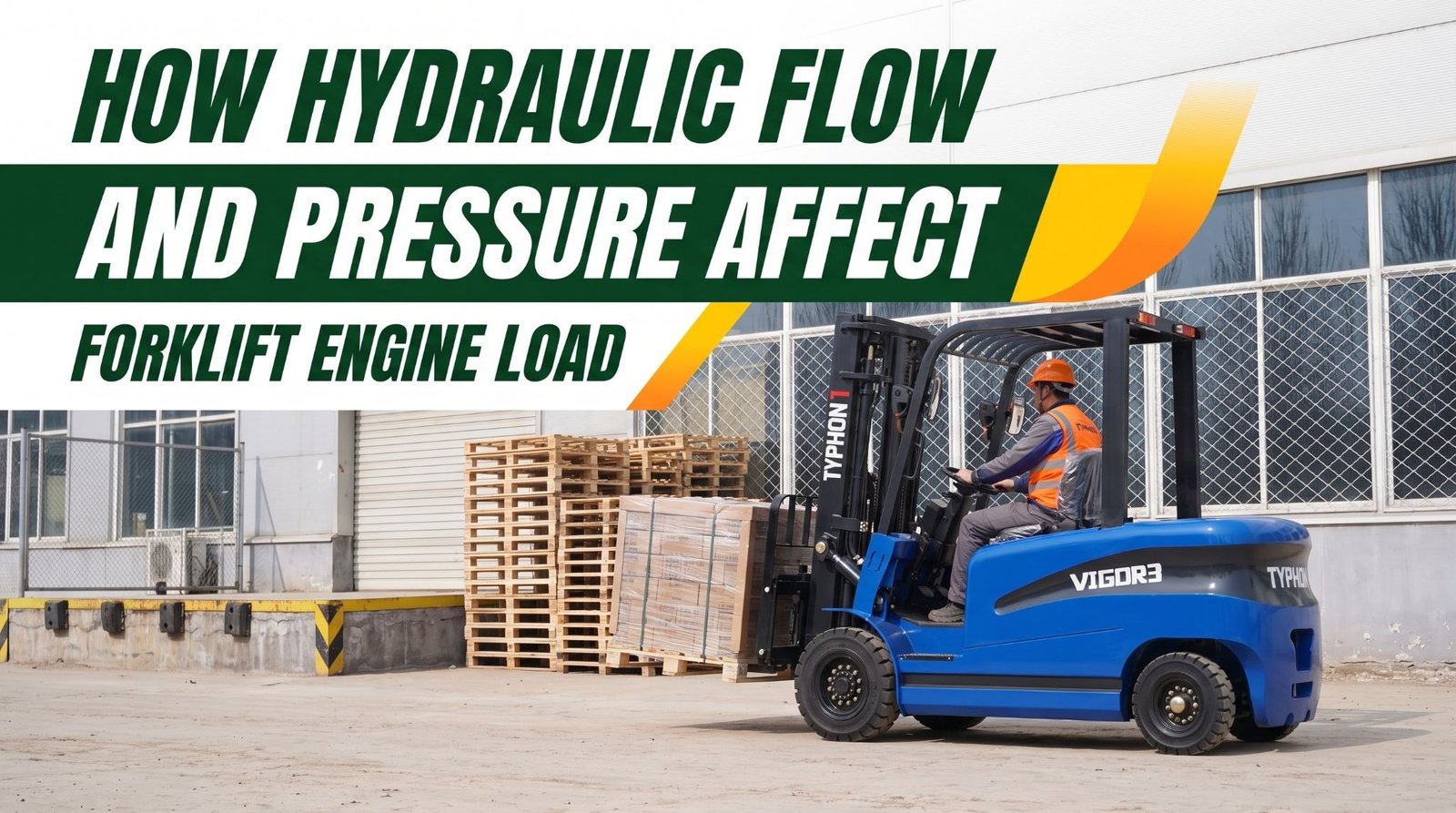
Every time a forklift raises a load, tilts the mast, or operates an attachment, the hydraulic system creates a corresponding demand on the engine. The hydraulic pump converts engine power into fluid flow and pressure, with flow primarily influencing actuator speed and pressure determining the force required to move or hold a load. As load weight and hydraulic resistance increase, pump torque demand rises, requiring the engine to deliver more power to maintain hydraulic performance. This relationship is why lift speed can decrease under heavy loads and why an engine operating too close to its available output may experience higher thermal and mechanical stress.
Proper matching of engine output, hydraulic pump capacity, system pressure, and required flow is essential for maintaining consistent forklift performance. An adequately sized powertrain can supply the hydraulic system without excessive RPM or engine loading, allowing the mast and attachments to operate smoothly while preserving drivetrain efficiency. Poor matching can result in sluggish hydraulic response, engine lugging, increased fuel consumption, and accelerated wear on the engine, pump, and related components. Understanding how hydraulic flow and pressure translate engine output into useful lifting force provides a more accurate basis for specifying, operating, and maintaining a forklift.
The Hydraulic Pump Draws Its Power From the Engine
A forklift lifts nothing with the engine directly. Instead, the engine turns a hydraulic pump, and that pump pressurizes fluid sent to the lift, tilt, and attachment cylinders. Every ounce of lifting force begins as engine output converted into hydraulic energy, which means the pump is a permanent load on the engine whenever it’s working. The moment an operator pulls a lift lever, the pump demands more from the engine, and the engine has to answer.
Two figures define what that pump delivers. Flow, measured in gallons per minute (GPM), sets how fast the cylinders extend and how quickly the mast rises. Pressure, measured in pounds per square inch (PSI), sets how much force the system can push against a heavy load. The engine has to supply the power behind both at once, and that power draw rises and falls with what the hydraulics are asked to do. A pump moving high flow against high pressure pulls hard on the engine; a pump idling with the levers untouched barely registers. This is the foundation of everything that follows: the engine carries the hydraulic system on its back, and the weight of that load changes constantly with the work.
Heavy Loads and Attachments Drive Pressure and Engine Load Up
Pressure is the direct measure of resistance, and nothing raises it faster than a heavy load. When a forklift lifts a light pallet, the cylinders meet little resistance, so system pressure stays low, and the engine barely notices the demand. Load that same mast to its rated capacity, and the hydraulic pressure needed to move the cylinders climbs sharply. The pump now works against far greater resistance, and to keep that pump turning, the engine must produce more power. Heavier loads mean higher pressure, and higher pressure means greater engine load in a straight, unbroken line.
Attachments push this demand further. A forklift running a bare fork carriage asks one thing of the hydraulics, but fits a clamp, rotator, push-pull, or multi-pallet handler, and the picture changes. These attachments add extra hydraulic functions, each drawing its own flow and pressure from the same pump, and many operate under continuous load rather than a single lift stroke. A paper-roll clamp holding its grip or a rotator turning a full load keeps the hydraulic system pressurized while the operator also lifts and travels. That stacking of demands lands squarely on the engine, which must feed every active function at once. The practical result is simple: the heavier the load and the more demanding the attachment, the harder the engine works to keep the hydraulics supplied.
Flow Rate Sets Lift Speed and Cycle Times
While pressure handles force, flow handles speed. The volume of fluid the pump delivers per minute determines how fast the lift cylinders fill, and that directly sets how quickly the mast rises. Higher flow raises the forks faster; lower flow raises them more slowly. In an operation where a machine completes hundreds of lift cycles a shift, that speed compounds into real productivity, because every second shaved off a lift cycle multiplies across the day. Flow is where hydraulic performance becomes throughput.
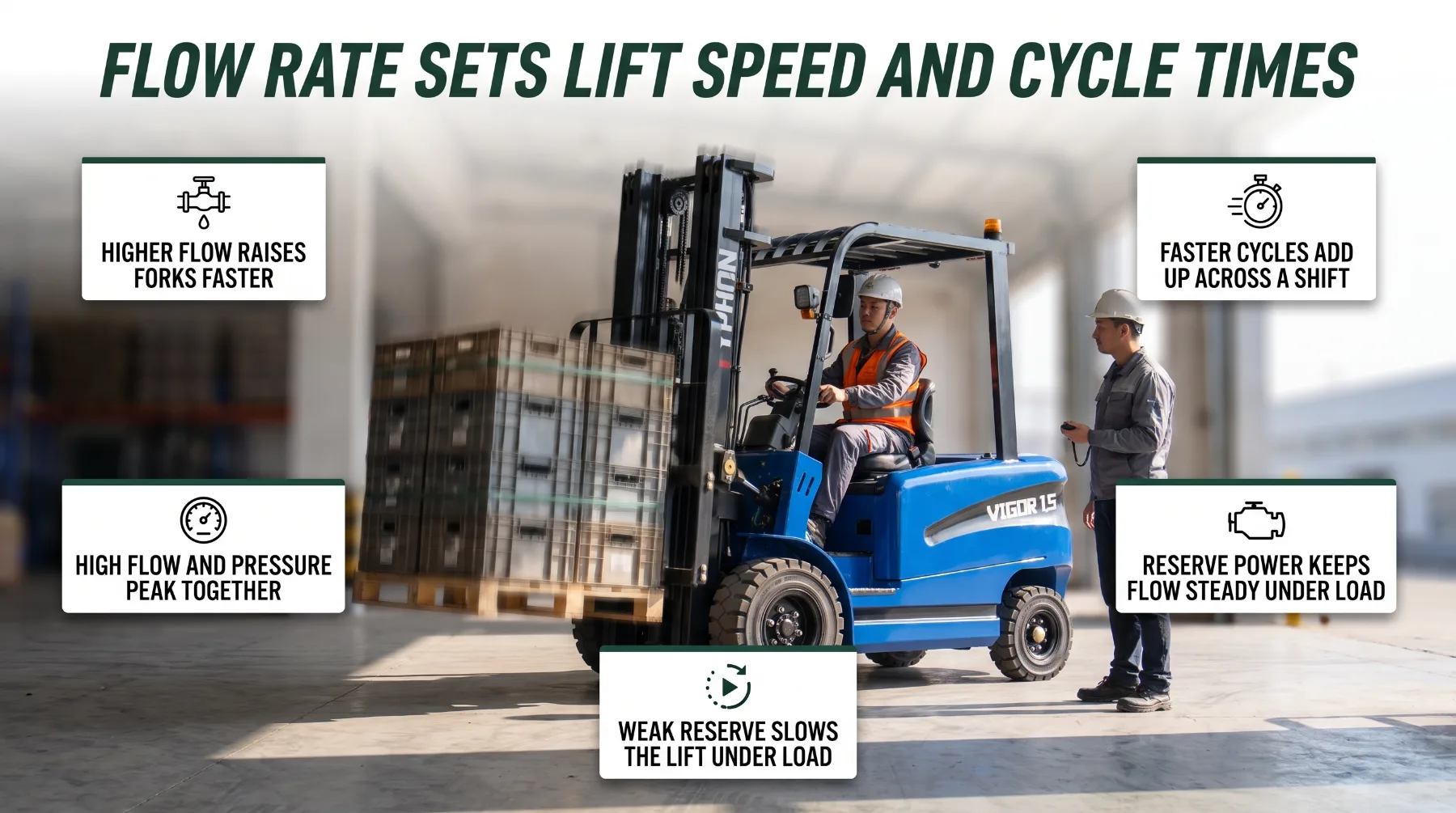
The catch is that flow also costs engine power, and the two demands often peak together. Moving high flow against the high pressure of a heavy load asks the most of the engine at exactly the moment the operator wants full speed. An engine with genuine reserve holds flow steady under that combined demand, so the mast rises quickly even with a full load and cycle times stay tight. An engine short on power can’t sustain the flow when pressure climbs, so the lift slows noticeably as the load gets heavier, and cycle times stretch out. Fast, consistent lifting under load is the signature of a hydraulic system and engine properly matched to each other, and it’s what keeps an operation moving at pace.
What Happens When the Engine Is Undersized for Hydraulic Demand
An undersized engine reveals itself the moment hydraulic demand stacks up. The clearest sign is a lift that slows or stalls under a heavy load, because the engine simply can’t supply the power the pump needs to maintain flow against high pressure. The operator feels the mast crawl, or watches it hesitate partway up, and instinctively works around it by lifting lighter loads or waiting out the slow cycles. Either way, productivity quietly erodes, and the machine never delivers the performance its capacity rating promised.
The trouble compounds when several demands hit at once. Lift a full load while an attachment holds pressure and the engine climbs a ramp, and an underpowered engine bogs down, dropping travel speed and lift speed together. Running the engine near its ceiling all day drives it hotter, forces hydraulic fluid past its efficient temperature range where it transmits power poorly and breaks down faster, and accelerates wear across the pump, seals, and cooling system. The strain reaches the drivetrain too, since an engine constantly fighting to feed the hydraulics ages faster than its hour meter suggests. Keep in mind that oversizing carries its own penalty, because an engine far larger than the hydraulics ever demanded burns extra fuel for capability you never use. The goal is a genuine match, one where the engine carries the real hydraulic load with reserve to spare but without waste.
Using This Knowledge to Improve Efficiency and Protect the Drivetrain
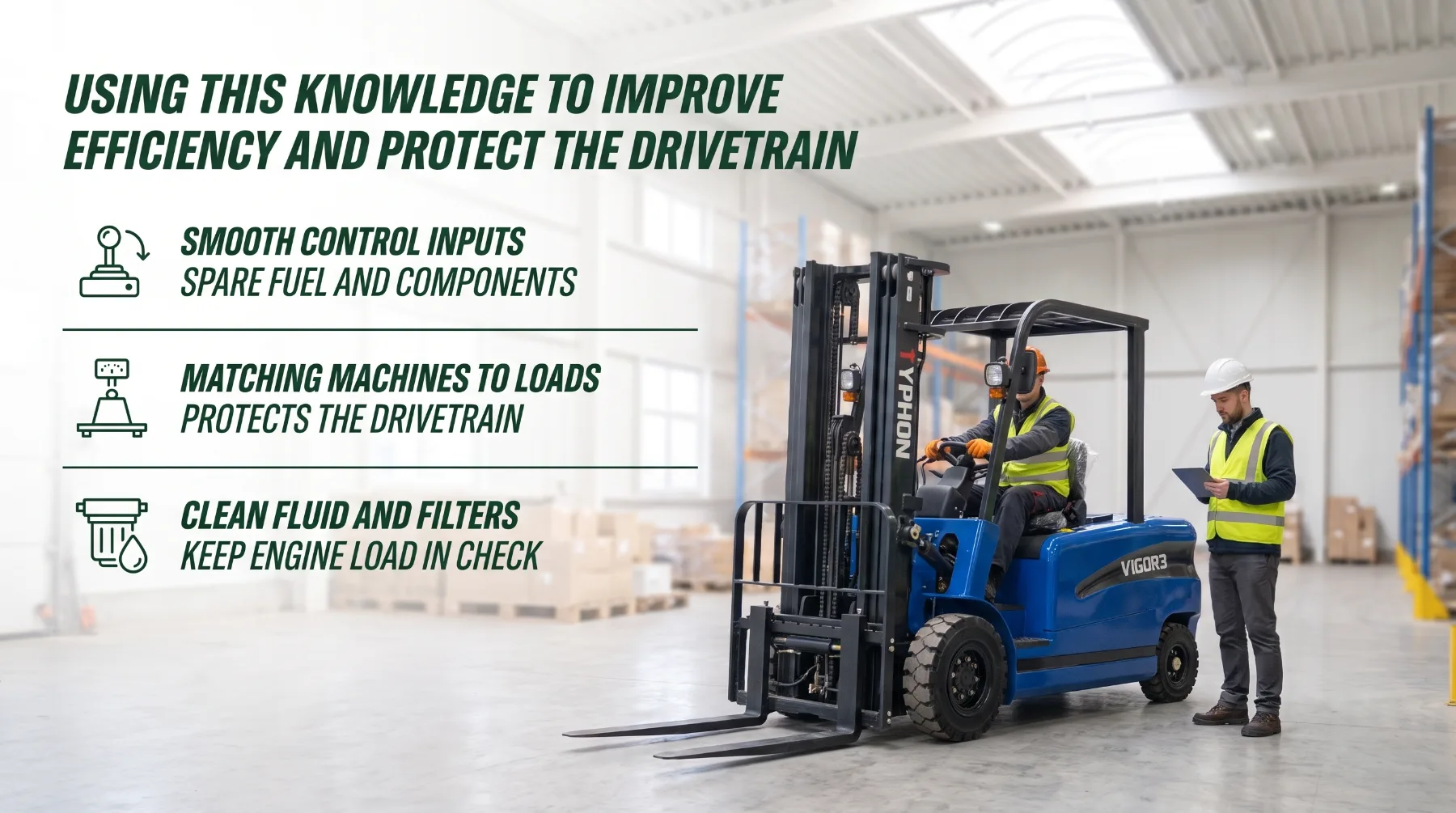
For operators, the payoff of understanding this relationship shows up in daily habits. Smooth, deliberate use of the hydraulic controls asks less of the engine than jerky, full-lever movements, and it spares both fuel and components. Lifting loads within the machine’s rated capacity keeps pressure in a healthy range rather than driving the pump and engine to their limits on every cycle. Avoiding needless full-speed lifts when a load doesn’t require them, and shutting down rather than idling with the hydraulics live, all trim the engine load that quietly drains fuel and adds wear. None of this slows real work; it simply stops the machine from working harder than the task demands.
For fleet managers, the same knowledge sharpens both operation and procurement. Matching each machine to the loads and attachments it will actually handle ensures the engine and hydraulic system are sized to the work, so no forklift spends its life straining or wasting capacity. Specifying the right pump flow and engine pairing for high-throughput operations protects cycle times, while confirming that attachment-heavy machines carry the hydraulic and engine reserve to run those attachments under load prevents the slow, overheated performance that shortens equipment life. Regular maintenance closes the loop, since clean hydraulic fluid at the correct level, healthy filters, and a clear cooling system all keep the hydraulics efficient and the engine load where it belongs. Treated this way, the connection between flow, pressure, and engine load becomes a tool for lower fuel bills, faster cycles, and a drivetrain that lasts.
Conclusion
Hydraulic flow and pressure directly determine the mechanical load imposed on a forklift engine because the hydraulic pump converts engine power into hydraulic power for lifting, tilting, and auxiliary functions. As load mass or attachment resistance increases, system pressure rises, increasing the torque required to drive the pump, while higher flow rates increase pump displacement demand and accelerate cylinder movement, reducing lift cycle times but requiring greater engine output. The relationship can be expressed as hydraulic power being approximately proportional to pressure × flow, with pump and drivetrain efficiencies determining the actual engine power required. If engine output is insufficient for the combined hydraulic, traction, and accessory loads, engine speed can drop, hydraulic response becomes slower, and operating efficiency declines, increasing thermal and mechanical stress. Proper engine sizing therefore requires matching rated power and torque characteristics to the pump’s maximum flow and pressure requirements, expected load profile, attachment demands, and duty cycle, while maintaining sufficient power reserve for simultaneous functions. Correct hydraulic-fluid condition, filter cleanliness, pump efficiency, relief-valve settings, and routine inspection are also essential because excessive leakage, restriction, or component wear can increase power losses and further raise engine load.
Frequently Asked Questions
Why does my forklift lift more slowly when the load is heavy?
Lift speed depends on hydraulic flow, the volume of fluid the pump sends to the lift cylinders per minute, while the weight of the load determines the pressure the system must overcome. When you lift a heavy load, the pump has to work against much higher pressure, and that demands more power from the engine. If the engine can’t supply enough power to maintain full flow against that higher pressure, the flow drops and the mast rises more slowly. A machine with adequate engine reserve holds its lift speed even under heavy loads, so a noticeable slowdown often signals the hydraulic demand is pushing the engine near its limit.
Do forklift attachments really increase engine load that much?
They can, and it’s often underestimated. Attachments like clamps, rotators, and push-pulls add hydraulic functions that draw flow and pressure from the same pump the lift and tilt cylinders use, and many hold pressure continuously rather than in a single stroke. When an operator runs an attachment while also lifting and traveling, those demands stack onto the engine at the same time. That combined draw raises engine load significantly, which is why attachment-heavy machines need enough hydraulic and engine reserve to run everything at once without bogging down, overheating, or slowing cycle times.
How does understanding hydraulic demand help protect my forklift’s drivetrain?
An engine forced to run near its limit to feed the hydraulics generates more heat, pushes hydraulic fluid beyond its efficient operating temperature range, and accelerates the aging of the pump, seals, cooling system, and drivetrain faster than the hour meter suggests. Once you understand that heavy loads and demanding attachments drive engine load up, you can protect the machine by lifting within its rated capacity, using controls smoothly, matching each forklift to the work it actually does, and keeping the hydraulic system properly maintained. Those steps keep engine load within a healthy range, which lowers fuel consumption, preserves performance, and extends drivetrain life.