How Engine Power and Track Traction Work Together on Skid Steers
Buying a skid steer often comes down to a single number on the spec sheet: horsepower. That number matters, but it only tells half the story. A powerful engine means very little if the machine cannot put that power to work against the ground. On a tracked skid steer, engine output and track traction operate as a team. One generates the force, and the other delivers it where the job actually happens. When these two systems are well matched, the machine digs, pushes, lifts, and carries with confidence. When they are mismatched, you get wheelspin, wasted fuel, and stalled progress. This guide explains how engine power and track traction work together, and how understanding that relationship helps you choose the right skid steer for your worksite.
Engine Power Drives Hydraulic Performance
Engine power is the starting point for everything a skid steer does. The engine supplies the energy that runs the hydraulic system, and that hydraulic system is what powers your attachments, your loader arms, and your track motors. Without enough available power, even a well-built machine will struggle to keep up when the work gets demanding. This is why engine output is the foundation of skid steer performance rather than just a bragging point.
Higher available power supports the hydraulic functions that heavy jobs require. When you run an auger through hard soil, drive a hydraulic breaker, or lift a full bucket, the hydraulic system draws heavily on the engine. A capable engine holds performance steady under that load instead of bogging down. Models like the TYPHON STOMP V1000 with its 24HP Kubota D1105 diesel, or the STOMP X1300 running a 25HP Kubota D1105, give the hydraulic system a dependable source of energy for these demanding cycles.
Consider how this plays out across a typical shift:
- Attachment operation stays responsive because the engine feeds consistent hydraulic flow
- Loader lift and tilt hold their speed even when the bucket is loaded
- Multi-function work, such as lifting while driving, does not force the machine to sacrifice one action for another
Gas-powered options such as the STOMP 507 with its 13.5HP engine or the 2,000lbs STOMP with a 23.5HP gas engine serve lighter tasks efficiently, matching power to smaller-scale needs. The key point is that power is not the finish line. It is the fuel that feeds the hydraulic system, and the hydraulic system is where useful work begins. A strong engine sets the stage, but what happens next depends on getting that energy to the ground.
Track Traction Transfers Power to the Ground
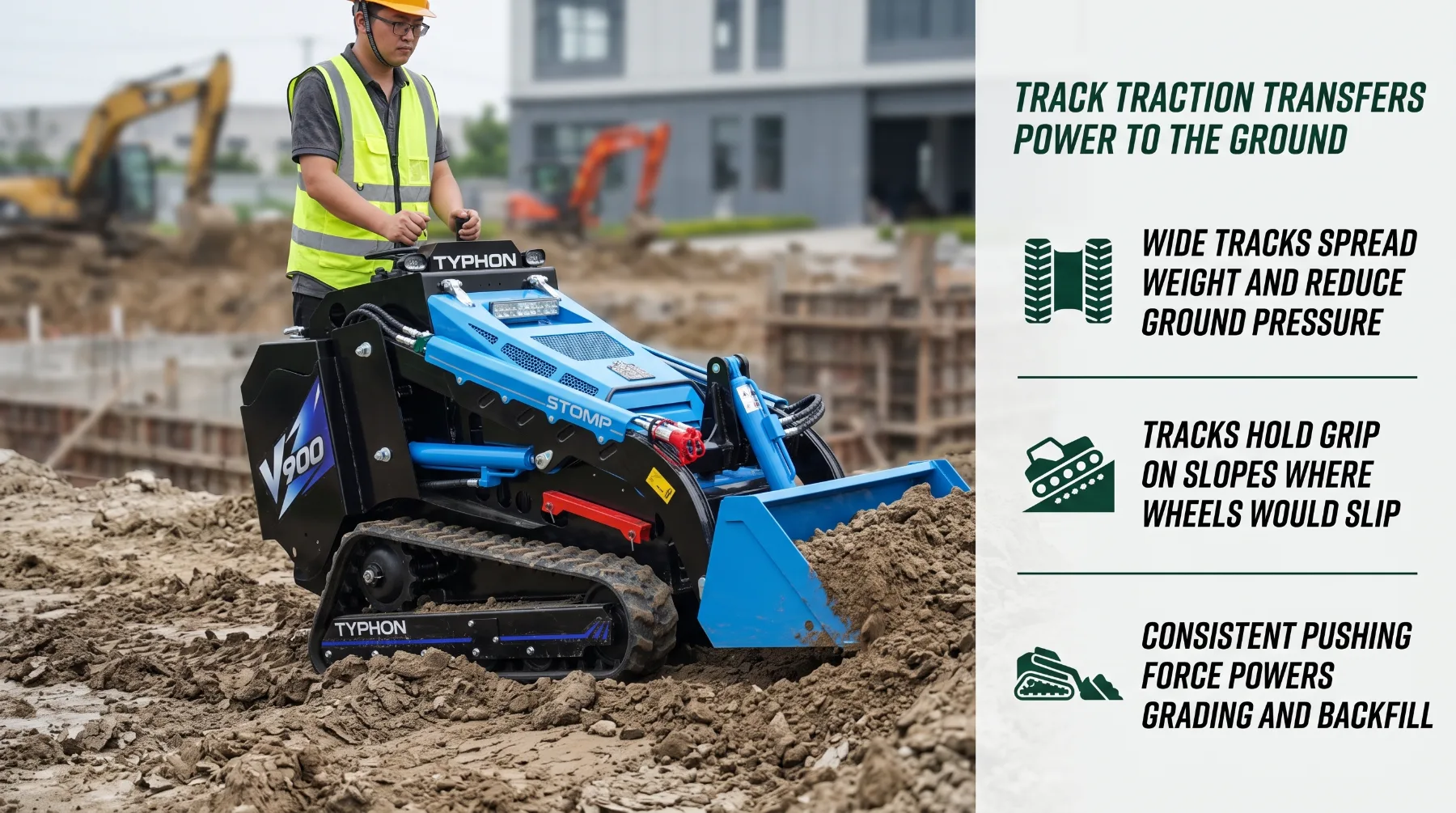
An engine can produce all the power in the world, but that power is useless until the machine can grip the ground and put it to work. This is the job of track traction. Traction determines how effectively a skid steer converts its available power into forward movement, pushing force, and steady digging. On a tracked machine, the rubber or steel tracks spread contact across a wide surface, creating the grip needed to move heavy loads and work on difficult ground.
Strong ground contact makes a real difference on the surfaces where skid steers earn their keep. Loose gravel, soft soil, mud, and uneven terrain all rob a machine of grip when traction is poor. Tracks help solve this problem in a few important ways:
- They spread the machine’s weight over a larger footprint, reducing ground pressure
- They maintain contact on slopes and uneven surfaces where wheels tend to slip
- They deliver consistent pushing force for grading, backfilling, and material handling
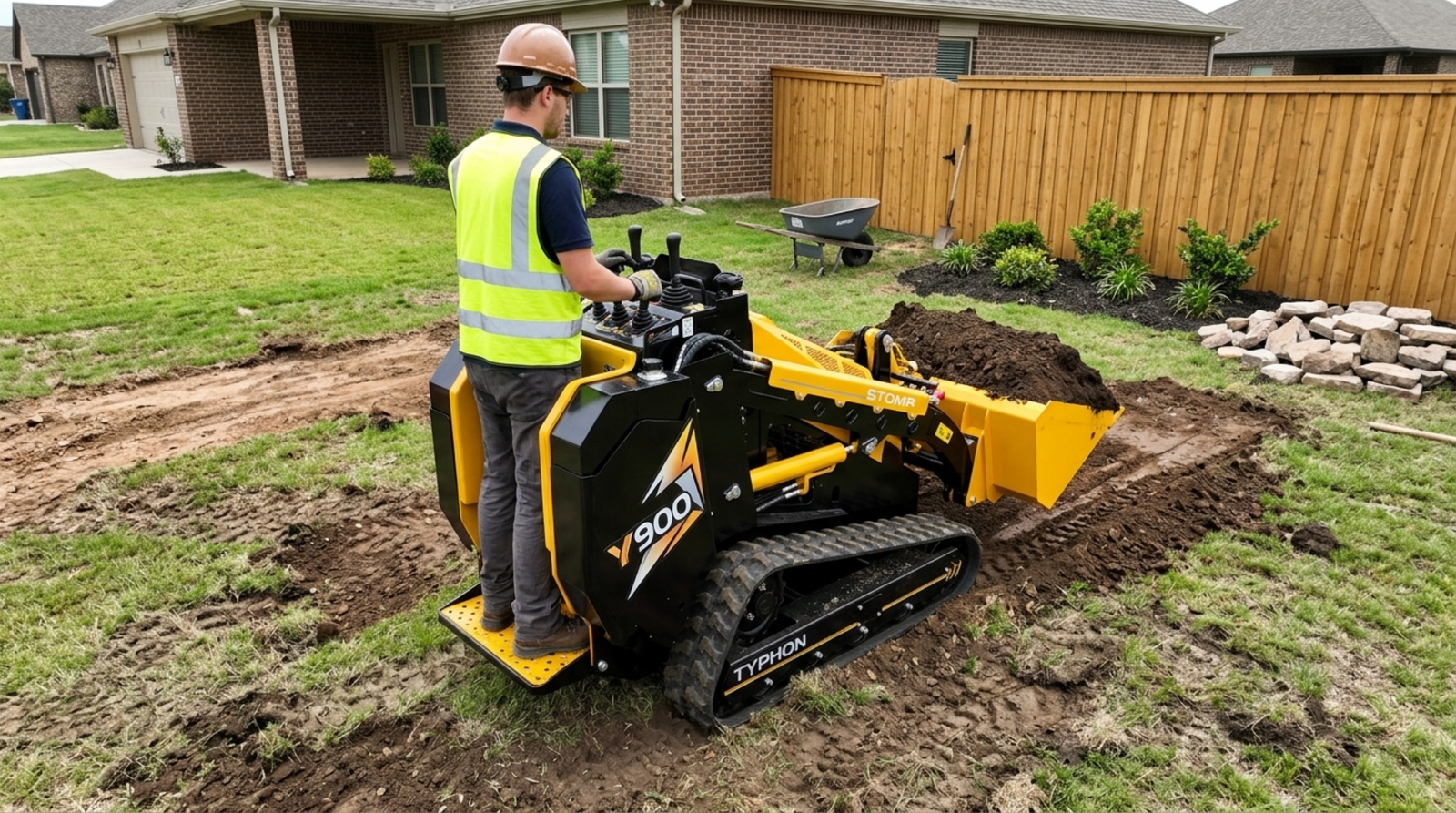
Compact track loaders such as the TYPHON STOMP V900, built on a 1.4-ton frame with a 25HP Kubota diesel engine, are designed to keep that grip even when the ground works against them. The wide track base lets the machine climb, push, and carry without the constant slipping that drains productivity.
Traction also protects the surfaces you work on. Because tracks distribute pressure more evenly than wheels, they cause less rutting on soft lawns, farm ground, and freshly graded sites. For operators working in gardens, farming, or landscaping, that gentler footprint matters. In short, track traction is the bridge between the engine and the actual work. It takes the power the engine produces and makes sure it reaches the ground where it counts.
Hydraulic Power and Track Drive
The connection between engine, hydraulics, and tracks is where a skid steer truly comes to life. The engine supplies power to the hydraulic system, and that hydraulic system then drives the track motors along with every other function on the machine. In practical terms, your tracks are hydraulically driven, so the same energy that runs your attachments also moves the machine across the site. This shared relationship is why balance matters so much.
When hydraulic output and track drive are properly balanced, the skid steer moves smoothly while it works. You can drive forward while lifting a load, or push material while operating an attachment, without one function starving the other. A well-engineered machine manages this flow intelligently, sending power where it is needed most at any given moment. The TYPHON STOMP V900 mini track loader, for example, features dual auxiliary hydraulics that let it run demanding attachments while still delivering reliable track drive.
Think about what happens during a heavy pushing task. The engine feeds the hydraulic pump, the pump powers the track motors, and the tracks transfer that force into the ground to move a pile of material. If any link in that chain is weak, the whole task suffers. A machine with strong hydraulic output but limited traction will spin its tracks. A machine with excellent grip but weak hydraulics will lack the force to push in the first place.
The best results come when hydraulic power and track drive are matched to complement each other. This balance decides how effectively the skid steer moves under load, how well it maintains speed on grades, and how confidently it handles multi-function work. When these systems are tuned together, the operator feels a machine that responds predictably and works hard without hesitation.
Weight Distribution and Ground Contact
Power and hydraulics can only do so much if the machine cannot press its tracks firmly into the ground. This is where weight distribution enters the picture. A skid steer needs enough weight, spread properly across its footprint, to turn engine and hydraulic power into usable traction. Without that downward force, the tracks simply cannot grip well enough to move heavy loads or push through resistance.
Weight works alongside track contact to create traction. The heavier and better balanced the machine, the more grip its tracks can generate against the surface. This is why operating weight is such an important spec. A 1.4-ton compact track loader like the TYPHON STOMP V900, rated for a 1,102 lb maximum load, carries enough mass to keep its tracks planted while still remaining nimble on the jobsite. That balance between weight and agility is what allows steady work without constant slipping.
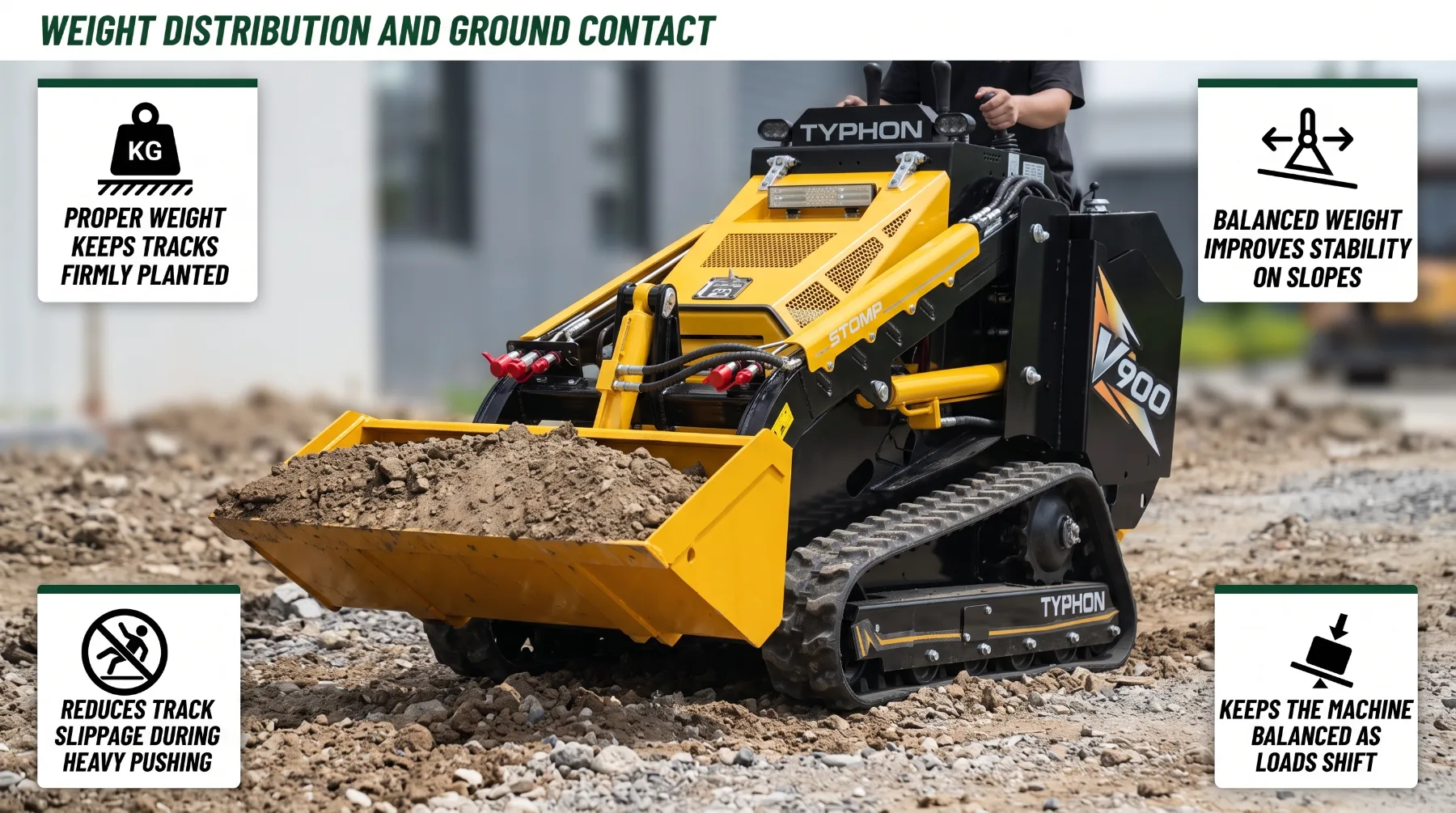
Proper weight distribution supports the machine in several ways:
- It keeps the tracks in firm contact with the ground for maximum grip
- It improves stability when lifting, carrying, or working on slopes
- It reduces track slippage during heavy pushing and digging
- It helps the machine stay balanced as loads shift during operation
Balance also affects safety and control. A skid steer that carries its weight well feels planted and predictable, even when handling a full bucket or reaching to place a load. A poorly balanced machine, by contrast, can feel tippy or lose grip at the worst moments. Load placement matters here too, since carrying attachments and materials low and close to the machine helps maintain stability. When weight, ground contact, and hydraulic power all work in harmony, the skid steer delivers its full capability. This is the quiet factor that turns raw power into productive, controlled work.
Matching Power and Traction to the Job
The final piece is putting it all together for your specific worksite. Engine power and track traction perform best when they are matched to the conditions you actually face. There is no single perfect combination for every job, because the demands of a muddy farm differ sharply from those of a tight residential grading project. The smart approach is to weigh your typical conditions and choose a machine built to handle them.
Several factors shape how much power and traction you truly need:
- Soil type affects grip, with soft or loose ground demanding better traction
- Slope increases the strain on both traction and stability
- Load requirements determine how much engine and hydraulic power you should carry
- Attachment demands raise hydraulic needs for augers, breakers, and grapples
Once you understand your conditions, you can match them to the right model. For light-duty tasks around gardens and farms, a tracked skid steer with a 22.1 HP Honda gas engine offers a practical balance of power and grip without excess. For heavier construction and continuous work, a diesel-powered machine like the TYPHON STOMP V1000 with its 24HP Kubota engine, or the STOMP 509 with a 25HP Kubota D1105, delivers the sustained power and traction that demanding jobs require.
Think about your workload realistically. A machine that spends most days pushing material and running attachments on rough ground needs both strong hydraulics and dependable traction. A unit handling lighter, occasional tasks can succeed with a smaller powerplant. Matching power and traction to the job protects your investment, keeps your crew productive, and ensures the skid steer performs the way you expect. When the machine fits the work, everything runs smoother and the results speak for themselves.
Conclusion
Engine power and track traction are not separate features to compare in isolation. They are partners that only reach their full potential when they work together. The engine produces the energy, the hydraulic system channels it, and the tracks transfer it to the ground where real work happens. Add proper weight distribution to the mix, and you have a machine that grips, pushes, lifts, and digs with confidence. Take any one of these elements away, and performance falls short no matter how impressive the spec sheet looks.
The right skid steer is the one that balances all of these factors for your conditions. Consider your soil, your slopes, your loads, and your attachment needs, then choose a model that matches them. The TYPHON STOMP lineup at American Excavator offers a range of tracked options, from compact gas-powered units for lighter tasks to strong Kubota diesel machines built for demanding daily use. When you match power and traction to your work, you invest in reliability and productivity that pays off on every job.
Frequently Asked Questions
1. Does more horsepower always mean a better skid steer?
Not on its own. Horsepower sets the ceiling for what a machine can produce, but that power is only useful if the skid steer can transfer it to the ground through good traction and proper weight distribution. A high-horsepower machine with poor grip will spin its tracks and waste energy. The best performance comes from a machine that balances engine power, hydraulic output, and track traction together for your specific working conditions.
2. Why are tracks better than wheels for tough ground?
Tracks spread the machine’s weight across a much larger surface than wheels, which lowers ground pressure and improves grip. This helps a skid steer stay stable and maintain traction on mud, loose soil, gravel, and slopes where wheeled machines tend to slip. Tracks also cause less rutting on soft surfaces, which makes them a strong choice for farming, landscaping, and work on freshly graded or delicate ground.
3. How does the hydraulic system connect to the tracks?
On a tracked skid steer, the engine powers the hydraulic system, and that hydraulic system drives the track motors. This means your tracks are hydraulically driven, using the same energy source that runs your attachments and loader arms. Because these functions share hydraulic power, a well-balanced machine, such as one with dual auxiliary hydraulics, manages the flow so it can move and operate attachments at the same time without losing performance.
4. Why does operating weight matter for traction?
Weight presses the tracks firmly into the ground, and that downward force is what allows the tracks to grip and generate traction. A machine that is too light for its task cannot maintain solid contact, which leads to slipping during heavy pushing or digging. Proper weight distribution also improves stability when lifting and carrying loads. A well-balanced skid steer, like a 1.4-ton compact track loader, keeps its tracks planted while staying agile.
5. How do I choose the right TYPHON STOMP model for my work?
Start by assessing your typical conditions, including soil type, slope, load requirements, and the attachments you plan to run. For lighter tasks around gardens or farms, a smaller gas-powered tracked model works well. For heavier construction and continuous daily use, a diesel-powered unit like the TYPHON STOMP V1000 or STOMP 509 with a Kubota engine delivers sustained power and traction. Matching the machine to your workload ensures dependable, productive performance.