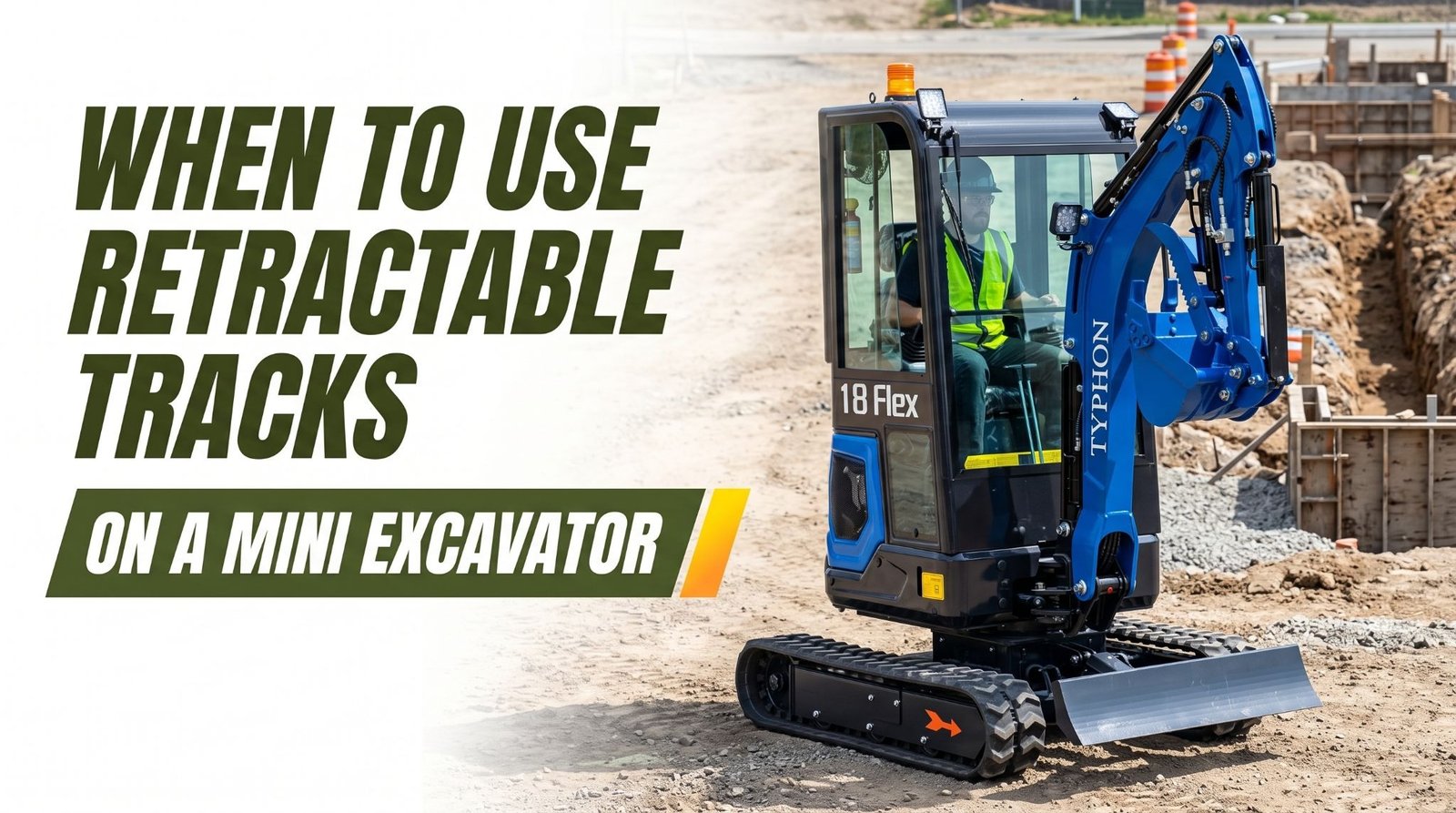
When to Use Retractable Tracks on a Mini Excavator
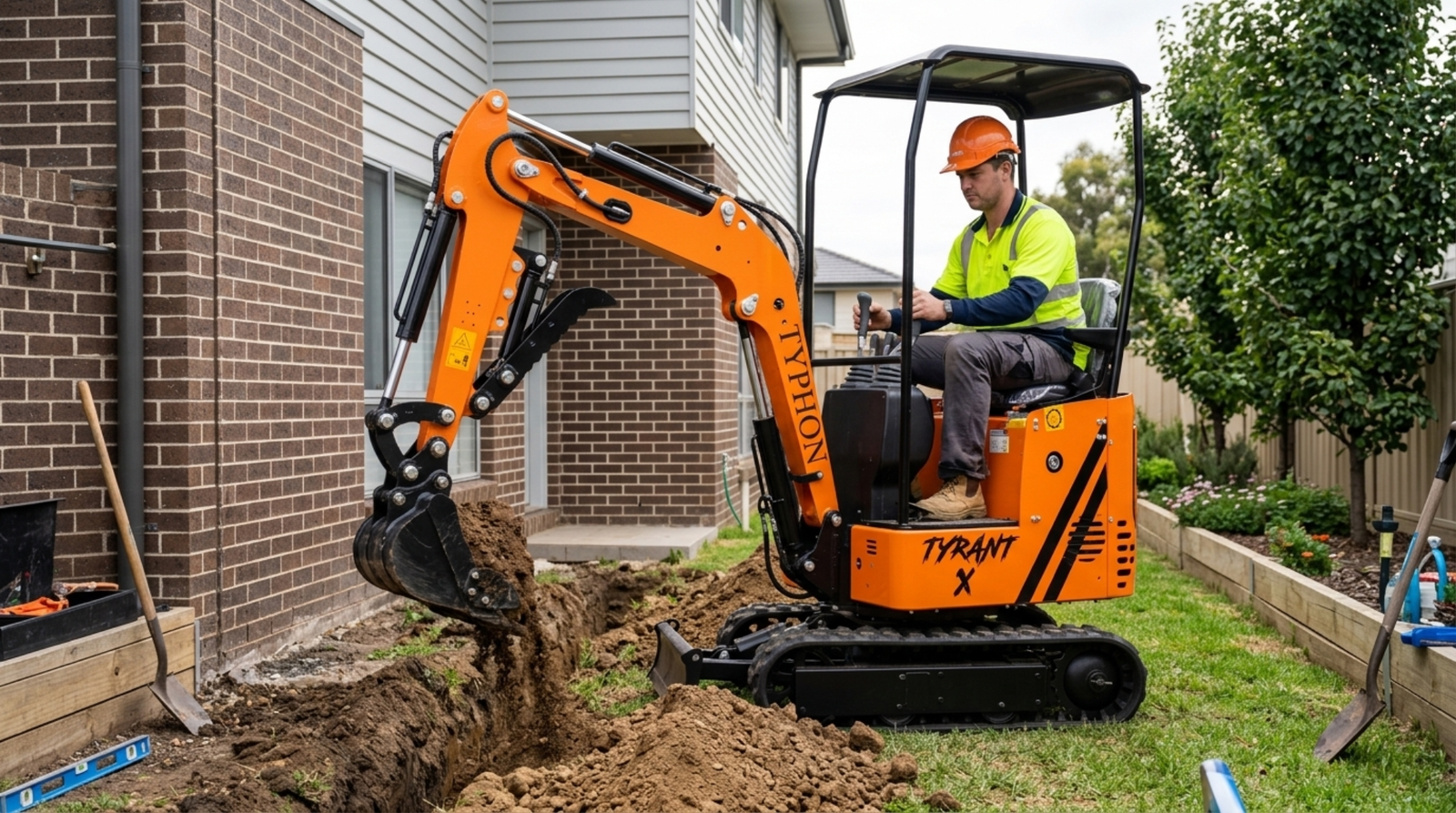
Getting a mini excavator into a backyard can be difficult when the work area is spacious, but the entrance is not. A residential drainage trench may offer plenty of room once the machine reaches the site, yet a standard garden gate can be too narrow for the excavator’s normal undercarriage width. Without a way to reduce that width, the crew may face manual digging, fence removal, or other time-consuming access work. Retractable tracks provide another solution by allowing the operator to narrow the undercarriage, pass through the restricted opening, and then expand it again once the machine reaches the work area.
Access is only half of the equation. A narrower undercarriage makes it easier to move through gates, between structures, and across other restricted entry points, while a wider stance provides a broader base once excavation begins. This ability to change width gives the operator more flexibility throughout the job rather than forcing the machine to remain in one configuration. The excavator can adapt its footprint to the space it is moving through and the stability it needs during operation.
Once positioned at the excavation area, track width becomes part of the machine’s working setup. Ground conditions, nearby structures, slope, digging direction, and available operating space all influence how far the undercarriage should be extended. Regular checks of the track frames, adjustment mechanism, hydraulic components, and surrounding areas can also help keep the system functioning properly. Used correctly, retractable tracks make one excavator more adaptable across residential projects where tight access and stable operation are both essential.
Passing Through Narrow Entrances
The most direct reason to retract the tracks is access, and it is the reason the feature exists. Retracting the undercarriage reduces the machine’s overall width, often by a meaningful margin, which lets a mini excavator slip through gates, doorways, alleys, and other restricted openings that would otherwise stop it cold. Many compact machines can narrow enough to clear a standard residential gate, and that difference is exactly what turns an inaccessible backyard into a workable jobsite.
This capability is what makes compact excavators so practical for residential landscaping and utility work, where the path to the job is frequently the hardest part. Fenced yards, tight side passages between houses, and narrow service corridors all present pinch points that a fixed-width machine cannot pass. By retracting to the machine’s minimum width, the operator can move through these openings under full control, then reach a work area that a larger or non-adjustable machine could never enter. For a contractor, that means winning and completing jobs that competitors have to turn down or approach with slower, more disruptive methods.
Expanding for Jobsite Stability
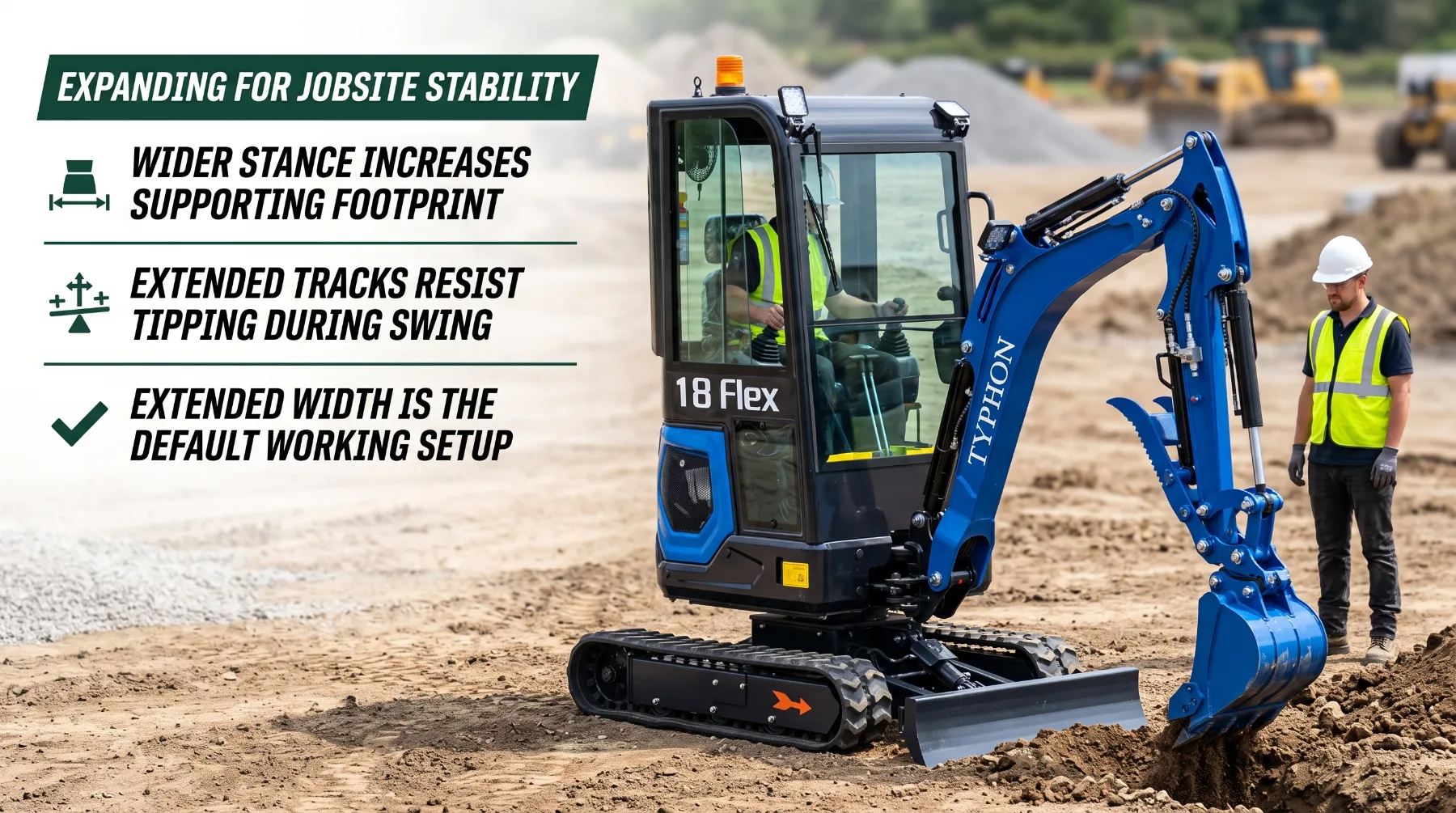
Once the machine reaches the open work area, the priority shifts from access to stability, and this is where extending the tracks earns its keep. Widening the undercarriage increases the supporting footprint beneath the machine, giving it a broader, more planted stance. That wider base directly improves stability during the demanding parts of excavation work, whether the operator is digging hard into packed soil, lifting a load, or swinging the boom out to the side.
Side-to-side work is where a wide stance matters most. When a mini excavator rotates and reaches away from its centerline, the load shifts toward one side of the undercarriage, and a narrow track width leaves far less resistance to tipping. Extending the tracks counters that by spreading the base wider, so the machine stays steady through the swing and the operator can work with confidence rather than caution. The retracted width gets the machine to the job, but the extended width is what lets it dig, lift, and rotate safely once it arrives. Treating the extended stance as the default working configuration, whenever space allows, is the sound habit.
Working Around Existing Structures
Residential and light commercial sites are rarely open ground. They are crowded with buildings, fences, retaining walls, sheds, and established landscaping features, and equipment has to navigate between all of it. Retractable tracks give the operator a way to handle these tight passages without abandoning the job or damaging the surroundings. The machine can retract to squeeze through a narrow gap between a house and a fence, then extend again once it clears into a more open space on the other side.
This adjust-as-you-go flexibility is what makes these machines so capable on congested properties. A yard might require threading the machine down a slim side passage, around a retaining wall, and past a row of mature plantings before reaching the actual work zone. Rather than being blocked at the first obstacle, the operator manages each constriction by narrowing the undercarriage where the space demands it and widening it wherever conditions allow. The result is a machine that adapts to the property instead of forcing the property to accommodate the machine, which protects existing structures and keeps the job moving.
Supporting Residential Excavation
The everyday work of residential excavation is precisely where retractable tracks prove their worth, because so much of it combines tight access with real digging demands. Backyard drainage projects, irrigation installation, foundation preparation, and utility trenching all tend to sit behind the same narrow entrances that block standard equipment. These are the jobs where a fixed-width machine either cannot reach the work or has to compromise on stability once it does.
An adjustable-width machine resolves that tension cleanly. It retracts to overcome the access limitation at the gate or passage, then extends to a wider working configuration once conditions in the yard allow, giving the operator both the reach into the job and the stable base to perform it well. A drainage trench dug across a fenced backyard, an irrigation line run through an established landscape, or a footing excavated close to a house all benefit from that combination. For contractors who make their living on residential and light utility work, this adaptability is often the difference between a job that pencils out efficiently and one that demands slow, costly workarounds.
Checking Ground Conditions
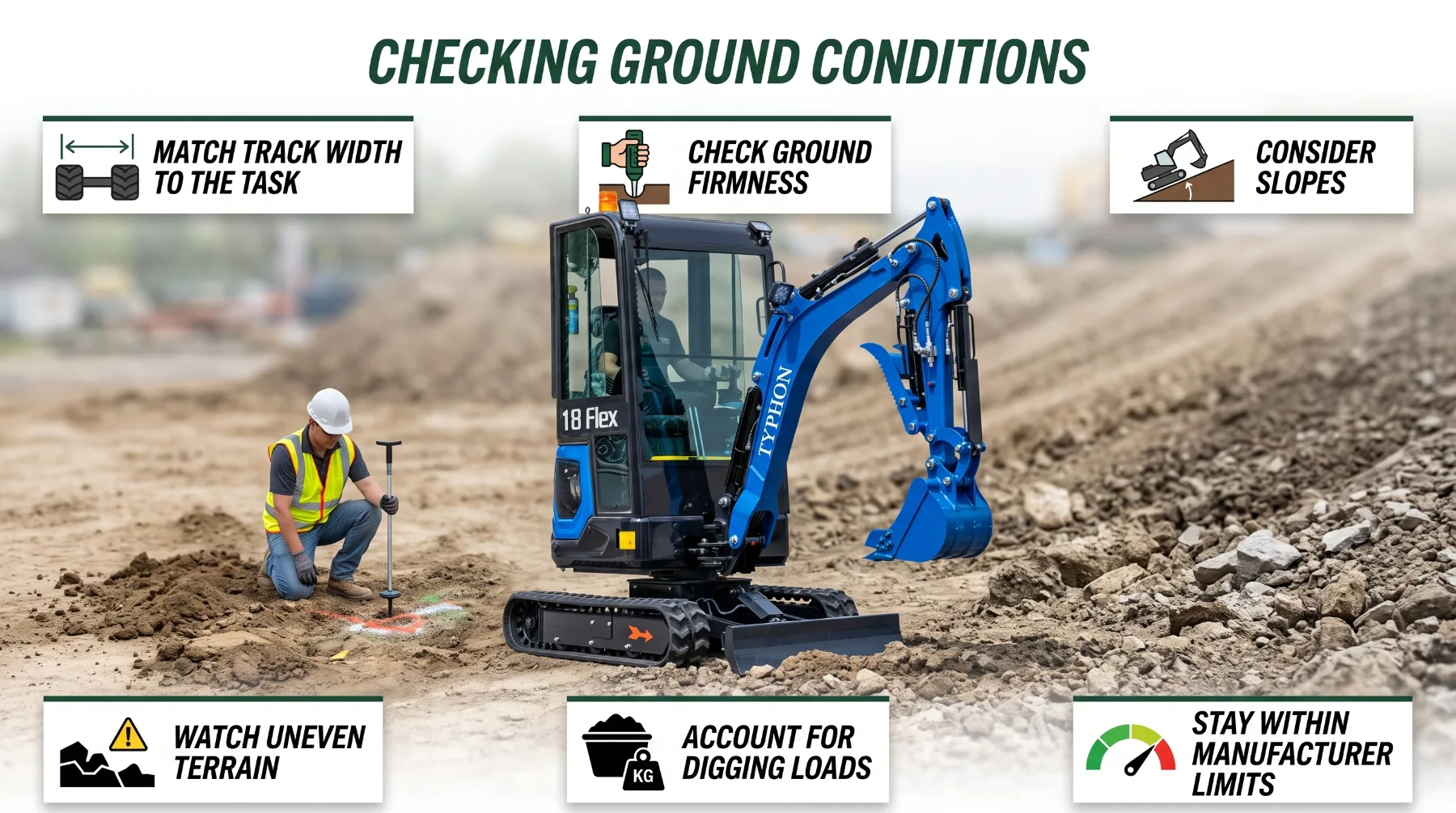
Track width should be matched to both the task and the ground beneath the machine. A wider stance can improve stability, but its effectiveness depends on the surface supporting the tracks and the conditions created by digging, loading, or traveling. Soft soil, slopes, uneven terrain, and heavy digging loads can all change how weight is distributed across the undercarriage.
- Match the track width to the task: Select a practical track stance based on the available working space, required stability, and type of work being performed.
- Check ground firmness: Soft soil provides less support beneath the tracks and can allow the machine to settle, shift, or become less stable under load.
- Consider slopes: Sloped ground changes how the machine’s weight is distributed and requires greater attention to positioning and stability.
- Watch uneven terrain: Irregular surfaces can place different loads on the tracks and undercarriage, especially when the machine is digging or carrying an off-center load.
- Account for digging loads: Heavy digging forces can increase the demands on machine stability, making proper positioning and the widest practical stance important where space allows.
- Stay within manufacturer limits: Track width should never be treated as a substitute for the manufacturer’s operating and stability limits. Ground conditions, machine position, track stance, and task demands all need to be considered together.
Inspecting the Track System
The retractable undercarriage is a working mechanical system, and it stays reliable only when it is inspected and kept clean. Regular checks of the track frames, rollers, idlers, hydraulic components, and the width-adjustment mechanism catch wear and damage before they turn into failures or leave the machine stuck at the wrong width. Because the retraction system relies on hydraulics and moving components to extend and retract, any fault there directly affects the machine’s core advantage.
Debris is the most common enemy of smooth operation. Dirt, mud, packed soil, and stones collect around the extending mechanism and throughout the undercarriage during normal work, and that buildup can bind the adjustment system, interfere with track movement, and accelerate wear on rollers and idlers. Keeping the undercarriage clean is therefore not just tidiness; it is what allows the tracks to retract and extend freely when the job calls for it. Fold a quick undercarriage inspection into the daily routine, clear out accumulated material, watch for hydraulic leaks or damaged components, and address anything worn or loose before it worsens. A clean, well-maintained track system is what keeps the retract-and-extend capability dependable job after job.
Conclusion
Retractable tracks allow a mini excavator to adapt its undercarriage width to changing access and operating conditions, providing a narrow configuration for confined spaces and a wider footprint for improved stability during excavation and lifting. Retracting the tracks reduces the machine’s overall width, allowing it to pass through narrow gates, doorways, alleys, and gaps between structures, while extending the tracks increases the support footprint and can improve lateral stability during digging, lifting, and side loading. The available width adjustment is particularly useful on residential drainage, irrigation, foundation, landscaping, and utility projects where access conditions change between travel and work areas. Track position should be selected according to the available clearance, ground condition, slope, load, and required working function, with greater attention required on soft, uneven, or sloped surfaces. The undercarriage adjustment system also requires regular inspection because track frames, rollers, idlers, hydraulic components, and adjustment mechanisms are exposed to soil and debris during operation. Before use, the operator should verify the machine’s retracted and extended dimensions, rated operating limits, ground conditions, and manufacturer’s requirements for track adjustment. Using the appropriate track width for each stage of the job allows the excavator to maintain practical access while providing a suitable working footprint for the intended excavation tasks.
Frequently Asked Questions
Why do mini excavators have retractable tracks?
Retractable tracks balance narrow access and working stability. The operator can narrow the machine to pass through gates, pathways, and other tight spaces, then extend the tracks to create a wider, more stable base for digging and lifting. This makes one compact excavator more adaptable for residential, landscaping, and utility work.
When should tracks be retracted?
Retract the tracks when passing through openings or spaces narrower than the machine’s normal width, such as gates, doorways, and narrow pathways. Once the machine reaches an open work area, extend the tracks again whenever conditions allow. The narrow setting improves access, while the wider stance provides better stability.
Should tracks stay extended while digging?
In most cases, yes. Extended tracks provide a larger supporting footprint and improve stability during digging, lifting, and side-to-side movements. If space prevents full extension, operate carefully within the machine’s stability limits and follow the manufacturer’s instructions for different track widths.
What affects retractable track performance?
Track condition, undercarriage components, hydraulic systems, debris, and ground conditions all affect performance. Mud, soil, and stones can interfere with the extending mechanism, while worn rollers, idlers, or hydraulic components can reduce reliability. Regular inspection, undercarriage cleaning, and timely repairs help keep the system working properly.