Skid Steer Applications for Construction and Material Handling
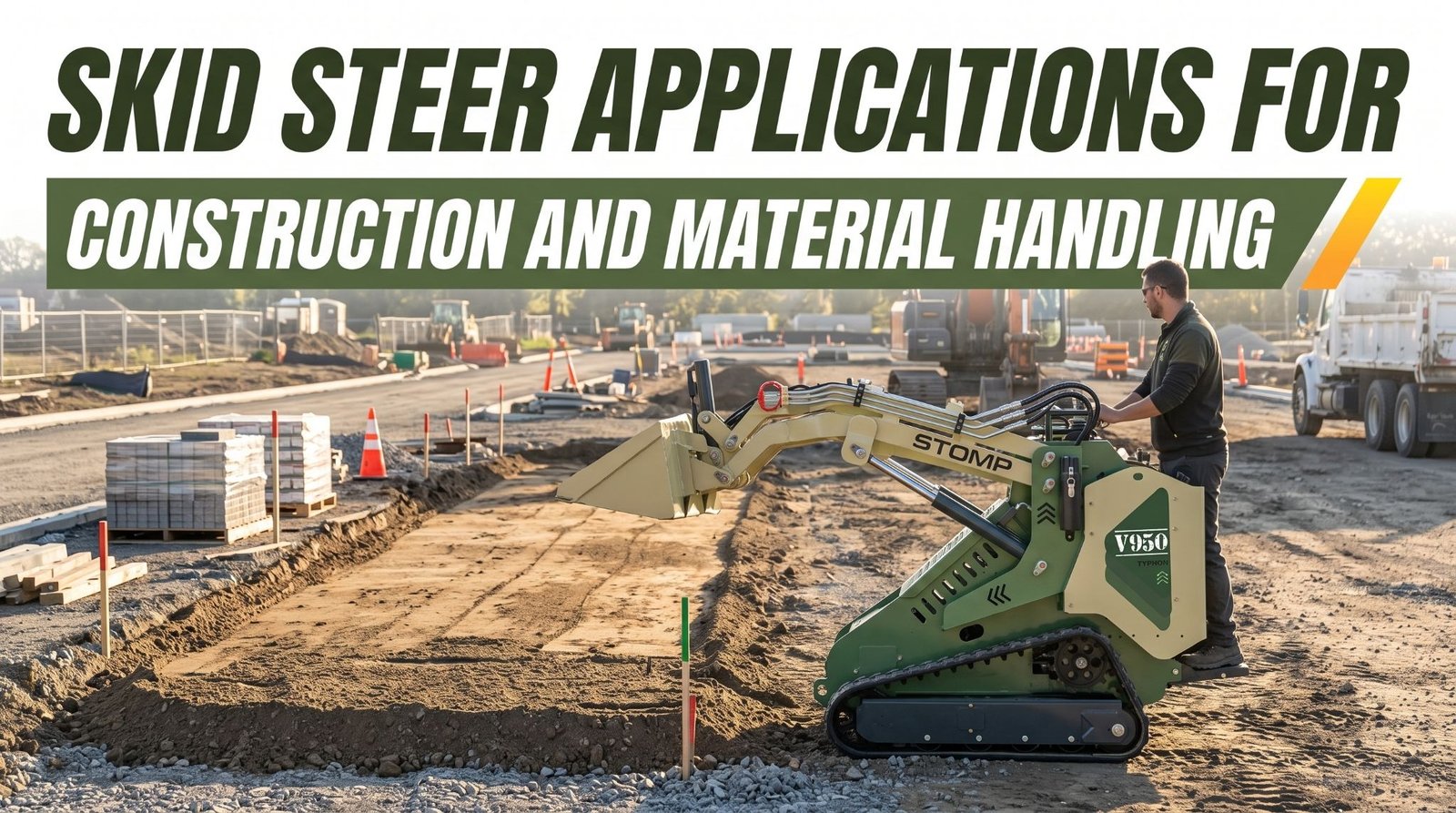
Handling several different tasks on the same jobsite can quickly make a contractor consider how many machines are actually needed. A stockpile of gravel may need spreading, ground may need leveling for a driveway, post holes may need digging, and demolition debris may need clearing before the next crew arrives. On a bigger site, that list might call for several machines, but one skid steer can handle these tasks by swapping attachments as the work changes throughout the day.
Versatility comes from the combination of a compact footprint and attachment compatibility. Different tools allow the same machine to move between loading, grading, excavation, digging, and material-handling tasks without requiring a separate machine for every job. This flexibility can be especially useful when work areas are limited, or several tasks need to be completed in sequence.
Throughout a busy project, attachment changes allow the machine to adapt as priorities shift. A bucket can handle loose material, while other attachments can support digging, grading, or debris removal as needed. Using one machine across multiple stages of the job can simplify equipment needs while keeping different tasks moving.
Load and Move Materials
Moving material is the work a skid steer does most often, and a bucket is the tool that makes it happen. With a bucket fitted, the machine handles soil, gravel, sand, debris, and other loose materials, scooping and carrying them wherever the job needs them. It’s the everyday task that keeps a site flowing.
The practical value shows up in what the machine saves you. Operators can load stockpiles, transport material over short distances, and fill designated areas without tying up a larger loader for every small job. A skid steer takes on the frequent, shorter-range material moves efficiently, leaving bigger equipment free for the heavy hauling. On a busy site, that division of labor keeps everything productive.
Key takeaway: A bucket lets a skid steer move soil, gravel, sand, and debris, handling loading and short-distance transport without relying on a larger loader for every task.
Prepare and Grade Surfaces
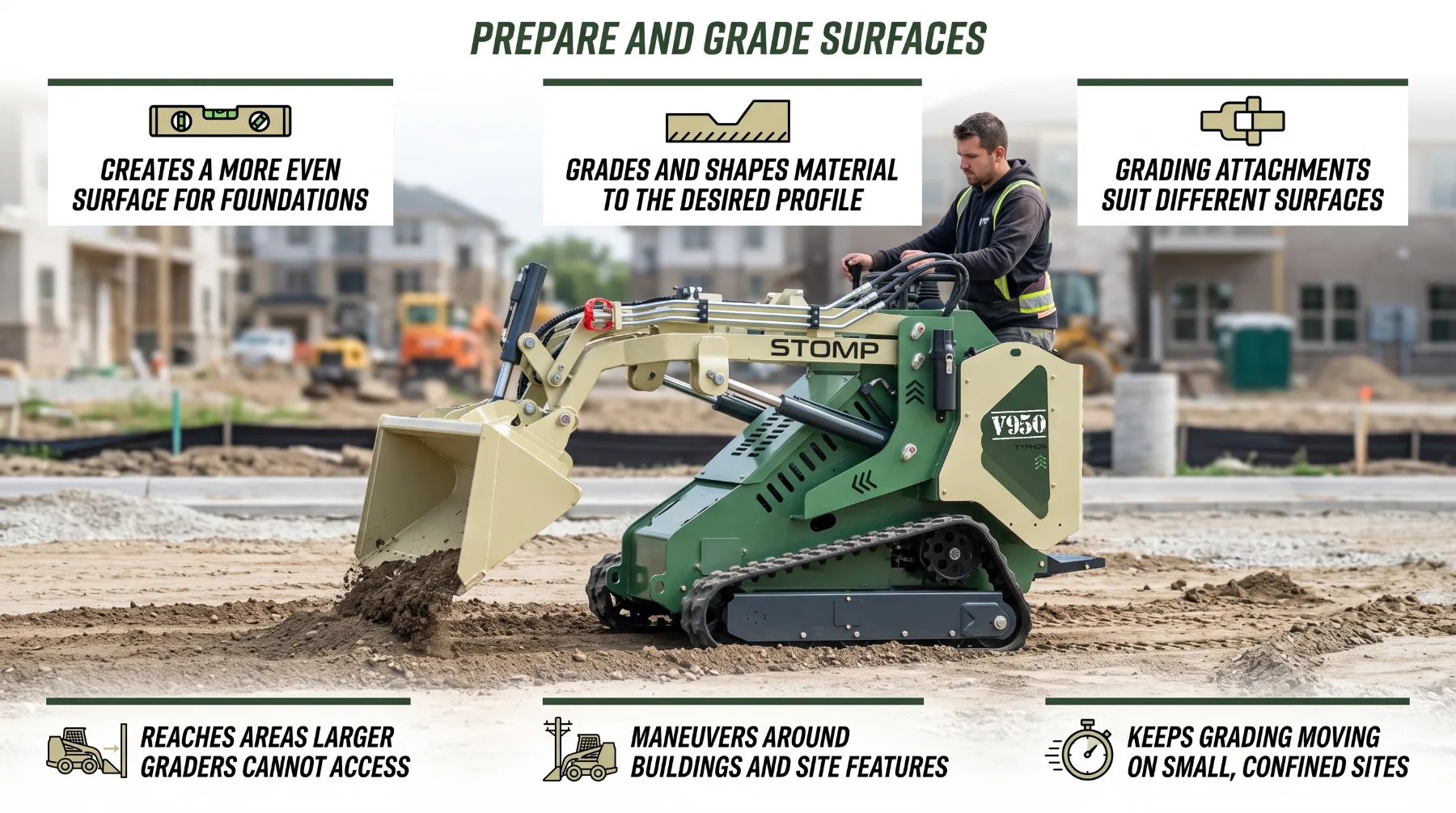
Preparing the ground correctly provides a solid starting point for foundations, driveways, landscaping, and other construction work. A skid steer fitted with a grading attachment can help level, smooth, and shape surfaces according to the project’s requirements. By working the material across the surface, the machine can help create more consistent ground conditions before the next stage of construction begins.
Its compact size is also a practical advantage on smaller or crowded sites where larger grading equipment may have difficulty accessing the work area. A skid steer can maneuver around buildings, structures, landscaping, and other obstacles while continuing to prepare the surface. This combination of grading capability and compact maneuverability makes it useful for projects where access is just as important as the quality of the finished ground.
- Surface Leveling: Helps create a more even surface for foundations, driveways, and other construction work.
- Ground Shaping: Supports grading and shaping material to achieve the desired surface profile.
- Grading Attachments: Provides a suitable working setup for preparing and smoothing different ground surfaces.
- Compact Access: Reaches areas where larger grading machines may have limited access.
- Obstacle Maneuvering: Allows work around buildings, structures, landscaping, and other site features.
- Small-Site Productivity: Keeps grading and surface preparation moving efficiently on smaller or confined projects.
Key takeaway: Grading attachments prepare ground for foundations, driveways, and landscaping, and the machine’s compact dimensions make it useful where larger grading equipment has limited access.
Dig Trenches and Ground
A skid steer isn’t limited to surface work; the right attachments let it dig. Tools designed for excavation and ground cutting turn the machine into a capable digging platform, extending its usefulness well beyond loading and grading. This is where attachment compatibility really pays off.
Different tools suit different digging jobs. Trenchers open narrow channels for utility installation, augers bore clean post holes, and other attachments support selected excavation tasks. That range lets one machine handle utility runs, fencing and post work, and smaller digging jobs without bringing in dedicated equipment for each. Matching the attachment to the task, and confirming it suits the machine’s capacity and hydraulics, keeps the digging efficient and the results clean.
Key takeaway: With trenchers, augers, and other excavation attachments, a skid steer supports utility installation, post-hole work, and selected excavation tasks from a single machine.
Handle Construction Debris
Demolition and renovation work leaves material behind, and clearing it is a job a skid steer takes on readily. These projects generate debris that has to move away from active work areas, and keeping those areas clear is what lets the next stage of work proceed safely and on schedule.
The machine adapts to the material through its attachments. Suitable buckets, grapples, or other tools let it collect and transport debris across short jobsite routes, gathering loose or awkward material and carrying it to a designated area. A grapple grips bulky or irregular pieces that a bucket alone would struggle to hold, while a bucket handles looser debris. Choosing the attachment that suits the material keeps cleanup quick and the site orderly.
Key takeaway: With suitable buckets, grapples, or other attachments, a skid steer collects and transports demolition and renovation debris across short jobsite routes to keep work areas clear.
Lift and Position Materials
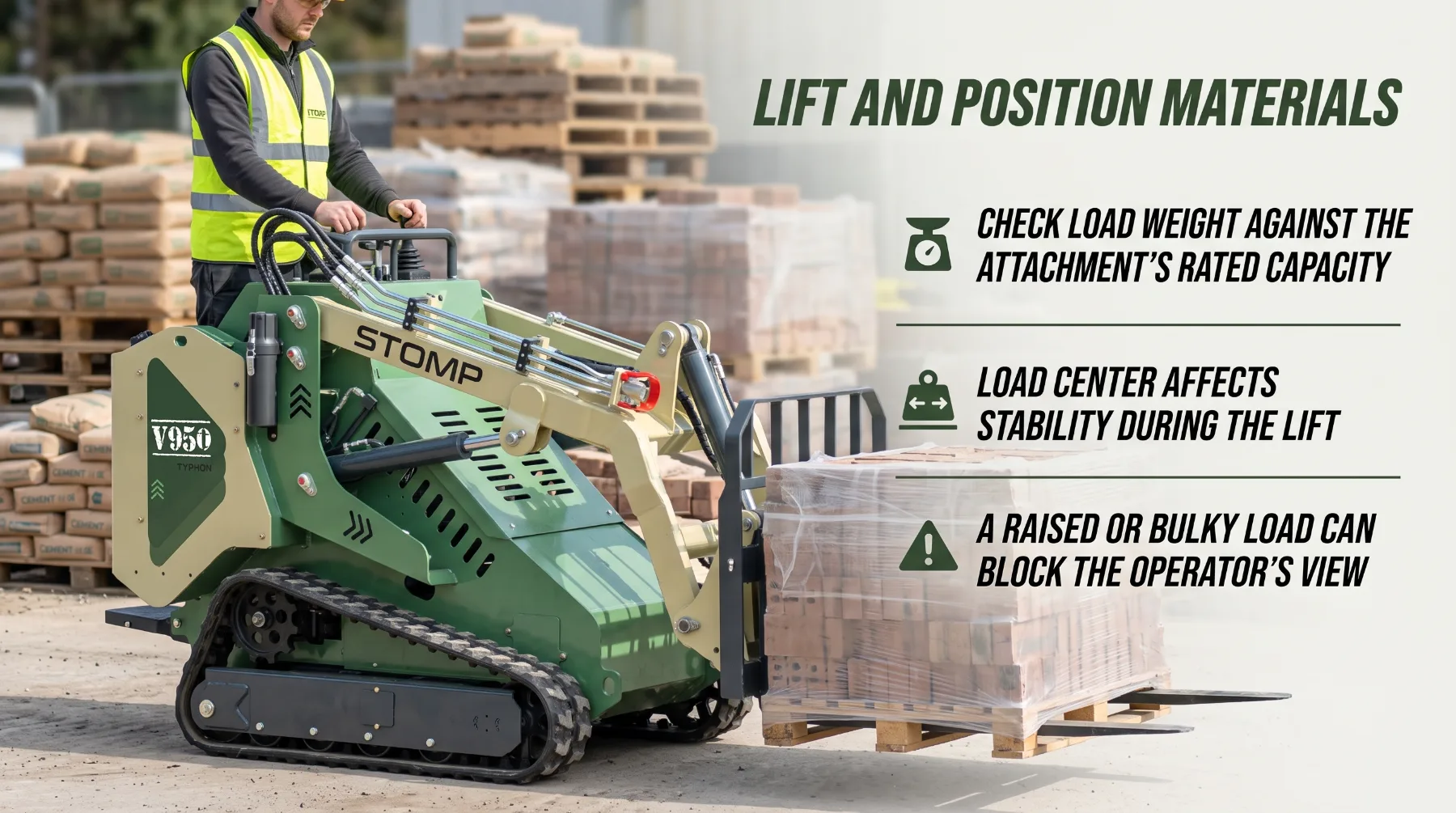
Fitted with forks, a skid steer becomes a material-handling machine for suitable palletized or packaged loads. This turns the same machine that loads gravel in the morning into one that positions delivered materials in the afternoon, moving pallets and packaged goods where they’re needed around the site.
Lifting demands more care than moving loose material, so a few factors deserve attention before every lift. Consider the load weight against the attachment’s capacity, so you never ask the machine to handle more than it’s rated for. Account for the load center, since how the weight sits on the forks affects stability. And keep visibility in mind, because a raised or bulky load can block the operator’s view. Weighing these together before lifting keeps the work both safe and controlled.
Key takeaway: Fork attachments let a skid steer lift and position palletized or packaged loads, so consider load weight, attachment capacity, load center, and visibility before every lift.
Support Landscaping Work
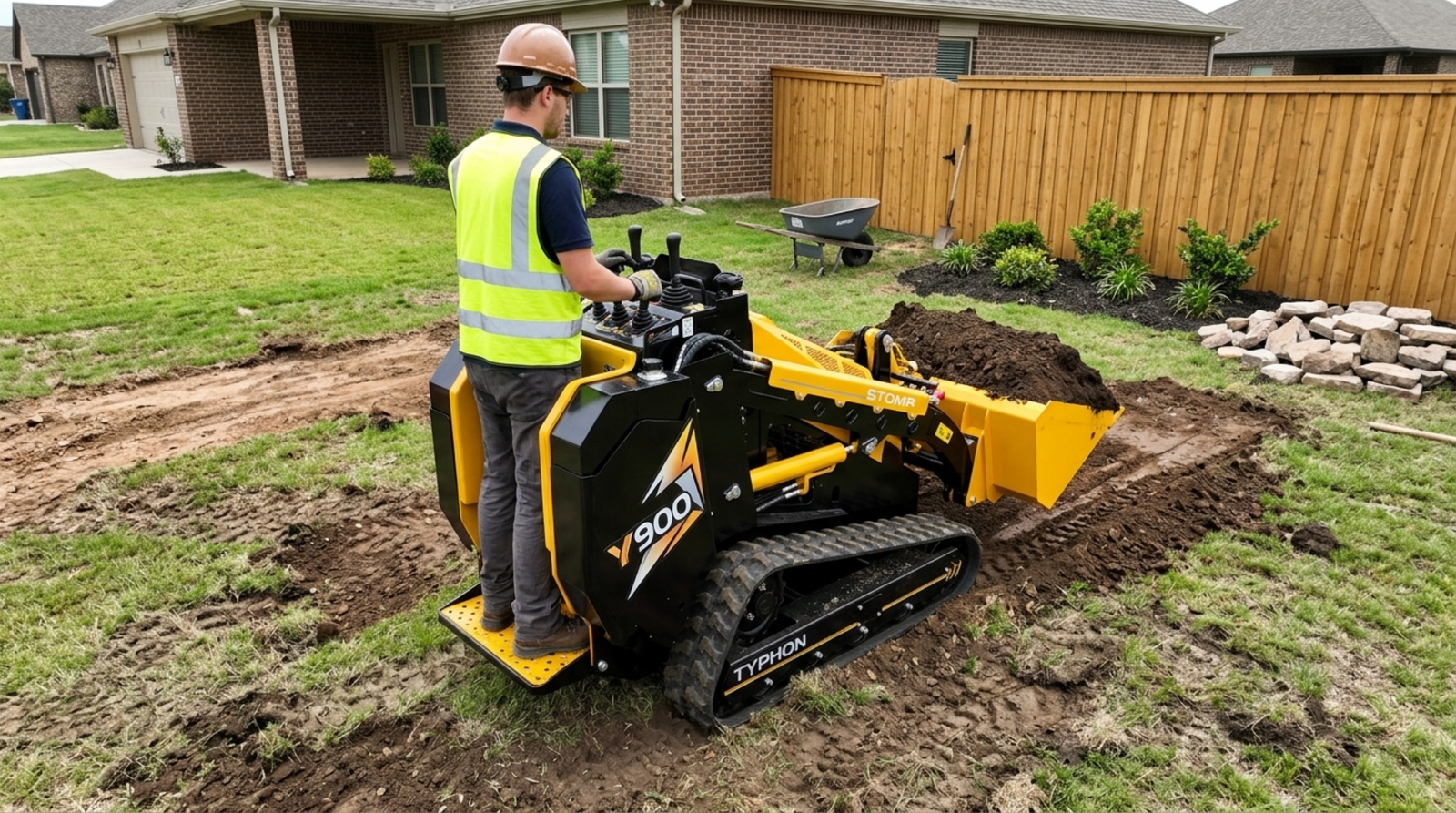
Landscaping pulls together many of the skid steer’s strengths in one type of project. This work can involve soil movement, grading, brush removal, and material placement, and each of those stages calls for a different capability from the machine.
The advantage is how readily the machine switches between them. A compact skid steer can change between suitable attachments to support several stages of site preparation, so one machine carries the project from moving soil to grading, clearing brush, and placing material. That flexibility means a landscaping crew doesn’t need a separate dedicated machine for each stage, which keeps the equipment footprint small and the work moving smoothly from one task to the next. For projects that shift focus as they progress, that adaptability is genuinely valuable.
Key takeaway: Landscaping involves soil movement, grading, brush removal, and material placement, and a compact skid steer switches between suitable attachments to support several stages without multiple dedicated machines.
Conclusion
A skid steer combines compact dimensions, maneuverability, and attachment versatility to support loading, material handling, grading, digging, debris removal, lifting, and landscaping work on construction sites. Buckets move soil, gravel, sand, and debris, while grading attachments, trenchers, augers, grapples, and forks extend the machine into specialized tasks. Its compact footprint helps it operate in restricted areas where larger equipment may have limited access, but each attachment should be matched to the machine’s rated capacity, hydraulic requirements, and intended application. Lifting tasks require particular attention to load weight, attachment capacity, load center, and visibility, while grading and digging require suitable access, ground conditions, and working space. Preparing the required attachments in advance and matching each one to the task allows a single skid steer to support multiple stages of construction and material-handling work efficiently.
Frequently Asked Questions
What are common skid steer applications?
Skid steers are versatile machines used for loading, grading, excavation, material handling, debris removal, landscaping, and attachment-based ground work. Buckets move soil, gravel, sand, and debris, while grading attachments prepare and level surfaces. Trenchers and augers handle utility trenches and post holes, grapples move bulky debris, and forks handle suitable palletized loads. Attachment compatibility allows one machine to perform many tasks that might otherwise require several pieces of equipment, provided each tool matches the machine’s capacity and hydraulic requirements.
Can a skid steer move construction materials?
Yes, skid steers can move a wide range of construction materials. Buckets handle loose materials such as soil, gravel, sand, and debris for loading, short-distance transport, and filling. Forks can lift palletized or packaged materials, while grapples handle bulky or irregular debris. Each load must remain within the machine and attachment’s rated limits. For lifting tasks, also consider load weight, attachment capacity, load center, and visibility.
Can one skid steer use multiple attachments?
Yes, many skid steers are designed to operate multiple attachments. A single machine can use buckets for loading, grading tools for surface preparation, trenchers or augers for digging, grapples for debris, and forks for material handling. This flexibility helps one machine cover several tasks on sites where space and equipment availability are limited. Each attachment must be compatible with the skid steer and match its hydraulic and capacity requirements.
Is a skid steer suitable for small construction sites?
Yes, skid steers are often well suited to small construction sites because their compact size and tight maneuverability allow them to work around buildings, fences, and other obstacles. They can handle loading, grading, excavation, debris removal, lifting, and landscaping by changing attachments, reducing the need for several machines on a crowded site. Always allow enough safe operating space and match each attachment to the machine’s capabilities.